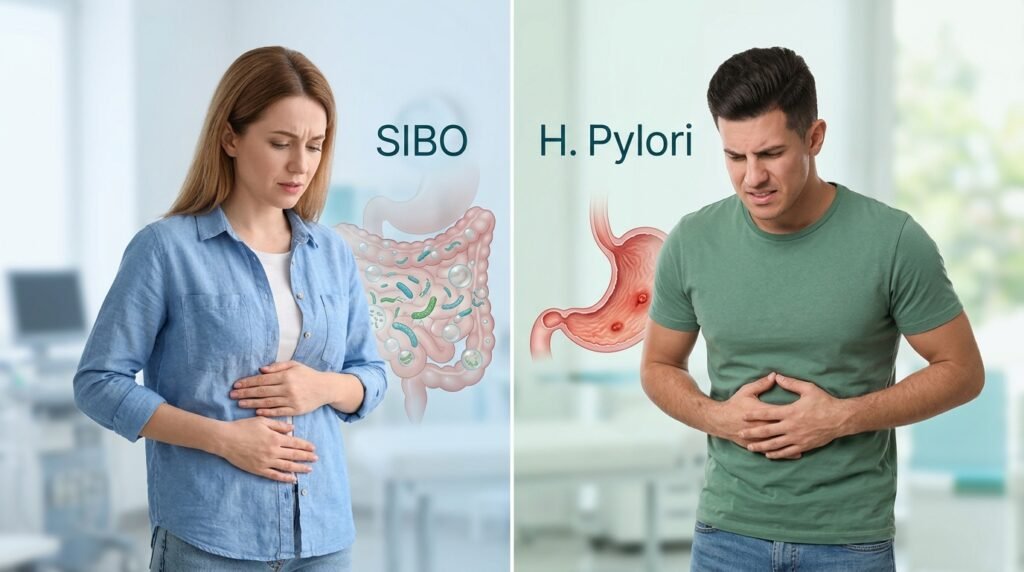
Quick answer: SIBO is an overgrowth of normal bacteria in the small intestine, while H. pylori is a specific bacterial infection in the stomach. Because H. pylori lowers stomach acid, it can actually cause SIBO to develop. Treatment differs significantly: SIBO requires breath testing and targeted antibiotics, whereas H. pylori requires stool testing and intensive triple antibiotic therapy.
Digestive issues can be incredibly frustrating to figure out. You feel bloated, uncomfortable, and tired, but the root cause remains a mystery.
Two common culprits behind chronic gut issues are SIBO and Helicobacter pylori (H. pylori). Because they share so many symptoms, people often confuse them.
Getting the right diagnosis is crucial. Treating the wrong condition can prolong your discomfort or even make your symptoms worse.
Let’s break down exactly what these two conditions are, how they differ, and what you can do to find relief.
What Is SIBO?
SIBO stands for Small Intestinal Bacterial Overgrowth. It happens when bacteria that normally live in your large intestine migrate upward and multiply in your small intestine.
Your small intestine is meant to absorb nutrients, not ferment food. When excess bacteria gather there, they feast on the food you eat, producing large amounts of gas.
This overgrowth often occurs due to slow gut motility, previous abdominal surgeries, or a lack of stomach acid.
What Is H. Pylori?
Helicobacter pylori is a specific spiral-shaped bacterium that infects the stomach lining. It is extremely common, affecting almost half the global population.
Unlike SIBO, which involves a mix of normal bacteria, H. pylori is a distinct infection. It damages the protective mucus layer of your stomach.
Over time, this damage can lead to painful stomach ulcers, chronic gastritis, and an increased risk of severe stomach issues.
SIBO vs H. Pylori: Main Differences
Location in the Digestive System
The biggest difference between the two is where they live. SIBO occurs exclusively in the small intestine.
H. pylori, on the other hand, sets up camp in your stomach.
Type of Bacteria
SIBO is not an infection from an outside pathogen. It is simply your body’s normal bacteria growing in the wrong location.
H. pylori is a specific, communicable bacterial infection. You often catch it during childhood from contaminated food, water, or close contact with family members.
Digestive Effects
Because SIBO bacteria ferment carbohydrates in the small intestine, the main effect is intense gas and bloating.
H. pylori physically damages the stomach lining. This leads to stomach irritation, inflammation, and painful ulcers rather than just gas.
Symptoms of SIBO
Bloating
Bloating is the hallmark symptom of SIBO. You might wake up with a flat stomach, but look several months pregnant by the end of the day.
Excess Gas
The bacteria produce hydrogen and methane gases as they digest your food. This leads to frequent belching and flatulence.
Diarrhea or Constipation
Depending on the specific gases produced, you might experience urgent diarrhea or stubborn constipation.
Food Intolerances
Because the small intestine is compromised, many people develop intolerances to dairy, gluten, or high-fiber foods.
Fatigue and Brain Fog
SIBO can interfere with your body’s ability to absorb essential vitamins. According to functional medicine experts, a B12 deficiency caused by SIBO often leads to intense fatigue and brain fog.
Symptoms of H. Pylori
Burning Stomach Pain
This pain usually happens a few hours after eating or during the night when your stomach is empty.
Nausea
A constant feeling of low-grade nausea is very common, especially in the morning.
Acid Reflux
As the bacteria damage your stomach lining, you might experience severe heartburn and acid reflux.
Loss of Appetite
The stomach discomfort often makes eating feel like a chore, leading to unintended weight loss.
Stomach Ulcers
If left untreated, H. pylori is the leading cause of painful peptic ulcers.
Shared Symptoms Between SIBO and H. Pylori
Telling these conditions apart by symptoms alone is tough. Both cause severe bloating, abdominal discomfort, and nausea.
They also both create general digestive upset that mimics irritable bowel syndrome (IBS).
Finally, because both conditions disrupt your digestion, they can lead to severe nutrient deficiencies over time.
Can You Have Both SIBO and H. Pylori?
Yes, you can absolutely have both at the same time. In fact, one often leads to the other.
Stomach acid is your body’s natural defense against harmful bacteria. H. pylori infections—and the acid-reducing medications used to treat them—drastically lower your stomach acid.
According to medical experts at QuinTron [2024], this low stomach acid allows bacteria to survive and migrate into the small intestine, setting the perfect stage for SIBO.
How Doctors Diagnose SIBO vs H. Pylori
SIBO Breath Test
The gold standard for diagnosing SIBO is a specialized breath test. You drink a sugary solution, and then breathe into a bag every 20 minutes.
The test measures the exact levels of hydrogen and methane gas produced by the bacteria in your small intestine.
H. Pylori Breath, Stool, or Blood Tests
To find H. pylori, doctors typically rely on a stool antigen test or a specialized urea breath test.
Blood tests can show if you have antibodies, but they can’t always tell if the infection is currently active.
Endoscopy
In severe cases, a gastroenterologist might perform an endoscopy to look directly at your stomach and small intestine. They can take tissue samples to test for either condition.
Treatment Differences Between SIBO and H. Pylori
SIBO Treatments
Conventional doctors often use a specific antibiotic called Rifaximin to clear the overgrowth.
Many naturopathic doctors prefer herbal antimicrobials, which can be just as effective. Patients also frequently adopt a Low-FODMAP diet to starve the bacteria of fermentable carbohydrates.
H. Pylori Treatments
H. pylori is notoriously stubborn. Treatment usually requires “triple therapy,” which includes two heavy-duty antibiotics and a proton pump inhibitor (PPI).
The PPI lowers stomach acid so the antibiotics can successfully heal the stomach lining.
Diet Tips for SIBO and H. Pylori
Foods That May Help
For both conditions, focus on easy-to-digest meals and anti-inflammatory foods.
According to the National Institutes of Health [2015], Manuka honey shows specific antibacterial activity against H. pylori. Omega-3-rich foods like wild-caught fish can also help reduce stomach inflammation.
Foods to Avoid
Sugary foods feed the bacterial overgrowth in SIBO, so keep sugar to a minimum.
You should also strictly avoid alcohol, processed foods, and spicy trigger foods, as they will deeply irritate an H. pylori infection.
Complications if Left Untreated
SIBO Complications
If you ignore SIBO, you risk severe malnutrition. The bacteria steal your nutrients, leading to dangerous vitamin deficiencies and chronic, painful bloating.
H. Pylori Complications
Untreated H. pylori physically destroys your stomach. This can lead to bleeding ulcers, chronic gastritis, and a significantly increased risk of stomach cancer.
When to See a Doctor
Don’t try to guess your diagnosis at home. If you have persistent bloating or burning stomach pain, it’s time to seek help.
Watch out for red flags like unexplained weight loss, persistent vomiting, or black, tarry stools. These indicate a severe issue that requires immediate medical attention.
Frequently Asked Questions
Is SIBO the same as H. pylori?
No. SIBO is an overgrowth of normal bacteria located in the small intestine. H. pylori is a specific bacterial infection that attacks the stomach lining.
Can H. pylori cause SIBO?
Yes. H. pylori infections reduce stomach acid production. Without enough stomach acid to kill off stray bacteria, those bacteria can easily migrate to the small intestine and cause SIBO.
Which condition causes more bloating?
While both cause bloating, SIBO is much more famous for it. SIBO bacteria actively ferment the food you eat, producing high volumes of gas that lead to extreme abdominal distension.
How do you test for SIBO and H. pylori?
SIBO is diagnosed using a lactulose or glucose breath test to measure hydrogen and methane gases. H. pylori is most accurately diagnosed using a stool antigen test or a urea breath test.
Can probiotics help both conditions?
Probiotics can be helpful, but they must be used carefully. Certain probiotic strains can soothe H. pylori inflammation, but taking the wrong probiotic with SIBO can accidentally add more bacteria to your overgrown small intestine.
Seeking the Right Help for Your Gut Health
Understanding the differences between SIBO and H. pylori is the first step toward getting your life back. While they share annoying symptoms like bloating and nausea, they are entirely different beasts.
Accurate testing is the only way to know exactly what is happening inside your gut. Guessing with random supplements or fad diets can often make the situation worse.
If you are struggling with chronic digestive issues, reach out to a functional medicine doctor or gastroenterologist. A targeted, professional treatment plan will help you clear the bacteria and finally heal your gut.