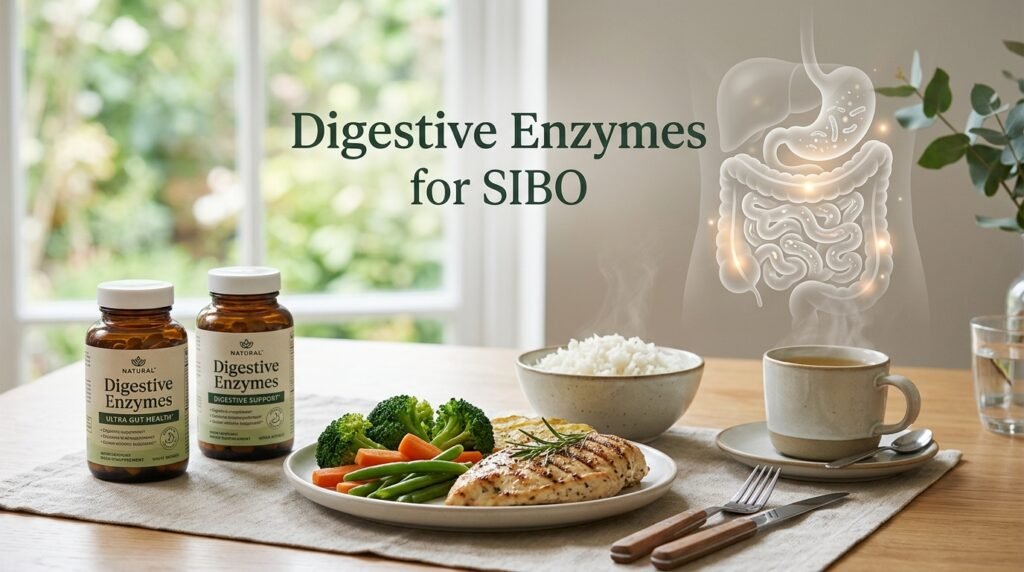
Quick answer: Digestive enzymes help manage symptoms of Small Intestinal Bacterial Overgrowth (SIBO) by breaking down food before gut bacteria can ferment it. While they do not cure the underlying bacterial overgrowth, taking specific enzymes like protease, lipase, amylase, and lactase can significantly reduce bloating, gas, and discomfort during your SIBO treatment protocol.
Living with SIBO often feels like a constant battle with your own stomach. You eat a healthy, balanced meal, and just minutes later, you feel uncomfortably bloated and heavy.
When you have a bacterial overgrowth in your gut, digesting food properly becomes a major challenge. The bacteria start feeding on your meals before your body has a chance to absorb the nutrients.
This feeding frenzy produces a massive amount of trapped gas in your intestines. The result? Pain, bloating, and unpredictable bowel habits.
Digestive enzymes offer a practical way to support your system. By helping your body break down food faster, enzymes leave less fuel behind for those troublesome bacteria.
What Is SIBO?
Small Intestinal Bacterial Overgrowth (SIBO) happens when bacteria that normally live in your large intestine migrate up into your small intestine. Your small intestine is meant to absorb nutrients, so it usually contains very few bacteria.
When these microbes relocate to the wrong area, they hijack your digestive process. They consume the carbohydrates, proteins, and fats you eat and release uncomfortable gases like hydrogen and methane as byproducts.
According to [The American Journal of Gastroenterology, 2020], up to 78% of people diagnosed with Irritable Bowel Syndrome (IBS) actually test positive for SIBO.
Common SIBO symptoms include extreme bloating, abdominal distension, nausea, flatulence, and alternating bouts of diarrhea and constipation.
What Are Digestive Enzymes?
Your body naturally produces digestive enzymes to break down the food you eat. You can think of them as tiny scissors that chop large food molecules into smaller, easily absorbable nutrients.
If your body does not make enough enzymes, or if a gut issue like SIBO blocks them from working, food sits partially undigested in your digestive tract.
You can take digestive enzyme supplements to give your body a helping hand.
The main enzyme types include:
- Protease: digests proteins
- Lipase: digests fats
- Amylase: digests carbohydrates
- Lactase: breaks down lactose (dairy sugar)
Can Digestive Enzymes Help SIBO?
Yes, they can offer significant symptom relief. Poor digestion directly worsens SIBO symptoms. When food moves slowly and breaks down poorly, it becomes an all-you-can-eat buffet for the overgrown bacteria.
By taking supplemental enzymes, you speed up the digestive process. Your body absorbs the nutrients quickly high up in the digestive tract.
This rapid absorption starves the bacteria residing further down. Less food fermentation in the gut naturally leads to a noticeable drop in gas production and pain.
Benefits of Digestive Enzymes for SIBO
Reduced Bloating
Bloating is often the most frustrating SIBO symptom. Enzymes help break down complex carbohydrates before bacteria can ferment them, drastically reducing the trapped gas that causes your stomach to swell.
Improved Nutrient Absorption
Because SIBO bacteria steal your nutrients, malnutrition and vitamin deficiencies are common side effects. Digestive enzymes ensure food is broken down into small enough particles for your intestinal lining to actually absorb the vitamins and minerals you need.
Less Gas and Indigestion
Gas is a direct byproduct of bacterial fermentation. By speeding up digestion, enzymes limit the amount of time food spends interacting with the bacteria, cutting down on excessive flatulence and burping.
Better Fat and Protein Digestion
SIBO can inflame the gut lining, which impairs your natural ability to digest fats and proteins. Supplemental enzymes step in to do the heavy lifting, preventing issues like greasy stools and stomach cramps after heavy meals.
Support for Low Stomach Acid Issues
Adequate stomach acid is crucial for triggering your natural enzyme release. Because low stomach acid is a known root cause of SIBO, taking a supplement that includes enzymes and Betaine HCl can optimize your digestion from the top down.
Best Digestive Enzymes for SIBO
Broad-Spectrum Digestive Enzymes
A broad-spectrum supplement contains a mix of several different enzymes. Choose a broad-spectrum enzyme if you struggle with multiple food types and need all-around support for complex meals.
Lipase
Lipase specifically targets dietary fats. Choose a targeted lipase supplement if your primary issues are fat malabsorption, floating stools, or discomfort after eating high-fat meals.
Protease
Protease handles protein breakdown. SIBO bacteria can sometimes feed on undigested proteins, so protease ensures your body absorbs these vital amino acids before the bacteria can reach them.
Amylase
Amylase tackles carbohydrates, turning them into simple sugars. Since SIBO bacteria thrive on fermentable carbohydrates, amylase helps process them quickly to minimize gas production.
Lactase
Many people with SIBO develop a temporary intolerance to dairy because the overgrowth damages the intestinal lining where lactase is produced. Taking lactase allows you to enjoy dairy products without severe cramping and diarrhea.
Ox Bile Supplements
Ox bile is often used alongside lipase to digest fats. It acts like dish soap, emulsifying dietary fats so the lipase enzymes can easily break them down. It is especially helpful for SIBO patients who have gallbladder issues.
How to Take Digestive Enzymes for SIBO
Timing is everything. To get the best results, you must take your digestive enzymes right before you start eating, or with your first bite of food.
If you take them too early, they may pass through your stomach before the food arrives. If you take them after you finish eating, they cannot mix properly with your meal.
Always start with a lower dose to see how your digestive system reacts. Follow the label directions carefully, and gradually increase the dose if your healthcare provider recommends it.
Can Digestive Enzymes Cure SIBO?
No, digestive enzymes cannot cure SIBO. They are a supportive tool designed to manage symptoms and improve your quality of life.
Enzymes do not kill the overgrown bacteria in your small intestine. To truly resolve the condition, you need to address the underlying bacterial overgrowth using targeted medical therapies.
However, combining enzymes with your medical treatment can make the healing process much more comfortable and prevent further nutritional deficiencies.
Other Treatments Often Used Alongside Digestive Enzymes
Antibiotics
Prescription antibiotics, such as Rifaximin, are the standard medical treatment for reducing the bacterial overgrowth in the small intestine.
Herbal Antimicrobials
According to [Global Advances in Health and Medicine, 2014], herbal antimicrobial blends containing berberine and oregano oil can be just as effective as antibiotics for clearing SIBO.
Low-FODMAP Diet
This temporary elimination diet restricts highly fermentable carbohydrates. It starves the bacteria and rapidly reduces symptoms like bloating and gas while you undergo treatment.
Probiotics
While controversial in the early stages of SIBO, specific probiotic strains (like Lactobacillus and Bifidobacterium) are often used later in treatment to help restore a healthy microbiome balance.
Gut Motility Support
Prokinetics are medications or supplements that stimulate the cleaning waves in your gut. They keep food and bacteria moving downward, which helps prevent SIBO from returning after treatment.
Possible Side Effects of Digestive Enzymes
While generally safe, digestive enzymes can cause minor stomach discomfort or nausea when you first start taking them.
Some people may experience temporary diarrhea as their digestive system adjusts to the rapid breakdown of food.
Allergic reactions are rare but possible, especially if the enzymes are derived from sources you are sensitive to (like mold, papaya, or pork). Stop using them immediately if you develop a rash, itching, or severe abdominal pain.
Who Should Avoid Digestive Enzymes?
People with specific food or mold allergies need to read ingredient labels carefully, as many enzymes are plant-based (derived from fungi) or animal-based (porcine).
If you have a diagnosed pancreatic condition, such as chronic pancreatitis, you should only use enzymes under strict medical supervision.
Pregnant or breastfeeding women, and those taking blood-thinning medications, should always consult their doctor before adding enzymes to their routine.
How to Choose the Best Digestive Enzyme Supplement
Key Ingredients to Look For
Look for a comprehensive blend that lists the specific activity levels of protease, lipase, and amylase. If you have low stomach acid, look for a formula that includes Betaine HCl.
Avoiding Unnecessary Fillers
Some cheaper supplements contain added prebiotics, fibers, or sugar alcohols. While healthy for some, these specific fillers provide extra fuel for SIBO bacteria and will likely worsen your bloating.
Third-Party Testing and Quality
Always choose a reputable brand that uses third-party testing. This ensures the supplement is pure, potent, and free of hidden contaminants that could upset your sensitive gut.
Frequently Asked Questions
Do digestive enzymes help with SIBO bloating?
Yes. Digestive enzymes break down complex carbohydrates and proteins quickly. This rapid digestion leaves less food available for the overgrown bacteria to ferment, which directly reduces the amount of bloating and gas you experience.
Can digestive enzymes make SIBO worse?
Pure digestive enzymes will not make SIBO worse. However, if your enzyme supplement contains added prebiotics, inulin, or hidden fermentable fibers, those specific additives can feed the bacteria and worsen your symptoms.
Should you take enzymes with every meal?
Yes, if you struggle with digestion, you should take an enzyme supplement with every major meal. You can generally skip them for small, simple snacks that are easy to digest.
What is the best enzyme for gas and bloating?
A broad-spectrum enzyme containing amylase, protease, and lipase is usually best for general gas and bloating. Alpha-galactosidase is also excellent for breaking down the complex sugars found in beans and cruciferous vegetables.
Are digestive enzymes safe long term?
Yes, digestive enzymes are considered safe for long-term use. Your body will not become “lazy” or stop producing its own natural enzymes just because you are taking a supplement.
When to See a Doctor
While enzymes are incredibly helpful, you should not rely on them to mask serious health issues.
You need to see a doctor if you experience persistent digestive symptoms that disrupt your daily life. Severe abdominal pain, bloody stools, or unexplained weight loss require immediate medical attention.
Additionally, if you suspect you have nutrient deficiencies—marked by extreme fatigue, hair loss, or brittle nails—a healthcare professional can run the proper blood tests and guide your recovery.
Moving Forward With Your Gut Healing Journey
Navigating a SIBO diagnosis can be overwhelming, but you do not have to endure the discomfort alone.
Digestive enzymes act as a powerful tool in your symptom-management toolkit. By supporting your body’s natural breakdown of food, they can bring you much-needed relief from the daily bloating and gas.
Remember, comprehensive SIBO treatment requires a multi-step approach. Enzymes work best when paired with targeted therapies and dietary adjustments.
Always work with a qualified healthcare provider or functional nutritionist to build a personalized care plan that targets the root cause of your gut issues.