Quick answer: A SIBO diet helps manage Small Intestinal Bacterial Overgrowth by reducing fermentable carbohydrates that feed gut bacteria. You should eat low-FODMAP foods like lean proteins, zucchini, and white rice, while avoiding high-FODMAP foods like onions, garlic, apples, and wheat. Diet alone won’t cure SIBO, but it significantly reduces symptoms.
Have you ever finished a meal only to look down and feel like you’ve suddenly swallowed a balloon? If you struggle with constant bloating, gas, and abdominal pain, you aren’t alone.
Many people spend years trying to figure out what is wrong with their gut. Often, the hidden culprit is something called Small Intestinal Bacterial Overgrowth, or SIBO.
When you have SIBO, the foods you eat can actually make your symptoms worse. But the good news? You can take back control of your digestion just by changing what is on your plate.
Let’s break down exactly how to eat for SIBO, without making things too complicated.
What Is SIBO?
Your gut is full of bacteria, and that is usually a good thing. Most of those bacteria live in your large intestine, where they help digest food and keep you healthy.
But sometimes, those bacteria decide to move house. They migrate up into your small intestine, an area that is supposed to have very few bacteria. This is Small Intestinal Bacterial Overgrowth (SIBO).
When these bacteria hang out in the wrong spot, they interfere with your digestion. They start munching on your food before your body can absorb the nutrients.
This bacterial feast creates a ton of gas. That trapped gas leads to the classic SIBO symptoms: severe bloating, stomach pain, diarrhea, and sometimes constipation.
Why Diet Matters for SIBO
So, why does food trigger such a massive reaction when you have SIBO? It all comes down to fermentation.
Gut bacteria love to eat carbohydrates. When you eat certain carbs, the bacteria ferment them. This process creates the hydrogen and methane gases that blow your stomach up like a tire.
According to Dr. Melissa Young from the Cleveland Clinic (2025), bacteria primarily consume carbohydrates, which results in gas production.
The main goal of a SIBO-friendly diet is simple. You want to starve the overgrown bacteria while still feeding yourself. By cutting off their food supply, you reduce the gas and calm your symptoms down.
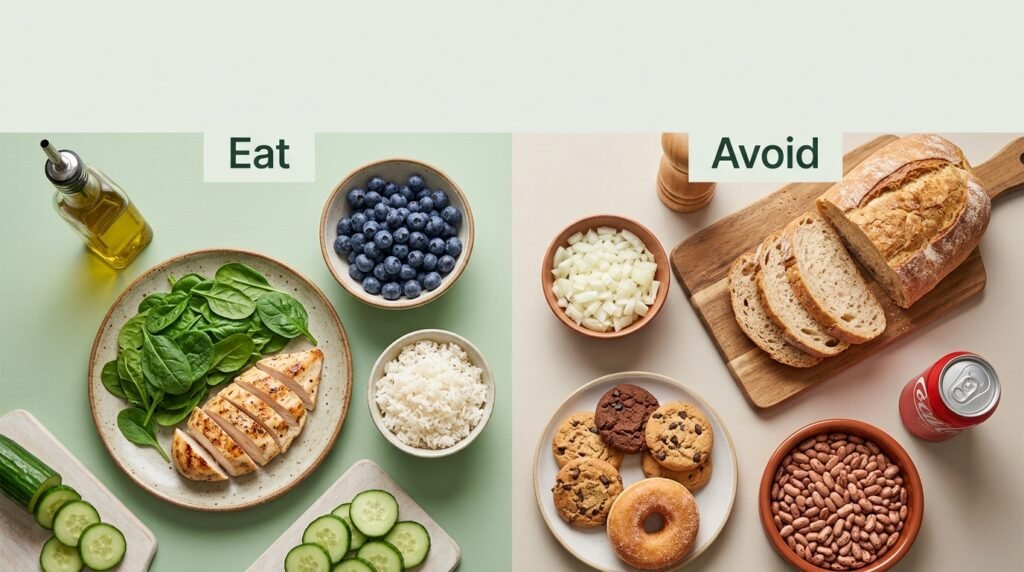
Foods to Eat on a SIBO Diet
You might feel like everything you eat causes a flare-up. But there are plenty of delicious, safe foods you can enjoy.
Low-FODMAP Vegetables
FODMAPs are specific types of carbohydrates that are hard to digest. You want to stick to vegetables that are low in FODMAPs.
- Zucchini
- Spinach
- Cucumbers
- Bell peppers
Lean Proteins
Bacteria don’t ferment protein, making it one of the safest food groups for SIBO.
- Chicken
- Turkey
- Eggs
- Fish
Healthy Fats
Fats are also safe and won’t feed the bacteria. Just don’t overdo it if you struggle with fat digestion.
- Olive oil
- Coconut oil
- Avocados (in moderation)
Low-Sugar Fruits
Many fruits are packed with fermentable sugars. Stick to these lower-sugar options.
- Strawberries
- Blueberries
- Kiwi
Lactose-Free or Dairy Alternatives
Lactose is a sugar found in milk, and it is a favorite food for gut bacteria.
- Lactose-free yogurt
- Almond milk
- Coconut milk
Easy-to-Digest Grains and Starches
Whole grains are usually healthy, but the fiber can trigger SIBO symptoms. Easy-to-digest starches are better.
- White rice
- Oats
- Quinoa (in moderation)
Foods to Avoid With SIBO
To stop the bloating, you have to stop feeding the bacteria. Here are the main foods to temporarily cut out.
High-FODMAP Vegetables
These veggies are highly fermentable and will quickly cause gas build-up.
- Onions
- Garlic
- Cauliflower
- Mushrooms
Sugary Foods and Sweeteners
Sugar is fast food for bacteria. You want to avoid it as much as possible.
- Candy
- Soft drinks
- High-fructose corn syrup
Certain Dairy Products
Remember, lactose is a sugar. Regular dairy is a big trigger for SIBO symptoms.
- Milk
- Soft cheeses
- Ice cream
Beans and Legumes
Beans are famous for causing gas in healthy people. For someone with SIBO, they are a recipe for disaster.
- Lentils
- Chickpeas
- Black beans
Processed and Fried Foods
These foods are hard on your digestive tract and can slow down your gut motility.
- Fast food
- Packaged snacks
Wheat and Refined Carbohydrates
Wheat contains fructans, which are highly fermentable carbohydrates.
- White bread
- Pastries
- Pasta
Best Diets for SIBO
There isn’t just one “perfect” SIBO diet. Different approaches work for different people. Here are the most common options.
Low-FODMAP Diet
This is the most commonly recommended approach. Developed by Monash University, it restricts specific fermentable carbs for a few weeks to calm symptoms.
Specific Carbohydrate Diet (SCD)
The SCD restricts difficult-to-digest carbs, including all grains, most dairy, and starchy vegetables. It is strict but highly effective for stubborn symptoms.
Elemental Diet
This is a temporary liquid nutrition approach. According to the Cleveland Clinic (2025), the formula is pre-digested, meaning your body absorbs it before it reaches the bacteria. It is highly effective but difficult to stick to.
Bi-Phasic SIBO Diet
Created by Dr. Nirala Jacobi, this diet combines an elimination phase to starve bacteria with a carefully structured reintroduction phase.
Sample 1-Day SIBO Diet Meal Plan
Wondering what a day of eating actually looks like? Here is a simple guide.
Breakfast
Scrambled eggs cooked in olive oil with a side of fresh strawberries and a small bowl of oatmeal.
Lunch
Grilled chicken salad with spinach, cucumbers, and a simple olive oil and lemon dressing.
Dinner
Baked salmon with a side of white rice and roasted zucchini.
Snacks
A handful of macadamia nuts or a hard-boiled egg.
Tips for Following a SIBO Diet
Changing how you eat is tough. These simple habits can make a huge difference in how you feel.
Eat Smaller Meals
Large meals put extra stress on your digestive system. Eating smaller portions helps your body digest food fully.
Avoid Snacking Too Often
Your gut needs a break between meals to sweep out leftover food and bacteria. Try to wait 3 to 4 hours between meals.
Stay Hydrated
Water helps keep food moving through your digestive tract. Drink plenty of water between your meals.
Keep a Food Journal
Everyone reacts to foods differently. Write down what you eat and how you feel to spot your personal triggers.
Reintroduce Foods Slowly
You shouldn’t stay on a strict diet forever. Once you feel better, test out small amounts of restricted foods to see what you can tolerate.
Foods That May Trigger SIBO Symptoms
Even some “healthy” foods can cause problems if they ferment in your gut. Watch out for these common triggers.
Gas-producing foods like cabbage and Brussels sprouts can cause immediate pain. Artificial sweeteners (like sorbitol and xylitol) are notoriously hard to digest.
Alcohol and carbonated beverages also irritate the gut lining and introduce extra gas into your system.
Can Diet Alone Cure SIBO?
Diet is incredibly powerful for symptom relief. But can it actually cure SIBO? Usually, no.
A diet simply starves the bacteria temporarily. To truly fix the issue, you have to treat the underlying causes.
This usually means working with a doctor to use pharmaceutical antibiotics or herbal antimicrobial treatments. Combining your diet with medical guidance is the best way to kick SIBO for good.
Common Mistakes on a SIBO Diet
Navigating gut health can be confusing. Here are a few traps you should try to avoid.
Restricting foods for too long can actually harm your long-term gut health. Your microbiome needs diversity to thrive.
Not eating enough nutrients is another big risk. If you cut out too many foods, you might miss out on essential vitamins.
Ignoring symptom tracking makes it impossible to know what is actually working. And finally, self-diagnosing without testing can lead you to treat the wrong problem entirely.
Frequently Asked Questions
What foods should you avoid with SIBO?
Avoid high-FODMAP foods that ferment easily in the gut. This includes onions, garlic, apples, beans, wheat, and lactose-heavy dairy products.
Are eggs good for SIBO?
Yes, eggs are a fantastic food for SIBO. They are purely protein and fat, meaning they contain no carbohydrates for gut bacteria to ferment.
Can you eat rice on a SIBO diet?
White rice is generally well-tolerated on a SIBO diet. It is an easy-to-digest starch that usually gets absorbed before bacteria can feed on it.
Is coffee allowed with SIBO?
Black coffee is usually fine for most people with SIBO. However, you should avoid adding regular milk or artificial sweeteners, which can trigger symptoms.
How long should you follow a SIBO diet?
A strict SIBO diet is short-term, usually lasting 2 to 6 weeks. After symptoms improve, you should slowly reintroduce foods to maintain a healthy, diverse microbiome.
When to See a Doctor or Dietitian
Diet changes are a great start, but they aren’t a replacement for professional help.
If you have severe digestive symptoms that disrupt your daily life, it is time to get tested. You should also seek help if you experience unexplained weight loss or nutritional deficiencies.
Persistent bloating despite dietary changes is a clear sign that you need a more targeted medical treatment plan.
Taking Your Next Steps
Managing SIBO can feel overwhelming at first. But by learning which foods to eat and which to avoid, you can drastically reduce your bloating and pain.
Remember, the goal is to calm your symptoms down so you can treat the root cause. A highly restrictive diet isn’t meant to last forever.
If you are struggling to figure out your triggers, don’t do it alone. Reach out to a registered dietitian or a gastroenterologist to build a plan that works specifically for your body.
Meta data
Meta title
SIBO Diet: Foods to Eat and Avoid for Better Gut Health
Meta description