Quick answer: An at-home SIBO test is a non-invasive breath test that measures hydrogen, methane, and sometimes hydrogen sulfide gases to diagnose Small Intestinal Bacterial Overgrowth (SIBO). You simply follow a strict prep diet, drink a sugar solution, collect breath samples into specialized tubes over two to three hours, and mail the kit to a lab for analysis.
Do you feel bloated every time you eat? Are you struggling with unpredictable bowel habits that just won’t go away?
You might be dealing with a gut issue called SIBO. Getting a diagnosis used to mean spending hours at a clinic, but today, you can easily test for it right from your living room.
At-home SIBO testing has become incredibly popular because it is convenient, private, and highly effective. By capturing the gases your gut bacteria produce, these simple kits can tell you exactly what is happening inside your digestive tract.
Ready to figure out what is causing your gut distress? Let’s dive into how these tests work and what you need to know before taking one.
What Is SIBO?
SIBO stands for Small Intestinal Bacterial Overgrowth.
Your large intestine is supposed to be packed with bacteria. But your small intestine should be relatively clear. When bacteria from your colon sneak up into your small intestine and multiply, you have SIBO.
These misplaced microbes feast on the food you eat. As they eat, they ferment your food and produce uncomfortable gases, which wreak havoc on your digestion.
Common causes of SIBO include slow gut motility, low stomach acid, or structural issues like surgical adhesions.
Common Symptoms of SIBO
How do you know if these bacteria have crashed the party? Look out for these common warning signs.
Bloating and Gas
Do you look six months pregnant after eating a simple meal? Severe, painful bloating is the most common hallmark of SIBO.
Abdominal Pain
All that trapped gas stretches your intestines. This causes cramping and deep abdominal discomfort that often worsens throughout the day.
Diarrhea or Constipation
Your bathroom habits depend on the specific gases the bacteria produce. Hydrogen usually speeds things up (diarrhea), while methane slows things down (constipation).
Food Intolerances
If you suddenly cannot tolerate garlic, onions, or apples, SIBO might be to blame. These foods feed the overgrown bacteria, triggering immediate symptoms.
Fatigue and Brain Fog
Gut health heavily impacts brain health. The toxins produced by overgrown bacteria can easily cross into your bloodstream, leaving you feeling exhausted and confused.
Nutrient Deficiencies
The bacteria in your small intestine will steal your nutrients before your body can absorb them. This frequently leads to low levels of vitamin B12, iron, and magnesium.
What Is an At Home SIBO Test?
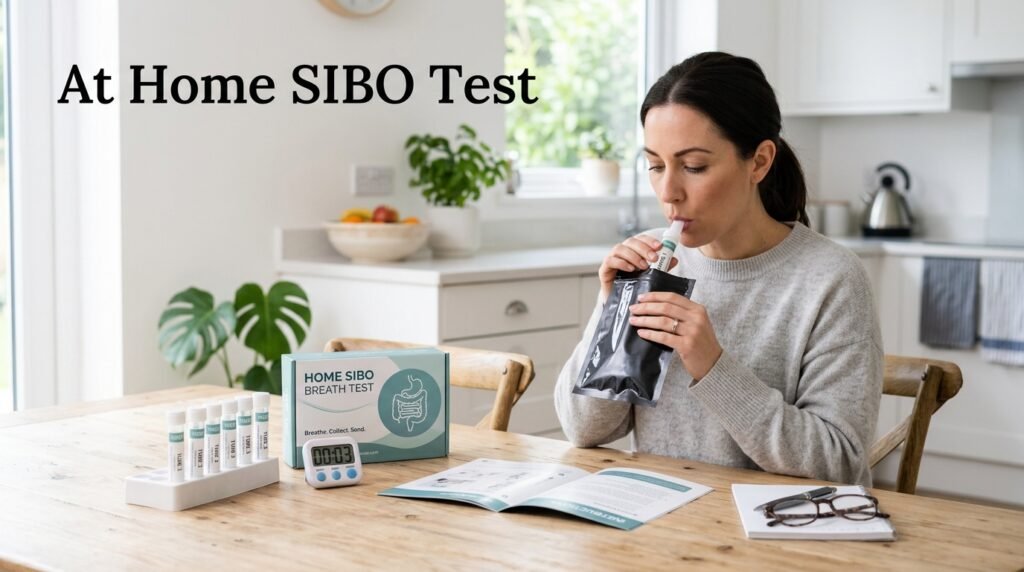
An at-home SIBO test is a medical kit that analyzes the breath you exhale.
Humans do not naturally produce hydrogen or methane gas. Only gut bacteria produce these gases. When you breathe into the test tubes, the lab measures exactly how much gas your microbes are making.
Taking the test at home is exactly the same process as doing it in a clinic. The only difference is that you collect the samples yourself on your own couch, saving you a long and boring waiting room visit.
How Does an At Home SIBO Test Work?
Taking a breath test is incredibly straightforward, but you must follow the instructions perfectly to get accurate results.
Preparing for the Test
Preparation is the most critical step. According to standard clinical guidelines, you must avoid antibiotics, probiotics, and gut-motility drugs for two to four weeks before testing [Fullscript, 2025].
The day before your test, you must eat a strict low-residue diet. This usually limits you to plain white rice, baked chicken or fish, eggs, and clear broth. You will then fast completely for 12 hours before starting the test.
Drinking the Test Solution
When you wake up on test day, you will take a baseline breath sample. Then, you will drink a sugary solution provided in your kit.
This drink will contain either lactulose or glucose. The sugar acts as bait for the bacteria.
Collecting Breath Samples
After drinking the sugar, you will blow into a new test tube every 15 or 20 minutes.
You will repeat this process for two to three hours. It is completely painless, but it does require you to set a timer and pay close attention to the clock.
Sending Samples to the Lab
Once you fill all the tubes, you will package them up using the provided materials.
Most kits include a prepaid shipping label. You simply drop the box in the mail, and the lab will usually email your results within a week or two.
Types of SIBO Breath Tests
Not all breath tests are identical. The sugar solution your doctor chooses can impact your results.
Lactulose Breath Test
Lactulose is a synthetic sugar that humans cannot digest. It travels through your entire small intestine, making it excellent for finding bacterial overgrowth deep in your gut.
The downside? It can sometimes move too fast and reach the large intestine too quickly, which might cause a false positive.
Glucose Breath Test
Your body absorbs glucose very quickly. This makes it highly accurate for finding bacteria at the very top of your small intestine.
However, because glucose is absorbed so fast, it often misses overgrowths located lower down in your digestive tract. Choose a lactulose test if you suspect your overgrowth is deeper in the small bowel.
Hydrogen vs Methane SIBO
Tests also look for different gases. Hydrogen gas is tightly linked to diarrhea-predominant SIBO.
Methane gas, on the other hand, causes severe constipation. Medical professionals now officially call methane overgrowth “Intestinal Methanogen Overgrowth” (IMO).
Are At Home SIBO Tests Accurate?
Yes, at-home SIBO tests are just as accurate as in-clinic tests.
However, breath testing is not perfect. A test is only as good as your preparation. If you cheat on the prep diet or fail to fast, your baseline gas levels will be too high, ruining the test.
False negatives can also happen if your overgrowth produces hydrogen sulfide, a third type of gas that older kits cannot detect.
Best At Home SIBO Test Kits
With several options on the market, how do you choose the right one?
Features to Look For
Look for a kit processed by a CLIA-certified lab. You also want a kit that provides clear, physician-reviewed results rather than confusing raw data.
Easy-to-use collection bags are also a massive plus, as they make capturing your breath much simpler.
Comparing Popular SIBO Test Kits
Most standard kits, like those from Genova Diagnostics or Commonwealth Diagnostics, measure hydrogen and methane. They generally cost between $150 and $250.
If you suspect you have hydrogen sulfide SIBO (often linked to a “rotten egg” smell and severe diarrhea), look into the Trio-Smart breath test. Trio-Smart is currently the leading kit that measures all three gases: hydrogen, methane, and hydrogen sulfide [Trio-Smart, 2025].
How to Read Your SIBO Test Results
Interpreting your results requires looking at the numbers and the timing of the gas spikes.
Positive Hydrogen Results
According to the North American Consensus guidelines, a hydrogen test is positive if your hydrogen levels rise by 20 parts per million (ppm) or more within the first 90 minutes.
Positive Methane Results
Methane rules are different. A test is positive for IMO if your methane levels hit 10 ppm or higher at any point during the test, including your fasting baseline.
Mixed Gas Results
Sometimes, both gases spike. This means you have a mixed overgrowth. Mixed cases often require a combination of treatments to clear both types of microbes.
What Normal Results Mean
If your gases stay flat and low throughout the test, you do not have SIBO. If your symptoms are still ruining your life, you might need to test for other issues like fungal overgrowth (SIFO) or large bowel dysbiosis.
What to Do After a Positive SIBO Test
A positive result gives you a clear target. Here is how you tackle it.
Speak With a Healthcare Provider
Never treat SIBO alone. Work with a gastroenterologist or a functional medicine practitioner who understands gut microbiomes to map out a clear plan.
Dietary Changes
Diet alone will not cure SIBO, but it can manage the pain. The Low FODMAP diet is the gold standard for symptom relief.
By eliminating highly fermentable carbs (like garlic, beans, and certain fruits), you stop feeding the bacteria and instantly reduce your bloating.
Treatment Options
Standard medical treatment involves specific, localized antibiotics like Rifaximin.
If you prefer a natural route, many doctors use potent herbal antimicrobials like berberine, oregano oil, and allicin. These herbal protocols generally take four to six weeks.
Can You Treat SIBO Naturally at Home?
You can absolutely support your gut naturally through diet, stress management, and meal spacing (waiting four hours between meals to stimulate gut cleaning).
However, trying to self-diagnose and self-treat is risky. Strong herbal antibiotics can wipe out your good bacteria if used incorrectly. Always lean on professional guidance.
When to See a Doctor
Gut symptoms can sometimes mask more dangerous conditions.
You should see a doctor immediately if you experience severe abdominal pain, unexplained weight loss, bloody stools, or chronic diarrhea that leads to dehydration. These are red flags that require urgent medical attention.
Frequently Asked Questions
Can you test for SIBO at home?
Yes. You can order a SIBO breath test kit online or through your doctor, collect your breath samples at home using the provided tubes, and mail them to a certified lab for analysis.
How accurate are at-home SIBO tests?
At-home SIBO tests are highly accurate and identical to clinic tests, provided you follow the strict preparation diet and fasting guidelines perfectly before collecting your breath samples.
What foods should you avoid before a SIBO test?
For 24 hours before your test, you must avoid all fruits, vegetables, grains, dairy, and sugars. You should only eat plain white rice, baked poultry or fish, eggs, and clear meat broth.
How long does a SIBO breath test take?
The active testing process takes between two and three hours. You will need to blow into a new test tube every 15 to 20 minutes during this timeframe.
What is the best test for SIBO?
The Trio-Smart breath test is widely considered the most comprehensive option because it is the only test that measures all three gut gases: hydrogen, methane, and hydrogen sulfide.
Why Understanding Your Test Results Matters
An at-home SIBO test is an incredible tool that puts the power of your health back in your hands. By taking the time to test your gut properly, you remove the guesswork from your digestion.
While taking the test requires a day of strict dieting and patience, finding the root cause of your bloating is entirely worth it. If you are tired of living with a painful stomach, talk to your doctor about ordering a kit. Getting that definitive answer is the very first step toward getting your life back.