Quick answer: STD testing checks for sexually transmitted infections using blood, urine, swab, or physical exams. Most sexually active adults should get tested at least once a year—more often with new or multiple partners. Many STDs have no symptoms, so testing is the only way to know your status and protect yourself and others.
Let’s talk about something most people avoid: STD testing.
It’s not the most fun topic. But it’s one of the smartest things you can do for your health. The truth is, many sexually transmitted infections show no signs at all. You could feel perfectly fine and still have one.
In fact, many people wonder whether they can have an infection without any obvious symptoms or even without having intercourse. Learn more in our guides on Can You Have an STD Without Having Intercourse? and Can You Get an STD Without Having Sex or Kissing?
That’s exactly why testing matters. Early detection means easier treatment, fewer complications, and real peace of mind. It also protects the people you care about.
This guide breaks down everything in plain language—what gets tested, when to go, what results mean, and how much it costs. Whether you’re testing for the first time or just want a refresher, you’ll find clear, honest answers here.
What Is STD Testing?
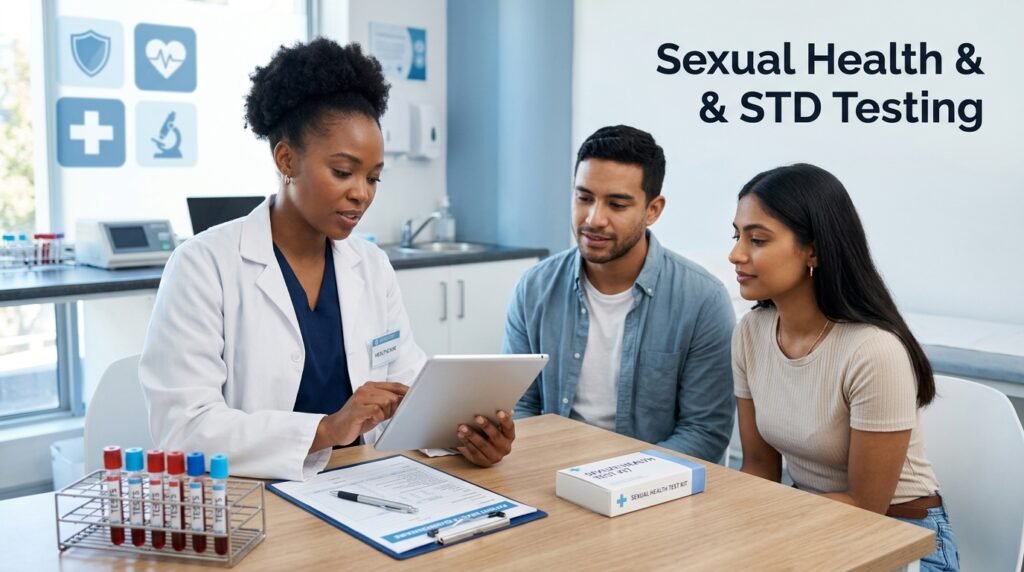
STD testing is a simple way to check if you have a sexually transmitted infection. A healthcare provider takes a sample—usually blood, urine, or a swab—and checks it for signs of infection.
That’s really all there is to it.
Understanding Sexually Transmitted Diseases (STDs)
STDs are infections that spread through sexual contact. This includes vaginal, anal, and oral sex. Some can also pass through skin-to-skin contact or shared needles.
They’re caused by bacteria, viruses, or parasites. The good news? Many are curable, and almost all are manageable with the right care.
STD vs. STI: What’s the Difference?
An STI (sexually transmitted infection) means a germ has entered your body. An STD (sexually transmitted disease) means that infection has started causing symptoms or damage.
In short: every STD starts as an STI. Doctors now lean toward “STI” because not every infection turns into a disease. But most people still say “STD,” so we’ll use both here. If you’re still confused by the terminology, check out our detailed comparison of STI vs. STD for examples and medical definitions.
How STD Testing Works
You visit a clinic, doctor, or use an at-home kit. You give a sample. A lab checks it. You get your results.
Some tests are quick. Others take a few days. We’ll cover timelines later in this guide.
Why STD Testing Is Important
Skipping testing can lead to problems you never saw coming. Here’s why it’s worth your time.
Preventing Complications
Untreated STDs can cause serious damage. Chlamydia and gonorrhea, for example, can lead to infertility if ignored. Syphilis can harm your heart and brain over time.
Catching these early usually means a simple fix.
Protecting Partners
If you have an infection and don’t know it, you can pass it on. Testing helps you avoid spreading something without meaning to. Prevention remains the most effective strategy. Read our guide on How to Stay Safe for practical ways to reduce your risk.
Reducing Community Transmission
When more people test and treat, infections spread less. Your choice helps your whole community stay healthier.
Peace of Mind and Early Treatment
Wondering “what if?” is stressful. A test gives you a clear answer. And if something does come up, you can start treatment right away.
Who Should Get Tested for STDs?
Sexually Active Adults
If you’re having sex, regular testing is a smart habit. Once a year is a good baseline for most people.
Individuals with Multiple Partners
More partners means higher risk. If this is you, test every 3 to 6 months.
Pregnant Women
Testing during pregnancy protects both mom and baby. Some infections can pass to the child during birth, so this step really matters.
Men Who Have Sex with Men (MSM)
Health experts recommend more frequent testing for this group—often every 3 to 6 months—due to higher risk for certain infections like HIV and syphilis.
People with Symptoms
Notice something off? Unusual discharge, sores, burning, or itching? Get tested right away.
Individuals with a Previous STD Diagnosis
Had an STD before? You can get it again. Retesting after treatment is a good idea.
Common STDs That Can Be Tested For
Here are the infections most tests look for.
- Chlamydia — Very common and often silent. Easily cured with antibiotics.
- Gonorrhea — Bacterial and curable, but can cause damage if ignored.
- Syphilis — Treatable with antibiotics, dangerous if left alone.
- HIV — Not curable, but very manageable with modern medicine.
- Herpes (HSV-1 & HSV-2) — A lifelong virus that can be controlled with treatment.
- HPV (Human Papillomavirus) — Extremely common. Some types can lead to cancer, which is why screening matters.
- Hepatitis B — A liver infection that’s preventable with a vaccine.
- Hepatitis C — Affects the liver and is now curable with newer drugs.
- Trichomoniasis — A parasite infection that’s easy to treat.
Signs and Symptoms of STDs
Symptoms vary a lot. Some are obvious. Others are easy to miss. Some people mistake STD symptoms for other health conditions. For example, urinary tract infections and early pregnancy symptoms can sometimes overlap, which we explain in Early Signs of Pregnancy vs. UTI.
Common Symptoms in Men
- Discharge from the penis
- Burning while peeing
- Sores or bumps on the genitals
- Pain or swelling in the testicles
Common Symptoms in Women
Women may experience symptoms differently than men, and some early warning signs can be easy to overlook. For a more detailed breakdown of what to watch for, read our guide on Early STD Symptoms in Women.
- Unusual vaginal discharge
- Burning during urination
- Itching or irritation
- Pain during sex or bleeding between periods
Asymptomatic Infections
Here’s the tricky part: many STDs cause no symptoms at all.
You could feel completely normal and still carry an infection. That’s why you can’t rely on how you feel. Testing is the only sure way to know.
Types of STD Tests
Different infections call for different tests. Here are the main ones.
Blood Tests
Used for HIV, syphilis, hepatitis, and sometimes herpes. A small sample is drawn from your arm.
Urine Tests
Common for chlamydia and gonorrhea. You simply pee in a cup. Easy and painless.
Swab Tests
A cotton swab collects a sample from the genitals, throat, rectum, or a sore. Quick and only mildly uncomfortable.
Physical Examinations
A doctor checks for visible signs like warts, sores, or rashes. Often paired with other tests.
Herpes testing deserves special attention because different tests have varying levels of accuracy and timing requirements. You can learn more in our guide to HSV Test Kits and our review of the Best At-Home Herpes Test Kits.
When Should You Get Tested?
Timing matters more than you might think. Here’s when to book a test.
After Unprotected Sex
If a condom broke or you skipped one, testing is a smart move. For a detailed overview, read How Soon After Unprotected Sex Can I Get Tested for STDs?
After a New Sexual Partner
Starting something new? Both partners getting tested is a healthy first step. Many people are unsure whether certain sexual activities carry a risk of infection. If you have questions about specific situations, read Can You Get an STD from a Handjob? and Can You Have an STD Without Having Intercourse?
Routine Screening Recommendations
Even with no symptoms, yearly testing is wise for sexually active adults. The ideal testing schedule depends on factors such as age, sexual activity, relationship status, and overall risk level. Learn more in How Often to Get Tested for STDs, where we break down testing recommendations for different groups.
Testing After Potential Exposure
Think you may have been exposed? Don’t wait for symptoms. But timing matters here too—which brings us to window periods.
STD Testing Window Periods
A “window period” is the time between exposure and when a test can detect the infection. Test too early, and you might get a false negative.
HIV Testing Window Period
Most tests detect HIV within 2 to 6 weeks. Some early tests work sooner, but a follow-up at 3 months gives the clearest result.
Chlamydia Testing Window Period
You can usually test 1 to 2 weeks after exposure.
Gonorrhea Testing Window Period
Similar to chlamydia—about 1 to 2 weeks.
Syphilis Testing Window Period
This one takes longer. Wait 3 to 6 weeks for an accurate result.
Herpes Testing Window Period
If you have a sore, a swab test works right away. Blood tests may take 4 to 12 weeks to show antibodies.
At-Home STD Testing vs. Clinic Testing
Both options work. The right one depends on your needs.
Benefits of At-Home STD Tests
- Total privacy
- Test on your own schedule
- No waiting rooms
- Discreet packaging
Advantages of Professional Testing
- A doctor can answer questions on the spot
- Treatment can start immediately
- Wider range of tests available
Accuracy Comparison
Reliable at-home kits use the same labs as clinics. The main risk with home tests is collecting the sample wrong, which can affect results.
Privacy Considerations
At-home kits offer the most privacy. But clinics keep your information confidential too. Choose what feels right for you.
How Accurate Are STD Tests?
Modern STD tests are highly accurate—but no test is perfect. Testing too early is one of the most common reasons for inaccurate results, especially with herpes testing. Our guide on Best At-Home Herpes Test Kits explains how timing can affect test performance.
Understanding False Positives
A false positive says you have an infection when you don’t. It’s rare, but it happens. A second test usually clears things up.
Understanding False Negatives
A false negative says you’re clear when you’re not. This often comes from testing too early, before the window period ends.
Factors Affecting Accuracy
- Testing too soon after exposure
- Poor sample collection
- The type of test used
When in doubt, retest. It’s always worth the peace of mind.
How to Prepare for an STD Test
A little prep goes a long way. Here’s what to know.
Before a Blood Test
No special prep needed in most cases. Just stay hydrated to make the draw easier. If you’re wondering whether routine blood work can detect sexually transmitted infections, see our guide Will Blood Work Show STDs?
Before a Urine Test
Try not to pee for at least 1 hour before. A first-morning sample often works best.
Before a Swab Test
Avoid using creams, douches, or medications in the area for 24 hours before, since these can affect results.
Understanding Your STD Test Results
Got your results back? Here’s how to read them.
Positive Results
Will an STD Go Away on Its Own? One of the biggest misconceptions is that infections will simply disappear without treatment. A positive means an infection was found. Don’t panic. Most STDs are treatable, and many are fully curable. Your provider will guide you on next steps.
Negative Results
A negative means nothing was detected. Just make sure you tested after the window period for accurate results. Receiving a negative result can be reassuring, but it’s not always the end of the story. If you’ve recently been exposed or are still concerned about symptoms, read STD Test Negative But Still Worried? to understand when retesting may be necessary.
Inconclusive Results
Sometimes a test can’t give a clear answer. This usually just means you need to test again.
When Retesting Is Recommended
Retest if you tested too early, got an unclear result, or had new exposure since your last test.
What Happens If You Test Positive?
A positive result isn’t the end of the world. Here’s your game plan.
Treatment Options
Bacterial STDs like chlamydia and gonorrhea are cured with antibiotics. Viral ones like HIV or herpes are managed with daily medication. Either way, treatment helps you stay healthy.
Informing Sexual Partners
It’s an awkward conversation, no doubt. But telling recent partners lets them get tested too. Some clinics can even notify partners for you, anonymously.
Preventing Reinfection
Finish all your medication. Avoid sex until treatment is done. And make sure your partner gets treated too—otherwise you can pass it back and forth.
Follow-Up Testing
Some infections need a follow-up test to confirm they’re gone. Your provider will let you know if this applies.
STD Testing Costs and Insurance Coverage
Average Testing Costs
Costs vary widely. A single test might run $50 to $100. A full panel can cost more. At-home kits often range from $50 to $200.
Insurance Coverage
Many insurance plans cover STD testing, especially routine screening. Check with your provider to see what’s included.
Free and Low-Cost Testing Options
Plenty of clinics offer free or sliding-scale testing. Community health centers and organizations like Planned Parenthood are great places to start.
Frequently Asked Questions
When Should You Get an STD Check?
You should get an STD check after unprotected sex, when starting a new relationship, if you develop symptoms such as unusual discharge or sores, or as part of routine sexual health care. Because many sexually transmitted infections cause no symptoms, regular testing is often the best way to protect your health and your partners.
For a complete guide on testing timelines, types of tests, costs, and what to expect during screening, read our full article: STD Check: What to Expect, When to Get Tested, and How It Works.
How often should I get tested for STDs?
At least once a year if you’re sexually active. Every 3 to 6 months if you have multiple partners or fall into a higher-risk group.
Can I get tested without symptoms?
Yes—and you should. Many STDs have no symptoms, so testing is the only way to know your status.
Can I Get Tested During My Period?
Yes, in many cases you can. Read our complete guide on Can You Get STD Tested on Your Period?
Are at-home STD tests reliable?
Yes, when you use a trusted brand and collect the sample correctly. Good kits use the same labs as clinics.
How long do results take?
It depends. Some rapid tests give answers in minutes. Lab-based tests usually take a few days.
Can STDs be cured?
Bacterial STDs like chlamydia, gonorrhea, and syphilis are curable. Viral ones like HIV and herpes aren’t curable, but they’re very manageable.
Can STDs go away on their own?
No. Don’t count on it. Even if symptoms fade, the infection often stays and can cause damage. Always get treated.
Does insurance cover STD testing?
Often, yes. Many plans cover routine screening. Check your specific policy to be sure.
Can I test too early after exposure?
Yes. Testing before the window period ends can give a false negative. When in doubt, retest later.
What If Someone Gave Me an STD Knowingly?
Legal options vary by location. For a detailed overview, read our guide: Can You Sue Someone for Giving You an STD?
Your Health Is Worth the Test
Here’s the bottom line: STD testing is quick, simple, and one of the kindest things you can do for yourself and your partners.
Many infections hide without symptoms. Regular testing is the only way to stay in the know. Catch things early, and treatment is usually easy.
So make testing a normal part of your routine—just like a dental checkup. If you’re unsure where to start or what to test for, talk to a healthcare provider. They’ve heard it all, and they’re there to help.
Your health matters. Take the test.