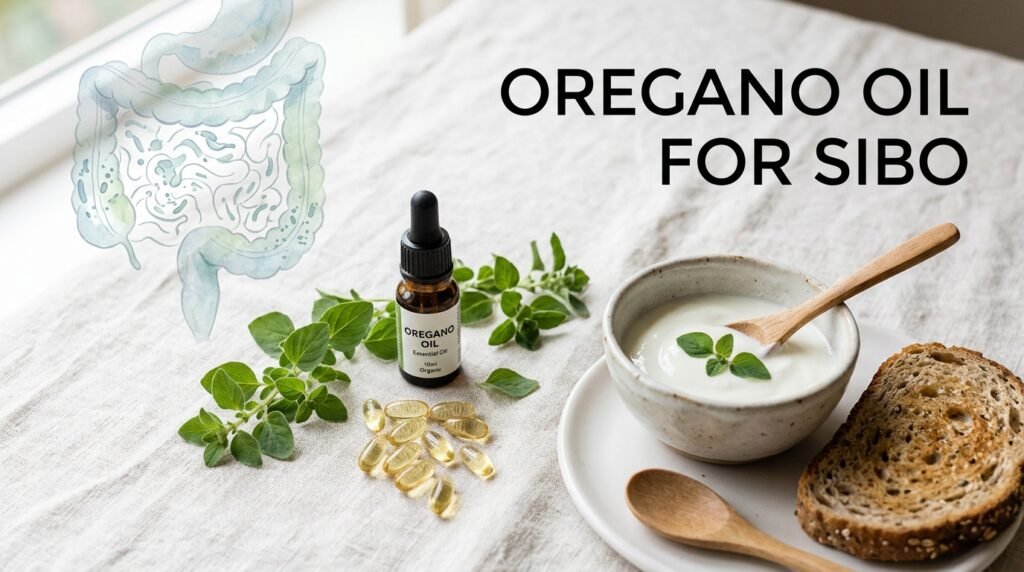
Quick answer: Yes, oregano oil can be an effective herbal treatment for Small Intestinal Bacterial Overgrowth (SIBO). A 2014 Johns Hopkins study found that herbal therapies, including oregano oil, had a 46% success rate in treating SIBO, compared to a 34% success rate for the common antibiotic Rifaximin. A typical protocol involves taking 100 mg of enteric-coated oregano oil capsules three times daily for 4 to 6 weeks.
Dealing with constant bloating, gas, and unpredictable bowel movements can make daily life incredibly frustrating. If you have been diagnosed with SIBO, you know exactly how exhausting these symptoms can be.
Many people turn to traditional antibiotics to clear out the stubborn bacteria causing their distress. But what if there was a natural alternative that worked just as well, if not better?
That is where herbal antimicrobials come into the picture. Oregano oil has quickly become a go-to remedy for gut healing. But before you start taking it, you need to understand how it works, the right way to take it, and the risks involved.
Let’s break down exactly how you can use oregano oil to take back control of your digestion.
What exactly is SIBO (Small Intestinal Bacterial Overgrowth)?
Your small intestine is where most of your food gets digested and absorbed. Normally, it contains very few bacteria.
SIBO happens when bacteria from your large intestine migrate upwards and set up camp in your small intestine. Once they are there, they feast on the food you eat.
This causes the bacteria to ferment sugars and starches, creating a huge amount of gas. That gas leads to severe bloating, abdominal pain, diarrhea, or constipation.
What is oregano oil and how does it work?
Oregano oil comes from the leaves of the oregano plant (Origanum vulgare). It is not the same stuff you sprinkle on a pizza.
This powerful oil contains high levels of active compounds, mainly carvacrol and thymol. These compounds act as a natural defense system against harmful microbes.
Carvacrol, in particular, is an aggressive antimicrobial. It essentially punctures the cell walls of harmful bacteria, causing them to leak and die off.
Can oregano oil actually help treat SIBO?
Absolutely. Oregano oil is highly respected in the functional medicine world for its ability to clear out bacterial overgrowth.
A landmark 2014 study from Johns Hopkins University compared herbal therapies to the standard SIBO antibiotic, Rifaximin. The researchers found that herbal treatments (which heavily featured oregano oil) successfully cleared SIBO in 46% of patients. Rifaximin only cleared it in 34% of patients.
Because it works so well, oregano oil is a staple in most herbal SIBO protocols.
What are the main benefits of oregano oil for SIBO?
Oregano oil does not just kill bacteria. It offers a few different benefits for a struggling gut.
Targeting harmful gut bacteria
As a strong antibacterial agent, oregano oil wipes out the specific types of bacteria that cause SIBO. It is especially effective against hydrogen-producing bacteria.
Reducing gut inflammation
Bacterial overgrowth damages the lining of your intestines. Oregano oil contains antioxidants that help calm this inflammation, giving your gut tissue a chance to heal.
Possible impact on yeast overgrowth
Many people with SIBO also have Candida (yeast) overgrowth. The carvacrol in oregano oil is a potent antifungal, meaning it can tackle both bacterial and fungal issues at the same time.
Reduction in bloating and gas
By reducing the number of fermenting bacteria in your gut, oregano oil directly targets the root cause of your symptoms. Fewer bacteria means less gas, which means less bloating.
How should you use oregano oil for SIBO?
Taking oregano oil incorrectly can do more harm than good. Here is how to use it safely and effectively.
Enteric-coated capsules vs essential oil drops
Never swallow pure oregano essential oil drops. They can burn your esophagus and stomach lining.
Instead, choose enteric-coated capsules. The special coating ensures the pill survives your stomach acid and dissolves exactly where it needs to: your small intestine.
General usage guidelines
According to the protocols used in clinical studies, a standard dosage is 100 mg of oregano oil taken three times per day. Always do this under the supervision of a qualified health practitioner.
Typical cycles and breaks in treatment
Do not take oregano oil forever. Most practitioners recommend a 4 to 6-week treatment cycle.
If you take it for longer than 6 to 10 weeks, you risk killing off the good, necessary bacteria in your large intestine.
With food vs. an empty stomach considerations
You should always take oregano oil capsules with meals. Taking them on an empty stomach can lead to severe heartburn and nausea.
How do you choose the best oregano oil supplement?
Not all supplements are created equal. When shopping for oregano oil, look for a product that clearly lists its carvacrol content.
You want a supplement standardized to contain at least 55% to 85% carvacrol. Also, ensure the product undergoes third-party testing for purity so you are not consuming unwanted fillers or heavy metals.
How does oregano oil compare to antibiotics like Rifaximin?
Rifaximin is the most common pharmaceutical prescribed for SIBO. It stays localized in the gut and is generally very safe.
However, Rifaximin can be incredibly expensive, sometimes costing thousands of dollars without insurance. Furthermore, bacteria can eventually build resistance to single-compound antibiotics.
Oregano oil is a fraction of the cost. Because it contains multiple complex plant compounds, bacteria struggle to build resistance to it. But herbal therapy usually takes a bit longer to work—about 4 to 6 weeks, compared to 2 weeks for antibiotics.
What are the possible side effects of oregano oil?
Even natural treatments have side effects. You need to be prepared for how your body might react.
Stomach irritation
High doses can cause general digestive irritation.
Heartburn or nausea
If you take a capsule that isn’t enteric-coated, or if you take it without food, you will likely experience strong heartburn or nausea.
Die-off symptoms (Herxheimer reaction)
When large numbers of bacteria die rapidly, they release toxins. This triggers a “die-off” reaction. For the first week or two, your bloating, gas, and fatigue might actually get worse before they get better.
Long-term safety considerations
Long-term use wipes out your beneficial microbiome. Stick strictly to the 4 to 6-week protocol.
Who should completely avoid taking oregano oil?
Oregano oil is very potent. Pregnant or breastfeeding women should strictly avoid it.
Do not give oregano oil to children or infants. If you are taking medications like lithium or diuretics, consult your doctor, as oregano oil can cause negative interactions.
How does oregano oil fit into a full SIBO treatment plan?
Taking a pill will not fix SIBO forever. You need a comprehensive approach to keep the bacteria from coming back.
Combined with diet changes
While taking antimicrobials, you need to starve the bacteria. A low-FODMAP or Bi-Phasic diet removes the fermentable carbohydrates that feed the overgrowth.
Gut motility support
SIBO often happens because your gut movements (motility) are too slow. Taking a prokinetic supplement (like ginger extract) keeps food moving downward, preventing relapse.
Use with other herbal antimicrobials
Oregano oil works best when paired with another herb. Practitioners often combine it with Allicin (from garlic) for methane-dominant SIBO, or Berberine for hydrogen-dominant SIBO.
What are the signs that oregano oil is working?
You will know the treatment is working when your daily life gets a little easier.
Look out for reduced bloating after meals. You should notice less trapped gas and less abdominal discomfort. Your bowel movements should become more regular and solid, and your daily energy levels will slowly start to bounce back.
Frequently asked questions about oregano oil for SIBO
Is oregano oil effective for SIBO?
Yes. Clinical studies show that herbal protocols containing oregano oil are as effective, if not slightly more effective, than the standard antibiotic Rifaximin for treating SIBO.
How long does oregano oil take to work for SIBO?
Most people start seeing a reduction in their symptoms within 2 to 3 weeks. A full treatment course generally takes 4 to 6 weeks to clear the bacterial overgrowth.
Can oregano oil cure SIBO?
Oregano oil can clear the bacterial overgrowth, but SIBO has a high relapse rate. To stay “cured,” you must address the root cause of your slowed digestion and use a prokinetic to keep your gut moving.
What are the side effects of oregano oil?
Common side effects include temporary heartburn, nausea, and stomach upset. You may also experience “die-off” symptoms like increased bloating and fatigue during the first week of treatment.
Should oregano oil be taken with food?
Yes. You should always take oregano oil capsules alongside a meal to prevent severe heartburn and protect your stomach lining.
When should you see a doctor about your SIBO symptoms?
Natural remedies are powerful, but they are not a replacement for medical care.
Seek professional help if you experience severe digestive pain or if your bloating and discomfort continue worsening despite treatment. Nutrient deficiencies, unexpected weight loss, or seeing no improvement after 4 weeks are all clear signs that you need a doctor’s guidance.
Next steps for your gut health
Using oregano oil for SIBO can be a massive step toward reclaiming your digestive health. It offers a well-researched, cost-effective, and natural way to clear out unwanted bacteria.
Just remember that killing the bacteria is only phase one. You must work on your diet and gut motility to ensure those microbes do not return. Always work alongside a qualified nutritionist or doctor to tailor a treatment plan specifically for your body.