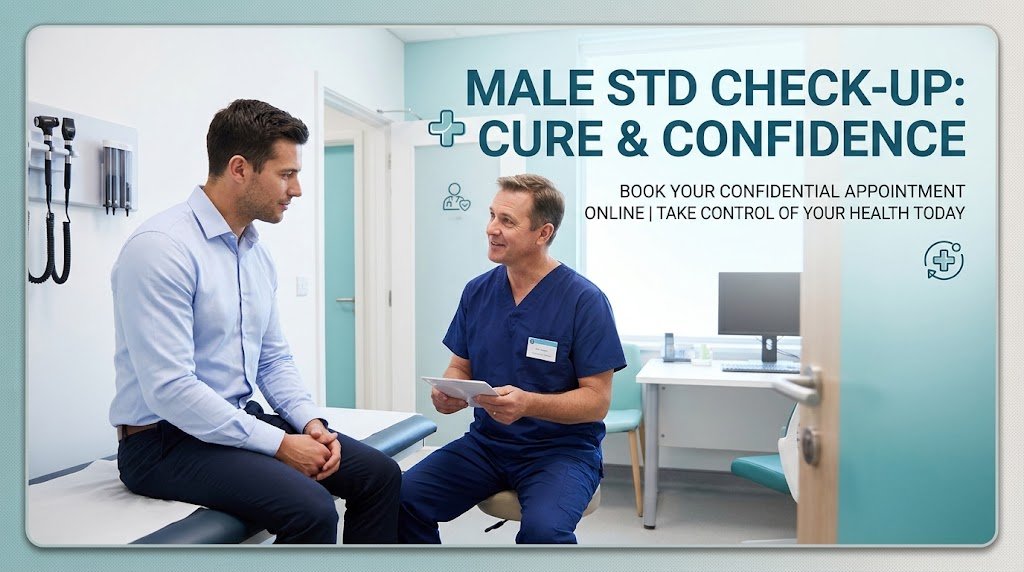
Quick answer: Most men skip STD testing because they feel fine — but many common infections, including chlamydia, HPV, and early-stage HIV, show no symptoms at all. A comprehensive male STD panel typically screens for 10 infections through a quick urine or blood sample. Modern private lab networks, like stdcheck.com, let you order online, test locally, and get results in 1-2 days, without an awkward doctor’s visit.
Let’s be honest. Getting tested for STDs isn’t on anyone’s list of fun errands. For a lot of men, it feels embarrassing. Or unnecessary. Or just… awkward to think about.
But here’s the thing. Feeling healthy and being healthy aren’t always the same thing.
Many of the most common sexually transmitted infections don’t cause any symptoms in men. No pain. No rash. No warning signs at all. The only way to actually know your status is to get screened.
This guide walks you through everything: why testing matters, what a full panel actually checks for, and how the process works from start to finish. We’ll also cover how modern, private testing options make the whole experience faster and far less stressful than you might expect.
One quick note before we dive in: this article is for general education. It doesn’t replace advice from your doctor. If you have symptoms or specific concerns, talk to a healthcare provider.
Why Regular STD Screenings Matter for Men
The “No-Symptoms” Trap
Here’s a fact that surprises a lot of guys: you can carry an infection like chlamydia or HPV for months, or even years, and never notice a thing.
Feeling fine isn’t the same as being clear. That’s what makes routine screening so important — it’s often the only way to catch something your body isn’t telling you about.
Protecting Long-Term Health
Left untreated, some infections can quietly cause bigger problems down the road. Chlamydia and gonorrhea, for example, can lead to urethritis (inflammation of the urethra, the tube that carries urine out of your body). Over time, untreated infections have also been linked to fertility issues and chronic inflammation.
Catching something early almost always means an easier, faster treatment path.
Peace of Mind in Relationships
Think of an STD check-up like a cholesterol test or an annual physical. It’s just part of taking care of yourself.
Getting tested regularly isn’t a sign that something’s wrong. It’s a sign you’re being responsible — for your own health and for anyone you’re intimate with.
What Tests Are Included in a Comprehensive Male STD Panel?
If you’ve never been tested before, the idea of a “panel” might sound confusing. Let’s simplify it.
The Standard 10-Panel Test (Recommended)
A comprehensive STD panel for men typically screens for:
- Chlamydia & Gonorrhea — usually checked with a urine sample or swab
- HIV Types 1 & 2 — checked with a blood sample
- Syphilis — checked with a blood sample
- Herpes Simplex Virus (HSV-1 & HSV-2) — the viruses responsible for oral and genital herpes
- Hepatitis B & C — viral infections that affect the liver
Some providers, including stdcheck.com, also offer an expanded 13-test panel that adds screening for Trichomoniasis, Mycoplasma Genitalium, and a set of general wellness markers for broader coverage.
Why Panel Testing Beats Single-Disease Testing
Here’s something a lot of people don’t realize: infections like to travel in pairs. If you have one STI, your risk of having another goes up.
That’s why a full panel makes more sense than testing for just one thing. One sample. One visit. Complete peace of mind, instead of wondering what you might have missed.
Traditional Clinics vs. Modern Discreet Testing
The Traditional Route (Primary Care or Public Health Clinics)
Going through your regular doctor or a public health clinic has its upsides. You get face-to-face time with a physician who knows your history.
But it comes with trade-offs, too:
- Scheduling delays — appointments can take days or weeks
- Waiting rooms, where privacy isn’t guaranteed
- The chance of running into someone you know, especially in smaller communities
The Modern Private Lab Route
This is where direct-to-consumer testing networks come in. These services let you skip the waiting room entirely.
stdcheck.com and healthlabs.com are well-known options built around exactly this kind of privacy-first, friction-free process. Here’s how it works:
- Order online. Choose a complete 10-panel test (or add-ons) in a few minutes. No appointment or doctor referral needed beforehand.
- Visit a local lab. Walk into one of thousands of certified labs across the U.S. — including trusted names like Quest Diagnostics and Labcorp. Most visits take under 15 minutes and involve a simple blood draw or urine sample. No physical exam required.
- Get fast, secure results. Your results are typically available online within 1 to 2 days. If you test positive for anything, a doctor consultation is available to talk through next steps and treatment.
Choose the private lab route if discretion, speed, and convenience matter more to you than an in-person doctor relationship. Choose the traditional clinic route if you’d rather build an ongoing relationship with a primary care provider who already knows your medical history.
What to Expect During Your Male STD Check-Up
Not knowing what’s coming is often the scariest part. So let’s remove the mystery.
Step 1: Selecting the Right Panel
You can choose a test based on specific concerns (say, a single recent exposure) or opt for the full comprehensive panel for complete coverage. When in doubt, the broader panel gives you the most peace of mind.
Step 2: The Lab Visit Experience
This part is quicker and less invasive than most people expect. For standard urine or blood-based panels, you won’t need to undress. The lab tech’s job is routine and confidential — they’re not going to ask why you’re there.
Most visits are done in well under 15 minutes.
Step 3: Understanding Your Results
A negative result means the infections tested for weren’t detected. A positive result simply means it’s time to start treatment — and the good news is, most STIs are highly treatable or manageable with modern medicine.
Either way, you’ll know where you stand, which is always better than wondering.
Frequently Asked Questions
Do I need a doctor’s order to get a male STD test?
Not if you use a private online testing network. Services like stdcheck.com or healthlabs.com include the required physician’s order as part of your purchase, so there’s no separate doctor’s visit needed beforehand.
How soon after exposure should I get tested?
This depends on the infection’s “window period” — the time it takes for a test to accurately detect it. Some infections, like chlamydia and gonorrhea, can show up within days. Others, like HIV or hepatitis, may require a few weeks to a few months for accurate antibody detection. If you’re unsure, ask a provider which timeline applies to your situation.
Will my insurance company find out about my test results?
If privacy is a top concern, choosing a private, self-pay testing option means your health insurance provider never receives an itemized claim or explanation of benefits (EOB) in the mail. Your results stay between you and your provider.
Who should get tested regularly?
Anyone who is sexually active, especially with new or multiple partners, benefits from routine screening — even without symptoms. Annual testing is a reasonable baseline for most sexually active men, with more frequent testing recommended after new partners or unprotected contact.
Take the First Step Today
Your sexual health is just one part of your overall wellness, but it’s not one to ignore. Routine screening isn’t about assuming something’s wrong. It’s about knowing for sure, instead of guessing.