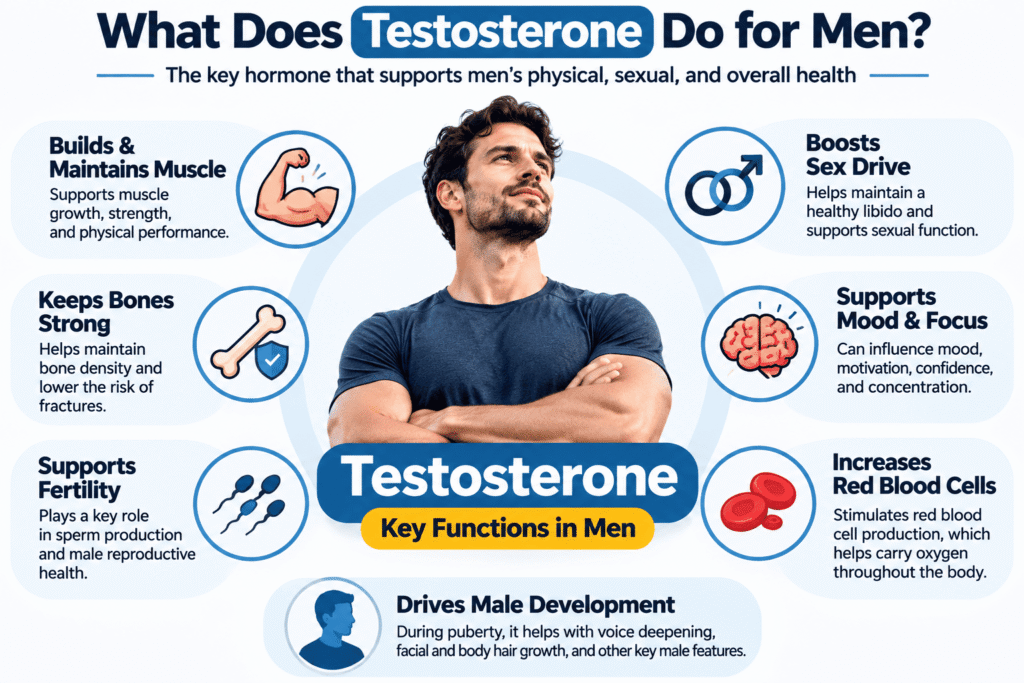
Quick answer: Testosterone is the main male sex hormone. It drives sex drive, sperm production, muscle mass, bone strength, red blood cell production, and plays a role in mood and energy. It’s critical during puberty, but it keeps working behind the scenes for the rest of a man’s life, affecting nearly everything from how he builds muscle to how he feels day to day.
If you’ve ever wondered why testosterone gets so much attention, it’s because this one hormone touches so many parts of a man’s health. It’s not just about sex drive, though that’s where most people’s minds go first. Testosterone also shapes your muscles, bones, mood, and even your red blood cell count.
As men get older, testosterone levels naturally start to dip. For some guys, that dip barely registers. For others, it comes with real symptoms — low energy, mood changes, less interest in sex, and a noticeable drop in strength. Knowing what testosterone actually does can help you figure out whether what you’re experiencing is a normal part of aging or something worth getting checked out.
This guide walks through how testosterone works, what it does for your body, what happens when levels drop too low, and what you can actually do about it.
What Is Testosterone and How Does It Work?
Testosterone belongs to a group of hormones called androgens. Think of it as a chemical messenger that travels through your bloodstream, telling different parts of your body what to do. It’s produced mainly in men, though women make small amounts too.
Where Is Testosterone Produced in Men?
Most of a man’s testosterone comes from the testes, specifically from cells called Leydig cells. These cells respond to signals from the brain and pump out testosterone throughout the day. A smaller amount also comes from the adrenal glands, which sit on top of your kidneys.
How Does the Body Control Testosterone Production?
Testosterone production isn’t random — it’s managed by a feedback loop between your brain and your testes. The hypothalamus, a small region in your brain, sends out a hormone that tells your pituitary gland to release luteinizing hormone (LH). LH then travels to the testes and signals them to produce testosterone. When testosterone levels get high enough, the brain senses this and slows down the signal, keeping everything in balance.
What Is the Difference Between Total and Free Testosterone?
Not all the testosterone in your blood is equally “available” for your body to use. Most of it binds to a protein called sex hormone-binding globulin (SHBG), which limits how active it can be. The portion that isn’t bound — called free testosterone — is what your tissues can actually use.
Total testosterone measures everything in your blood, bound and unbound. Free testosterone measures just the active portion. Doctors sometimes check both, especially if your total testosterone looks normal but you’re still having symptoms. You can learn more about this distinction on our page about [Free Testosterone Levels] (link).
What Does Testosterone Do for Men? 7 Main Functions
Here’s where testosterone really earns its reputation. This hormone is involved in far more than most people realize.
1. Supports Sex Drive and Sexual Function
Testosterone plays a major role in libido — your interest in sex. When levels are healthy, most men notice a steady, normal sex drive. When testosterone drops, that interest often fades too.
Testosterone also has a relationship with erectile function, though it’s not the only factor involved. Blood flow, nerve function, and mental state all play a part. So while low testosterone can contribute to erection problems, it’s rarely the sole cause.
2. Helps Build and Maintain Muscle Mass
Testosterone supports protein synthesis, the process your body uses to build muscle tissue. This is part of why men generally carry more muscle mass than women. Healthy testosterone levels help maintain lean muscle and support physical strength and performance, especially when combined with regular exercise.
3. Maintains Bone Density and Strength
Your bones are living tissue, constantly breaking down and rebuilding. Testosterone helps keep that process balanced, supporting bone mineral density. When testosterone drops too low for too long, bones can become weaker and more prone to fractures, a condition sometimes called osteoporosis in men.
4. Supports Sperm Production and Fertility
Testosterone is essential for sperm development inside the testes. This is worth noting: taking testosterone from an outside source, like testosterone replacement therapy, can actually suppress your body’s natural sperm production. That’s an important consideration for men who are hoping to have children while on testosterone therapy.
5. Influences Mood and Cognitive Function
Some research suggests testosterone may be linked to motivation, mood, and concentration, though the evidence here is more mixed than with physical effects. Some men with low testosterone report feeling flat, unmotivated, or mentally foggy. Others don’t notice much of a mood shift at all. Mood is complicated, and testosterone is just one piece of a much bigger picture.
6. Supports Red Blood Cell Production
Testosterone stimulates erythropoiesis, the process of making red blood cells, and helps maintain healthy hemoglobin levels. This is actually one reason doctors monitor blood counts closely during testosterone therapy. Too much testosterone can push red blood cell counts higher than is safe, increasing the risk of complications like blood clots.
7. Drives Male Puberty and Physical Development
During puberty, testosterone levels rise sharply and trigger many of the changes associated with becoming an adult man. This includes a deeper voice, facial and body hair growth, genital development, and a growth spurt. These changes happen gradually over several years as testosterone levels climb.
What Are the Benefits of Healthy Testosterone Levels?
When testosterone sits within a normal range, men typically experience:
- A steady, healthy sex drive
- Normal muscle mass and strength for their age
- Strong, dense bones
- Healthy sperm production and fertility
- Stable mood and energy
- Normal red blood cell counts
- Typical male physical characteristics
It’s worth being clear about something here: maintaining healthy testosterone is not the same as pushing levels above the normal range. More isn’t automatically better. The goal is balance, not maximizing a number.
What Happens When Testosterone Levels Are Low?
Low testosterone, sometimes called “low T” or hypogonadism, can show up in a few different ways.
Common Physical Symptoms of Low Testosterone
Men with low testosterone often notice a reduced sex drive, a drop in muscle mass, thinning body hair, and sometimes reduced bone density over time. These changes tend to happen gradually, which is part of why they can be easy to dismiss as “just getting older.”
Emotional and Mental Symptoms
Low mood, fatigue, and trouble concentrating are also common complaints. But these symptoms have a lot of possible causes — stress, poor sleep, depression, thyroid problems, and more. Testosterone is only one piece of the puzzle, which is why it’s worth getting properly evaluated rather than assuming testosterone is the issue.
Can Low Testosterone Cause Erectile Dysfunction?
Low testosterone can contribute to erectile dysfunction, but it’s rarely the only factor. Blood vessel health, nerve function, psychological stress, and certain medications all play a role too. If you’re dealing with ED, it’s worth looking at the full picture rather than assuming testosterone alone is to blame.
What Are Normal Testosterone Levels in Men?
Testosterone is measured in nanograms per deciliter (ng/dL). Normal ranges vary somewhat between labs, and levels naturally decline with age — a man in his 20s typically has higher testosterone than a man in his 60s.
A total testosterone level around 300 ng/dL is often used as a general clinical threshold in some guidelines, but a single number doesn’t tell the whole story. Diagnosing low testosterone requires both symptoms and consistently low results on repeated blood tests, not just one low reading. Testing is usually done in the morning, since testosterone levels are naturally highest early in the day and drop as the day goes on.
What Causes Low Testosterone in Men?
Low testosterone can stem from a number of causes, including:
- Natural aging
- Testicular disorders or injury
- Pituitary gland conditions
- Obesity
- Sleep disorders, including sleep apnea
- Chronic illnesses, such as diabetes or kidney disease
- Certain medications
- Past or current anabolic steroid use
Doctors often distinguish between primary hypogonadism, where the problem originates in the testes themselves, and secondary hypogonadism, where the issue starts in the brain’s signaling system (the hypothalamus or pituitary gland). This distinction matters because it affects how the condition is treated.
How Can Men Support Healthy Testosterone Levels Naturally?
While there’s no magic fix for boosting testosterone, a few everyday habits can support your overall hormonal health.
Get Adequate Sleep
Testosterone production is closely tied to sleep. Poor sleep, especially chronic sleep deprivation, has been linked to lower testosterone levels over time.
Maintain a Healthy Weight
Carrying excess body fat, particularly around the midsection, is associated with lower testosterone. Working toward a healthy weight can support better hormonal balance.
Exercise Regularly and Build Strength
Regular physical activity, especially resistance training, supports overall health and may help support healthy testosterone levels as part of a broader lifestyle approach.
Eat a Balanced Diet
A diet with enough protein, healthy fats, and essential nutrients supports your body’s overall hormone production. There’s no single “testosterone food” that will dramatically change your levels on its own.
Address Underlying Health Conditions
Conditions like sleep apnea, diabetes, and obesity can all contribute to low testosterone. Managing these conditions with a doctor’s help can support better hormone levels over time.
It’s worth being honest here: no food, supplement, or workout routine has been shown to dramatically raise testosterone on its own. Be cautious of products that claim otherwise.
When Should You Get a Testosterone Blood Test?
If you’re experiencing symptoms like persistent low sex drive, unexplained fatigue, loss of muscle mass, or mood changes, it may be worth talking to a doctor about testing. Testing usually involves a morning blood draw, since testosterone levels peak early in the day. Because levels can fluctuate, doctors often repeat the test to confirm results before making a diagnosis. Additional testing, like checking LH or free testosterone, may follow depending on your results.
Testosterone testing isn’t something every man needs as routine screening. It’s generally driven by symptoms, not done as a standard check-up item.
Can Testosterone Replacement Therapy Help Men With Low Testosterone?
Testosterone replacement therapy (TRT) can help men who have been medically diagnosed with hypogonadism — meaning they have both low blood levels and real symptoms. For these men, TRT may improve energy, sex drive, muscle mass, and mood.
That said, TRT isn’t without risks. It can suppress natural sperm production, affecting fertility, and it isn’t appropriate for men with certain conditions, like prostate cancer. It also requires ongoing monitoring, including blood tests to track red blood cell counts and other markers.
TRT isn’t something to pursue simply because of normal aging or a desire for better athletic performance. It’s a medical treatment for a diagnosed condition, and it should be managed closely by a doctor.
Frequently Asked Questions About Testosterone in Men
What does testosterone do for a man’s body?
Testosterone regulates sex drive, supports muscle and bone strength, drives sperm production, influences mood and energy, and supports red blood cell production. It’s also responsible for the physical changes that happen during male puberty.
Does testosterone make men stronger?
Testosterone supports muscle protein synthesis, which helps build and maintain lean muscle mass. This contributes to strength, but exercise and nutrition also play major roles in overall physical strength.
Does testosterone affect sex drive?
Yes. Testosterone is one of the main hormones driving libido in men. When levels drop, many men notice a reduced interest in sex, though other factors like stress and relationship health matter too.
What happens when a man has too much testosterone?
Excess testosterone, often from external sources like unsupervised use, can increase red blood cell counts, raise the risk of blood clots, and suppress natural testosterone and sperm production. It can also cause mood changes and other health issues.
At what age does testosterone start declining?
Testosterone levels generally start a gradual decline after age 30, dropping roughly 1% per year on average. The decline varies a lot from man to man.
Can low testosterone cause tiredness?
Yes, low testosterone can contribute to fatigue. However, tiredness has many possible causes, so it’s worth ruling out other issues like poor sleep, thyroid problems, or depression.
Does testosterone affect facial hair growth?
Yes. Testosterone, along with its more potent form DHT, plays a key role in triggering facial and body hair growth during puberty and adulthood.
How do you know if your testosterone is low?
Common signs include low sex drive, fatigue, reduced muscle mass, mood changes, and loss of body hair. A blood test, usually done in the morning, can confirm whether your levels are actually low.
Final Thoughts: Why Testosterone Matters for Men’s Health
Testosterone shapes far more than most men realize — from sex drive and muscle strength to bone health, mood, and fertility. Chasing a specific number isn’t the goal. What matters more is paying attention to your symptoms and getting properly tested if something feels off.
If you’ve been dealing with persistent symptoms like low energy, reduced sex drive, or unexplained mood changes, talk to a healthcare professional about whether testosterone testing makes sense for you. A doctor can help you figure out what’s actually going on and what, if anything, needs to change.