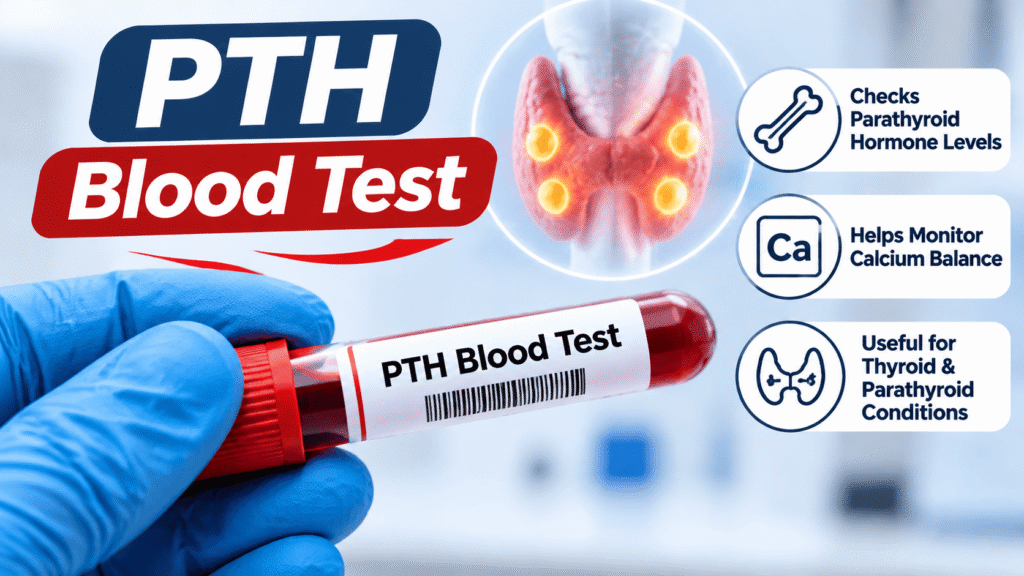
Quick answer: A PTH blood test measures parathyroid hormone, the chemical messenger that controls calcium levels in your blood, bones, and kidneys. Normal PTH levels typically fall between 10 and 65 pg/mL, though exact ranges vary by lab. Doctors order this test alongside a calcium test to investigate symptoms like fatigue, bone pain, kidney stones, or abnormal calcium results. You can order a PTH test directly through HealthLabs.com without a doctor’s referral.
Your routine metabolic panel comes back, and there it is: calcium flagged as high. Or maybe you’ve been dragging through the day with bone aches and fatigue that won’t quit, and your doctor mutters something about ordering a “PTH test” before you’ve even had time to ask what that means.
If you’re nodding along, you’re not alone. Most people have never heard of their parathyroid glands, let alone understood that these four tiny structures quietly run one of the body’s most important balancing acts. Parathyroid hormone, or PTH, doesn’t get the attention that thyroid hormone or insulin does, but it’s just as critical to how you feel day to day.
This article breaks down what a PTH blood test actually measures, what counts as a normal PTH level, what high or low PTH symptoms look like, and how to check your levels without jumping through insurance hoops. By the end, you’ll understand exactly why this hormone matters and what your next step should be.
What Is a PTH Blood Test?
The parathyroid glands are four pea-sized structures tucked behind the thyroid gland in your neck. Despite their small size, they have one job that matters enormously: keeping blood calcium levels within a tight, stable range.
Parathyroid hormone works like a thermostat for calcium. When blood calcium dips too low, the parathyroid glands release more PTH, which triggers three coordinated actions: pulling calcium out of bone storage, increasing calcium absorption in the gut, and reducing calcium loss through the kidneys. When calcium rises back to normal, PTH production slows down again.
Here’s the crucial clinical point that often gets glossed over: a PTH test should never be interpreted on its own. The same PTH number can mean completely different things depending on what your calcium level is doing at the same time. A “normal” PTH reading next to high calcium is actually abnormal, because PTH should be suppressed when calcium is elevated. That’s why doctors almost always order a PTH test and a serum calcium test together, not in isolation.
Why Do Doctors (or You) Order a PTH Test?
A PTH blood test is typically ordered to investigate one of the following situations:
- Unexplained high or low blood calcium levels found on a routine panel
- Recurrent kidney stones or unexplained loss of bone mineral density (osteoporosis)
- Persistent vitamin D deficiency that isn’t improving despite supplementation
- Monitoring chronic kidney disease (CKD), since the kidneys play a direct role in calcium regulation
- Tracking recovery after thyroid or parathyroid surgery, when the glands may be temporarily or permanently affected
If you’ve checked any of these boxes, a PTH test gives your doctor (or you) the data needed to figure out whether the parathyroid glands, your kidneys, or your vitamin D status are driving the problem.
High PTH Levels vs. Low PTH: What’s the Difference?
What causes high PTH (hyperparathyroidism)?
High PTH levels, known as hyperparathyroidism, generally fall into two categories.
Primary hyperparathyroidism happens when one or more parathyroid glands become overactive on their own, often due to a benign growth called an adenoma. Secondary hyperparathyroidism occurs when the glands are producing extra PTH to compensate for another problem, most commonly low vitamin D or declining kidney function.
High PTH symptoms often include fatigue, frequent thirst, kidney stones, bone and joint pain, constipation, and brain fog. These symptoms can be vague and easy to dismiss, which is part of why hyperparathyroidism often goes undiagnosed for years.
What causes low PTH (hypoparathyroidism)?
Low parathyroid hormone, or hypoparathyroidism, is less common and is usually the result of accidental damage to the parathyroid glands during neck or thyroid surgery.
Symptoms of low PTH include muscle cramps, tingling or numbness in the fingers and toes, muscle spasms, and dry skin. These symptoms reflect what happens when calcium drops too low without enough PTH to correct it.
What Are Normal PTH Blood Test Ranges?
Most labs report a normal intact PTH range between 10 and 65 pg/mL (picograms per milliliter). However, exact thresholds vary slightly depending on the lab and the specific assay used to run the test.
Because of this variation, always check the reference range printed directly on your lab report rather than relying on a single universal number. A result that looks borderline against one lab’s range might be perfectly normal against another’s, and your calcium level at the time of testing matters just as much as the PTH number itself.
How to Take Control: Ordering Your Own PTH Test Online
Traditionally, checking a hormone marker like PTH meant getting a specialist referral, waiting on insurance pre-approval, and then sitting on a waitlist for an appointment that might be weeks out. If you’re dealing with ongoing fatigue, bone pain, or an abnormal calcium result sitting in your inbox, that timeline can feel unbearable.
Direct-to-consumer lab testing offers a more streamlined path. It lets you bypass the referral process, order the test privately, and start monitoring your health proactively instead of waiting for the system to catch up.
If you want to evaluate your parathyroid function, check your calcium balance, or investigate persistent fatigue without waiting weeks for a doctor’s appointment, you can order testing directly through HealthLabs.com.
Why choose HealthLabs.com:
- No doctor’s visit or insurance paperwork required to place an order
- Access to thousands of CLIA-certified partner labs nationwide for fast, local blood draws
- Secure, confidential digital results typically delivered within 1-3 business days
- HSA/FSA cards accepted at checkout
Frequently Asked Questions About PTH Blood Tests
Does a PTH blood test require fasting?
Generally, no strict fasting is required for a standalone PTH test. However, if it’s bundled with a comprehensive metabolic panel or lipid panel, fasting may be necessary. Always check the specific lab prep guidelines provided with your order.
Can stress or time of day affect my PTH levels?
Yes. PTH follows a diurnal rhythm and tends to peak overnight, which is why doctors often prefer consistent morning testing to keep results comparable over time.
Is high PTH a sign of cancer?
Rarely. Parathyroid carcinomas do exist, but they’re uncommon. The vast majority of high PTH cases come from benign adenomas (primary hyperparathyroidism) or secondary responses to low vitamin D or kidney issues, not cancer.
Who should consider ordering a PTH test?
Anyone with abnormal calcium or vitamin D results, unexplained fatigue, bone or joint pain, muscle cramps, or a history of kidney stones should consider a PTH test, especially if symptoms persist despite other treatments.
Stop Guessing, Start Testing
Calcium and parathyroid balance are foundational to your energy, muscle function, and bone health. Guessing won’t resolve symptoms like unexplained fatigue or bone pain, but blood data will.