Quick answer: A herpes simplex swab test checks fluid from an active sore, blister, or ulcer for the virus’s genetic material. This PCR (polymerase chain reaction) method is the most accurate way to confirm an active herpes outbreak, with results typically ready in 1 to 3 days. It only works on a visible, open lesion — not for people without symptoms.
Finding an unexpected sore, blister, or ulcer can send your mind racing. That worry is completely normal. But here’s some reassurance: getting a clear answer is the very first step toward feeling calm and back in control.
This guide walks you through the herpes simplex swab test from start to finish. You’ll learn what it is, how it differs from a blood test, how accurate it really is, and what you can expect the moment a clinician reaches for that cotton swab.
A quick note before we start: This article is for informational purposes only. It doesn’t replace a diagnosis from your doctor or healthcare provider. If you have symptoms, please reach out to a medical professional.
What Is a Herpes Simplex Swab Test?
A herpes simplex swab test collects a small fluid sample directly from an active sore. The lab then checks that sample for signs of the herpes simplex virus (HSV).
This is different from a herpes blood test, which looks for antibodies — your immune system’s response to the virus — that can linger for weeks or months after an outbreak. A swab test, by contrast, confirms an infection that’s active right now.
When Is a Swab Test Used?
A swab test only works when you have something to swab. You’ll need a visible, active lesion, blister, or sore for your clinician to sample.
This is the key difference from blood testing:
- Swab test: Requires an active lesion. Detects the virus itself, in real time.
- Blood test: Works anytime, even without symptoms. Detects antibodies built up over time.
If your sore has already healed, a swab won’t be useful. Your doctor may recommend a type-specific IgG blood test instead.
Distinguishing HSV-1 and HSV-2
One swab sample can tell you which type of herpes simplex virus you’re dealing with. The lab examines the viral genetic material and separates it into two categories: HSV-1 (most often linked to oral cold sores) and HSV-2 (most often linked to genital herpes). Either type can appear in either location, so this distinction matters for understanding your specific case.
HSV PCR Swab Test vs. Viral Culture: What’s the Difference?
Labs use two main methods to analyze a herpes swab. One is considered far superior today.
The Polymerase Chain Reaction (PCR) Test — The Modern Gold Standard
PCR stands for polymerase chain reaction, a lab method that detects the virus’s DNA (its genetic blueprint) in your sample. Think of it like a photocopier: PCR technology makes millions of copies of any tiny trace of viral DNA, making it detectable even in minuscule amounts.
Choose PCR testing if accuracy and speed matter most to you — and for most people, they do. Here’s why PCR has become the preferred method:
- Faster results. Turnaround is typically 1 to 3 business days.
- Far more sensitive. PCR catches the virus even when very little is present.
- More reliable overall. It’s less likely to miss an infection that’s actually there.
The Traditional Viral Culture Test
A viral culture is the older method. It involves taking your sample and attempting to grow the virus in a lab setting over several days.
This approach works well on fresh, moist lesions. But its sensitivity drops significantly once a sore starts healing or scabbing over. Because of this limitation, viral culture testing for herpes simplex has largely been replaced by PCR in most modern labs.
What to Expect During the Procedure
Not knowing what will happen is often the hardest part. Let’s remove that uncertainty.
Preparing for the Appointment
You don’t need any special medical preparation for this test. No fasting, no medication changes.
The one essential requirement: you need a visible sore, blister, or ulcer for the clinician to sample. Try to get tested as soon as you notice a new lesion, while it’s still fresh.
The Swabbing Process
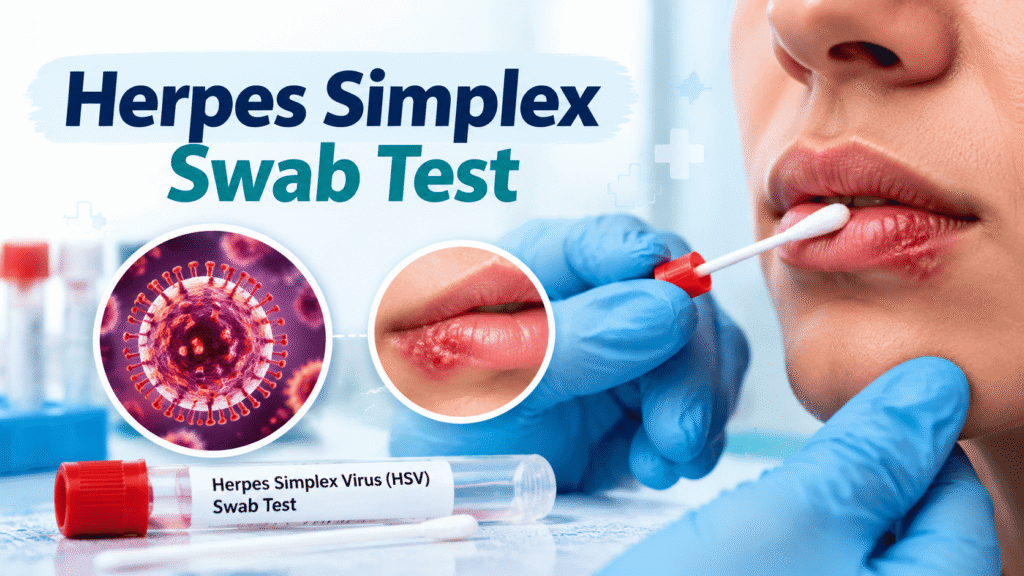
Here’s what actually happens, step by step:
- A clinician uses a sterile cotton swab.
- They gently but firmly rub the swab against the active blister, ulcer, or raw area.
- This collects a small amount of cellular fluid from the lesion.
- The swab goes into a sealed container and off to the lab.
The whole process takes just seconds. Does it hurt? You may feel brief, localized discomfort — similar to a light pinch or rubbing sensation — but it passes quickly.
How Accurate Is a Herpes Swab Test?
Accuracy is often the biggest question on your mind, and rightly so.
High Accuracy on Active Lesions
When performed on a fresh, newly formed sore, a PCR swab test offers near 100% accuracy. This makes it the most trustworthy tool available for confirming an active outbreak.
The Timing Factor: Why Timing Matters
Timing changes everything with this test. As a lesion heals and scabs over, the amount of virus present (what’s called viral shedding) decreases significantly.
Choose to get tested within the first few days of noticing a new sore if accuracy is your priority. Waiting until the lesion is mostly healed increases the chance of a false negative — a result that shows no virus, even though one is present.
Genital Sore Testing: Traditional Clinics vs. Ordering a Private Lab Test Online
Once you know a swab test is right for you, the next question is simple: where do you go to get it?
The Traditional Route
You can visit your primary care doctor, an urgent care clinic, or a public health clinic. This route works well if you already have a provider you trust and don’t mind scheduling an appointment.
Keep in mind this path often involves waiting for an available appointment slot, which can delay testing at the exact moment timing matters most.
The Private, Direct-to-Consumer Alternative
Choose an online lab testing platform if you want to skip the scheduling wait and the sometimes-awkward in-person conversation. These services let you order confidential lab testing directly, often the same day you notice symptoms.
STDcheck.com is a leading option for discreet, nationwide STI testing. You order your test online, receive the necessary physician’s lab requisition (the paperwork that authorizes your test), and then visit one of over 4,500 local testing centers — including well-known labs like Quest Diagnostics and LabCorp — for prompt, professional handling. Most results are available within 1 to 2 days.
HealthLabs.com is another trusted, private testing platform. It offers comprehensive testing panels with direct access to certified local laboratories nationwide, no doctor referral or insurance required. Results are typically available within 1 to 3 business days through a secure online account.
Both platforms let you take control of your health on your own schedule, without added hassle.
Frequently Asked Questions
Can I get a herpes swab test if I don’t have any symptoms or sores?
No. A swab test requires an active lesion or blister to collect viral cells. If you don’t have symptoms right now, a type-specific IgG blood test is typically used instead to check for past exposure.
How long do herpes swab test results take?
PCR results typically return within 1 to 3 business days, depending on the lab network you use.
Does a positive swab test tell me where I got it?
Yes. Because your sample is taken directly from a specific spot on your body, a positive swab confirms the exact site of the active infection — whether that’s oral or genital.
How accurate is a herpes swab compared to a blood test?
A PCR swab test on a fresh, active lesion offers near 100% accuracy for confirming an outbreak happening right now. A blood test, by comparison, checks for antibodies and can help identify past exposure even without visible symptoms, but it won’t pinpoint a specific sore’s location or timing.
What’s the difference between herpes culture and PCR testing?
Viral culture grows the virus in a lab over several days and works best on fresh lesions, but it loses accuracy as a sore heals. PCR detects viral DNA directly, making it far more sensitive, faster, and the preferred choice for most testing today.
Getting the Answers You Deserve
Dealing with an unexpected sore is stressful enough without added uncertainty. A PCR swab test gives you a clear, accurate answer so you can move forward with the right care plan, whatever that looks like for you.