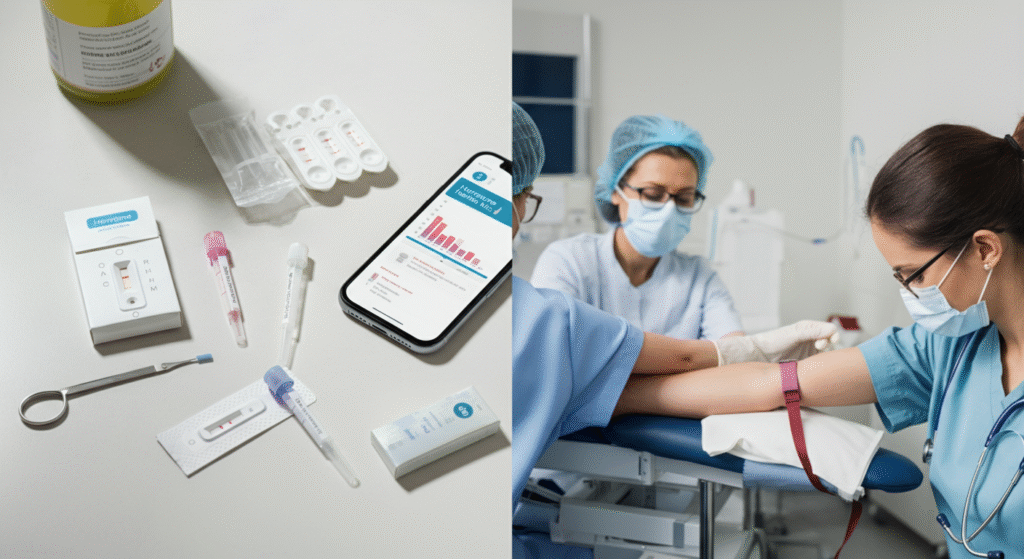
Quick answer: Free testosterone is the small portion of testosterone in your blood that isn’t bound to proteins, meaning your body can actually use it. A standard “total testosterone” test can look normal while free testosterone is quietly low, which explains why so many people feel exhausted, foggy, or unmotivated despite a “clean” lab report. The fix is simple: ask for a free testosterone test, done early in the morning, through a direct-to-consumer lab like HealthLabs.com.
You’re sleeping eight hours. You’re eating decently. You’re even hitting the gym a few times a week. And yet you still feel like you’re running on empty.
Maybe your muscles don’t respond to training the way they used to. Maybe your drive, in every sense of the word, has quietly disappeared. You mention it to your doctor, they run a blood test, and a week later you get the message: “Your testosterone is normal.”
So why do you still feel terrible?
This is one of the most frustrating experiences in men’s (and sometimes women’s) health. You know something is off, but the paperwork says you’re fine. The problem usually isn’t your hormones. It’s the test.
Most standard panels only measure total testosterone, the entire amount floating in your bloodstream. But total testosterone includes a huge chunk that your body can’t actually use. The hormone your cells really respond to is called free testosterone, and it’s often left off the standard lab order entirely.
In this article, you’ll learn what free testosterone actually is, why doctors miss it so often, what symptoms point to a problem, what “normal” ranges look like, and how to get tested quickly without jumping through insurance hoops.
What Is Free Testosterone
Testosterone travels through your blood in two different states.
Bound testosterone is attached to proteins, mainly Sex Hormone-Binding Globulin (SHBG) and, to a lesser extent, albumin. While it’s attached, it’s inactive. It can’t bind to receptors in your muscles, brain, or elsewhere.
Free testosterone is the unbound portion. It’s the hormone that’s actually circulating freely and available for your tissues to use.
Here’s an analogy that makes this click for most people. Think of total testosterone as the balance in your bank account. It looks impressive on paper. Free testosterone is the cash sitting in your wallet, the part you can actually spend right now.
You might have $50,000 in savings, but if none of it is accessible, it doesn’t help you buy groceries today. The same logic applies to your hormones.
This is exactly why doctors can miss the problem. If your SHBG is elevated, it binds up more testosterone than usual. Your total testosterone number can sit comfortably in the “normal” range while your free testosterone, the part your body actually uses, is quietly running low. The lab report looks fine. Your body disagrees.
Signs and Symptoms of Low Free Testosterone
Low free testosterone doesn’t show up as one dramatic symptom. It shows up as a slow accumulation of smaller ones that chip away at how you feel day to day.
Physical symptoms:
- Persistent fatigue, even after a full night’s sleep
- Unexplained weight gain, especially around the belly
- Loss of muscle mass or strength, despite consistent training
- Thinning hair
Sexual symptoms:
- Low libido
- Erectile dysfunction
- Fewer morning or spontaneous erections
Mental and emotional symptoms:
- Brain fog and poor concentration
- Irritability
- Mild anxiety or depression
Here’s the catch: these symptoms overlap heavily with other issues, including thyroid problems, poor sleep, chronic stress, and even depression on its own. That overlap is exactly why guessing doesn’t work. Lab testing is the only way to confirm whether your hormones are actually the culprit.
What Are Normal Free Testosterone Levels?
Reference ranges for free testosterone vary depending on the lab and the testing method used. Some labs use equilibrium dialysis, which is considered the gold standard, while others use calculated or direct measurement methods. This is one reason your “normal” range might look different from a friend’s results, even if you’re the same age.
For adult males, free testosterone typically falls somewhere between 35.0 and 155.0 pg/mL, though some direct-measurement assays report ranges closer to 9 to 30 pg/mL. Always check the reference range listed on your specific lab report, since the units and methods aren’t standardized across providers.
A few factors can push your levels lower than they should be:
- Age: Free testosterone naturally starts declining after your early 30s, dropping gradually each year.
- Body composition: Excess body fat increases SHBG production, which binds up more testosterone and leaves less available.
- Chronic stress: Elevated cortisol over long periods can suppress testosterone production.
- Sleep deprivation: Poor or insufficient sleep disrupts the hormonal signals your body needs to produce testosterone efficiently.
How to Test Your Free Testosterone Levels (Without the Hassle)
Why the traditional route is so frustrating
If you’ve tried going through a primary care doctor, you already know the drill. First, you need an appointment, which could be weeks out. Then you need to convince your physician that a free testosterone test is worth running, not just the standard total panel. Then there’s the insurance approval process, which can involve prior authorizations, referrals, and paperwork that drags the whole thing out even further.
By the time you get results, you might have waited a month just to confirm what you suspected from the start.
The easier way: direct-to-consumer lab testing
You don’t actually need a doctor’s referral to get a testosterone panel anymore. Direct-to-consumer lab testing networks let you order the exact test you want, skip the insurance back-and-forth, and get your blood drawn locally within days.
If you’re dealing with symptoms of a hormonal imbalance and want real answers instead of guesswork, checking both your free and total testosterone is the fastest way to get clarity.
For this, consider the Testosterone Free & Total Test through HealthLabs.com. Here’s why it’s worth highlighting:
- No doctor’s visit or insurance paperwork required upfront
- Access to over 4,500 CLIA-certified labs across the U.S., making it easy to find a location near you
- Secure, confidential results, typically delivered within 1 to 3 business days
- HSA and FSA funds accepted, so you can use money you’ve already set aside for healthcare
Instead of waiting weeks for an appointment and a referral, you can order your test today and have a blood draw done this week.
How to Prepare for Your Testosterone Blood Test
Getting an accurate result isn’t just about which test you order. A little preparation goes a long way.
Timing matters. Testosterone levels peak in the early morning and decline as the day goes on. Schedule your blood draw before 10:00 or 11:00 a.m. if possible, since testing in the afternoon can show artificially lower numbers.
Fasting requirements vary. Some testosterone panels don’t strictly require fasting, but it’s smart to double-check the instructions for your specific test, or simply keep your routine consistent on test day.
Consistency helps if you retest. If you plan to check your levels again down the line, try to keep your sleep, exercise, and eating habits similar each time. This makes it easier to spot real changes instead of noise caused by lifestyle shifts.
Frequently Asked Questions
Can women have low free testosterone?
Yes. While testosterone is often framed as a “male” hormone, women produce it too, and it plays a real role in energy, libido, and mood. Low free testosterone in women can also be tied to conditions like PCOS, where hormone imbalances affect multiple systems at once. If you’re a woman experiencing unexplained fatigue or low drive, it’s worth asking about testosterone testing alongside other hormone panels.
What is the difference between free and total testosterone?
Total testosterone measures every bit of testosterone in your blood, including the portion bound to proteins and therefore inactive. Free testosterone measures only the unbound, biologically active hormone your body can actually use. You can have a normal total number and a low free number at the same time, which is why both figures matter.
Can I use insurance for online lab testing?
Direct-to-consumer platforms like HealthLabs.com typically don’t require insurance at all, and that’s often the point. Paying directly keeps your results private and out of standard insurance records, while still letting you use HSA or FSA funds if you have them. This gives you more control over both your privacy and your costs.
Stop Guessing. Start Testing.
Guessing about your hormone levels doesn’t get you anywhere. It leaves you stuck between symptoms you can feel and a lab report that tells a different story. The only way to actually take control of your energy, mood, and performance is to get real data, specifically, your free testosterone number alongside your total.
The good news is that getting that data no longer requires a frustrating trip through your doctor’s office and your insurance company’s approval process. You can order your panel in a few clicks, visit one of thousands of local labs, and have answers in a matter of days.