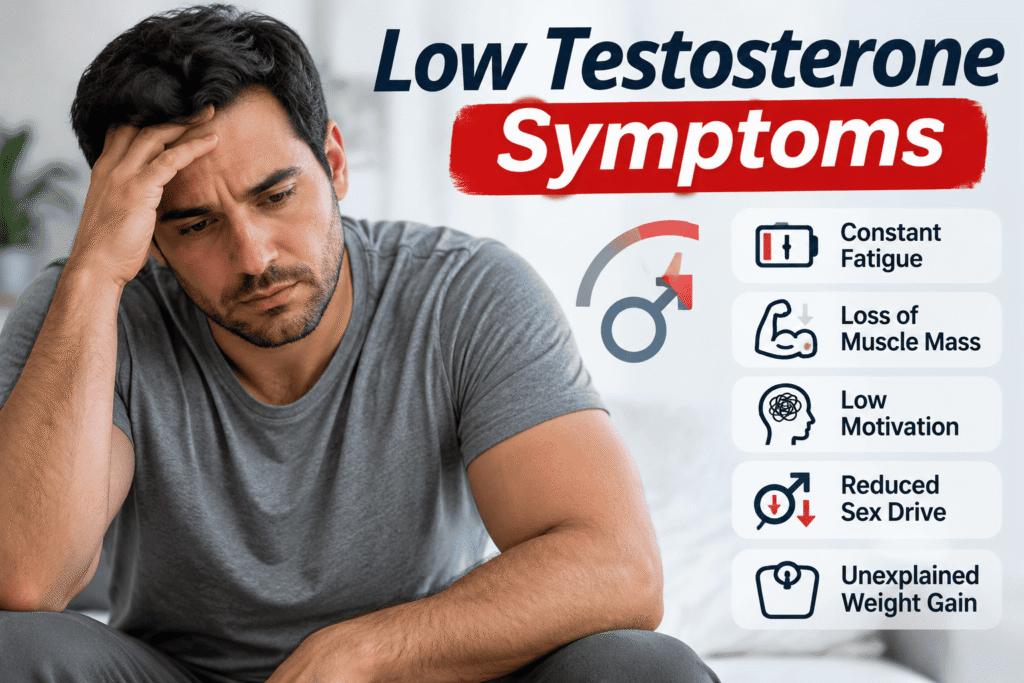
Quick answer: Low testosterone symptoms include low sex drive, erectile dysfunction, constant fatigue, loss of muscle mass, weight gain around the belly, thinning hair, mood swings, and brain fog. These symptoms often overlap with other conditions like depression or thyroid problems, which is why a blood test is the only way to know for sure if low T is behind what you’re feeling.
You’re tired all the time. Your workouts don’t seem to be working anymore. And honestly? Your drive just isn’t what it used to be.
It’s easy to chalk this up to getting older, work stress, or just “a phase.” Sometimes that’s exactly what it is. But sometimes, it’s your hormones talking.
Testosterone does a lot more than most men realize. It affects your energy, your mood, your muscle, and yes, your sex life. When levels drop below where they should be, your body tends to let you know, even if the signs are easy to dismiss at first.
Here’s the thing about testosterone decline: it’s actually normal. Most men start losing about 1% of their testosterone per year after age 30. That’s a slow, gradual slide, and for a lot of guys, it doesn’t cause noticeable problems for years.
But for some men, levels drop further and faster, landing in a range doctors call hypogonadism. That’s when the symptoms stop being subtle and start affecting daily life.
Before we go further, here’s an important note: this guide is for educational purposes only. It isn’t a substitute for a real evaluation from your doctor. If you’re concerned about your hormone levels, the information below can help you understand what to look for, but a medical professional (and a blood test) should guide any actual diagnosis or treatment.
Sexual Symptoms: The Most Common Indicators
When doctors screen for low testosterone, they usually start here. Sexual symptoms tend to be the clearest, earliest signs that something’s off.
Reduced Libido (Low Sex Drive)
A noticeable drop in your desire for intimacy is often the very first clue. It’s not just about frequency. Many men describe it as a general loss of interest, like the spark that used to be there just… isn’t.
This isn’t the same as being tired after a long day. It’s a more persistent shift in how much you think about or want intimacy at all.
Erectile Dysfunction and Loss of Morning Erections
Here’s one most men don’t talk about, but doctors pay close attention to it: morning erections.
Healthy testosterone levels support spontaneous erections, including the ones that happen overnight and first thing in the morning. Major urological organizations point to the loss of these as a key clinical flag for low T. If you’ve noticed they’ve become rare or stopped altogether, that’s worth mentioning to a doctor, not just brushing off.
Erectile dysfunction itself can have many causes, including stress and blood flow issues, but testosterone is a well-documented piece of that puzzle.
Decreased Ejaculate Volume
Testosterone plays a direct role in semen production. When levels fall, ejaculate volume can decrease too. It’s a smaller, less obvious symptom, but it often shows up alongside the others on this list.
Physical and Body Composition Changes
Low testosterone doesn’t just affect your sex life. It can reshape your body in ways that are frustrating to deal with, especially if you’re putting in the work at the gym and not seeing results.
Persistent Fatigue and Low Energy
This isn’t your normal “I need more coffee” tired. This is the kind of exhaustion that sticks around even after a full eight hours of sleep.
Men with low testosterone often describe feeling drained before the day even starts. If rest isn’t fixing your fatigue, that’s a signal worth paying attention to.
Loss of Muscle Mass and Strength
Testosterone helps your body build and maintain muscle through protein synthesis. When levels drop, that process slows down.
The result? Your workouts feel less effective. You might be lifting the same weights but seeing less definition, less strength, and slower recovery. For guys who take pride in staying fit, this one can be especially discouraging.
Increase in Body Fat (Particularly Visceral Fat)
Low T is linked to an increase in body fat, especially visceral fat, the kind that builds up around your organs and belly. This isn’t just a cosmetic issue. Visceral fat is tied to higher metabolic risks, including problems with blood sugar and heart health.
It can become a frustrating cycle too: low testosterone contributes to fat gain, and excess fat can further lower testosterone. Breaking that cycle often starts with knowing where your levels actually stand.
Hair Loss and Decreased Body Hair
Thinning on your scalp, a patchier beard, or noticeably less body hair can all be tied to hormonal shifts. Hair changes alone don’t confirm low testosterone since genetics play a huge role too, but combined with other symptoms on this list, it’s a piece worth considering.
Emotional and Cognitive Symptoms: Dealing with “Brain Fog”
Testosterone doesn’t just affect your body. It plays a real role in brain chemistry, mood regulation, and mental clarity.
Mood Changes, Irritability, and Depression
Ever feel like you’re snapping at people over small things, or just generally flatter than usual? Hormonal imbalances can genuinely affect brain chemistry in ways that show up as irritability, sadness, or a general loss of motivation.
This doesn’t mean every bad mood is a hormone problem. But if low mood has become your new normal and nothing seems to explain it, testosterone could be part of the picture.
Difficulty Concentrating and Brain Fog
Struggling to focus during meetings? Forgetting things you’d normally remember without a second thought? That foggy, can’t-quite-think-straight feeling is a commonly reported symptom of low testosterone.
It can affect work performance, decision-making, and even how sharp you feel in everyday conversations.
What Causes Low Testosterone?
Low testosterone doesn’t have a single cause. It’s usually a combination of factors, including:
Aging and natural biological shifts. As mentioned earlier, testosterone naturally declines with age. For most men, this is gradual, but it adds up over time.
Lifestyle factors. Obesity, poor sleep, chronic high stress, and poor nutrition can all contribute to lower testosterone levels. These are also some of the few factors you can directly influence.
Medical factors. Conditions like type 2 diabetes, certain medications, testicular injury, or pituitary gland issues can all interfere with how your body produces testosterone.
Because so many different things can lower your levels, it’s hard to pinpoint the cause just by looking at symptoms. Which brings us to the next, and arguably most important, question.
How Can You Actually Check Your Testosterone Levels?
Why Guessing Isn’t Enough
Here’s the tricky part about low-T symptoms: they overlap heavily with other conditions. Depression, thyroid problems, and sleep apnea can all cause fatigue, mood changes, and low energy that look almost identical to low testosterone.
That means you can’t just self-diagnose based on symptoms alone. A blood test is the only definitive way to know what’s actually going on with your hormone levels.
Modern Direct-to-Consumer Lab Testing
The good news? You don’t need to wait weeks for a doctor’s appointment or sit through an uncomfortable clinic visit just to get your levels checked.
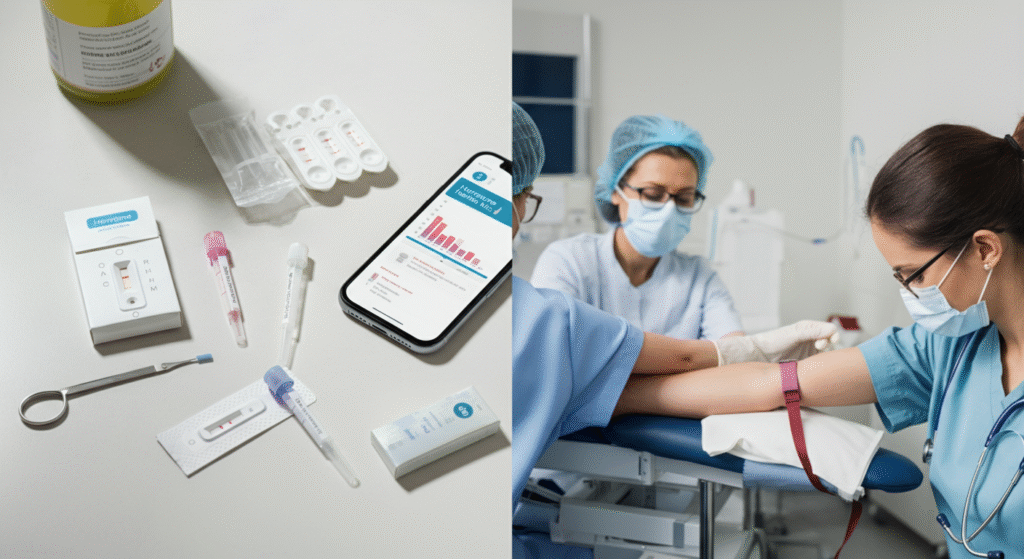
Direct-to-consumer lab testing lets men order hormone panels online and get tested at a local lab, often within days instead of weeks.
HealthLabs.com is one platform built specifically for this kind of convenience. It offers dedicated testosterone panels, including both Total and Free Testosterone tests, through a massive network of certified local laboratories. There’s no doctor visit required to place an order, and results come back electronically, often within a few days.
If you’ve been putting off getting checked because the process felt like a hassle, this kind of testing removes most of the friction. You order online, visit a nearby lab for a quick blood draw, and get your results without ever sitting in a waiting room.
Frequently Asked Questions
What is considered a “normal” testosterone level?
Standards vary slightly by lab, but major urological organizations generally define normal total testosterone as roughly 300 to 1,000 ng/dL. That said, your individual symptoms matter just as much as the raw number. Some men feel fine at the lower end of that range, while others experience noticeable symptoms even in the “normal” zone.
Can low testosterone be fixed without hormone replacement therapy (HRT)?
Yes, in mild cases. Addressing underlying lifestyle factors, like losing excess weight, correcting vitamin deficiencies, improving sleep quality, and increasing strength training, can naturally help boost testosterone levels. HRT is typically reserved for more significant, clinically confirmed deficiencies.
Do I need a doctor’s referral to get my testosterone checked online?
No. Platforms like HealthLabs.com include the required physician’s lab order as part of your purchase, so you can order a test without needing to schedule a separate doctor’s visit first.
What’s the difference between Total and Free Testosterone testing?
Total testosterone measures all the testosterone in your blood, including what’s bound to proteins. Free testosterone measures only the portion that’s active and available for your body to use. Testing both gives a more complete picture of your hormonal health than either alone.
Who should consider getting tested?
Any man noticing a cluster of the symptoms above, especially fatigue, low libido, and mood changes happening together, is a good candidate for testing. Age alone isn’t a reason to test, but persistent, unexplained symptoms are.
You Don’t Have to Just “Deal With It”
Chronic fatigue, low mood, and a fading drive aren’t things you’re required to accept as part of getting older. They might be your body’s way of telling you something specific is going on, and testosterone is often part of that conversation.
The only way to really know is to check your levels. Guessing based on symptoms alone can lead you down the wrong path, especially since so many conditions share similar warning signs.