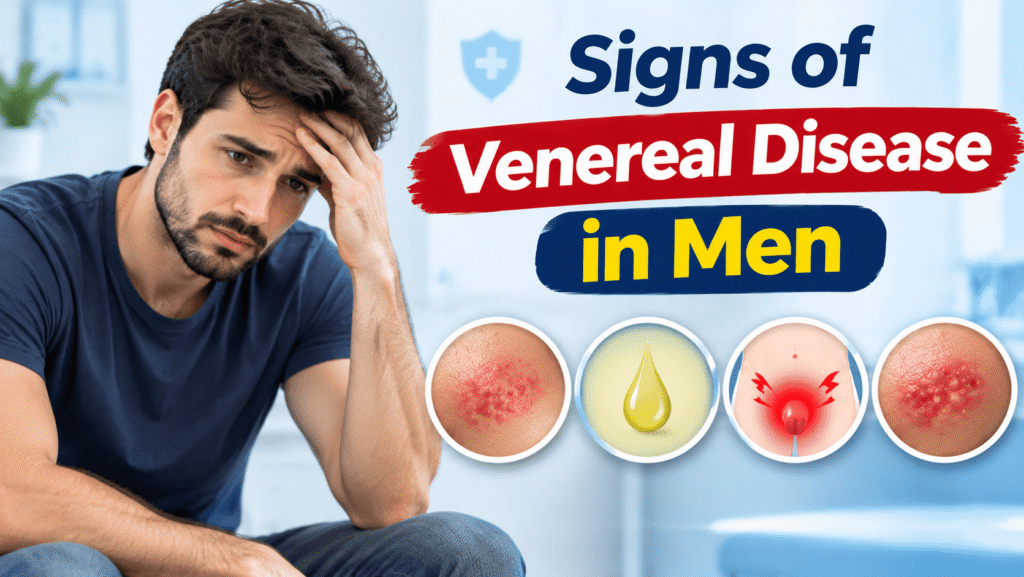
Quick answer: Common signs of venereal disease in men include painful urination, unusual discharge, sores or bumps on the genitals, and persistent itching. But here’s the catch — many STDs show no symptoms at all early on. That’s why regular testing matters more than waiting to “feel” sick.
Noticing something off down there can send your mind racing. Is it nothing? Is it serious? Should you call a doctor right now or just wait it out?
That stress is real, and it’s completely normal. But here’s some good news: catching the early signs of a sexually transmitted disease (also called a venereal disease) is one of the most powerful things you can do for your health. The sooner you spot a symptom, the sooner you can get treated — and the sooner that nagging worry in the back of your mind can go away.
This guide walks through the physical signs men should pay attention to, explains why some infections hide in plain sight with no symptoms whatsoever, and breaks down your testing options, from the traditional doctor’s visit to private, at-home-friendly alternatives.
A quick note before we dive in: This article is for educational purposes only. It’s not a substitute for a real diagnosis from a licensed medical professional. If something feels wrong, please see a doctor or get tested.
Why Some STDs Don’t Show Any Symptoms at All
Here’s the part that catches a lot of guys off guard: you can carry chlamydia, HPV, or even HIV in its early stages and feel completely fine.
No pain. No discharge. No warning signs whatsoever.
That’s why doctors call these “silent” infections. Your body might be fighting something you have no idea is there, and meanwhile, it can still be passed on to a partner. This is exactly why routine screening isn’t just for people who “feel sick” — it’s a standard part of staying on top of your health, symptoms or not.
With that in mind, let’s look at the symptoms that do show up for a lot of men.
Universal Signs of Venereal Diseases in Men
These are some of the most commonly reported symptoms, and the ones most guys search for when something feels off.
Painful or Frequent Urination (Dysuria)
If peeing suddenly feels like a chore — burning, stinging, or just plain uncomfortable — that’s worth paying attention to. This kind of discomfort, known medically as dysuria, is one of the most common early signs of infections like chlamydia and gonorrhea.
You might also notice you’re running to the bathroom more often than usual, even when there’s not much to go.
Unusual Penile Discharge
Any fluid coming from the penis that isn’t, well, normal, is a red flag. This could look like:
- Cloudy or milky discharge
- A yellow or greenish tint
- Thicker, pus-like fluid
Discharge is one of those symptoms that’s hard to ignore once you notice it, and it’s often one of the first things that sends men looking for answers.
Bumps, Sores, Blisters, or Warts
Not all bumps are created equal, and the differences actually matter:
- Painful, fluid-filled blisters often point to herpes.
- Firm, painless ulcers or sores (sometimes called chancres) can be an early sign of syphilis.
- Small, flesh-colored bumps that resemble skin tags are often linked to HPV (genital warts).
These can show up on the shaft, scrotum, or around the anus. If you spot something new and you’re not sure what it is, don’t try to diagnose it yourself through a Google image search (we’ve all been tempted). Get it checked out.
Itching, Redness, or Irritation
Persistent itching or redness around the genitals or rectal area isn’t always an STD — sometimes it’s just irritation from soap or tight clothing. But when it sticks around, worsens, or comes with other symptoms on this list, it’s worth getting evaluated.
Less Common or Advanced Symptoms to Watch For
Some symptoms don’t show up right away. They tend to appear when an infection has been around for a while, or has started to spread.
Testicular or Scrotal Pain and Swelling
Ever had a dull ache in one testicle that just won’t go away? Left untreated, infections like chlamydia and gonorrhea can travel upward into the reproductive tract, leading to a condition called epididymitis. This causes tenderness, aching, or swelling in one or both testicles.
It’s uncomfortable, and in some cases, can affect fertility if it’s not treated.
Rectal Discomfort, Discharge, or Bleeding
This symptom gets overlooked a lot, but it’s important: itching, pain during bowel movements, or unusual discharge from the rectal area can signal an infection, especially after anal exposure.
Systemic Flu-Like Symptoms
Sometimes an STD doesn’t stay “local.” Fatigue, swollen lymph nodes in the groin, or a low-grade fever can be your body’s way of signaling a systemic infection, like acute HIV or syphilis in its secondary stage.
It’s easy to brush these off as a regular cold or a rough week. But if they show up alongside any of the symptoms above, or after a potential exposure, it’s worth getting tested.
Why You Can’t Rely on Symptoms Alone
Let’s circle back to something important: symptoms are not a reliable way to know your status.
Part of the reason is something called the “window period.” This is the time between exposure to an infection and when a test can actually detect it. Depending on the STD, that window can range from a few days to a few months. Testing too early, even with symptoms present, can sometimes lead to a false negative.
Waiting around for visible symptoms before getting tested means you could unknowingly pass an infection to a partner, or let something untreated turn into a bigger problem down the line, like infertility or chronic pain.
The responsible move? Treat routine screening as a normal part of taking care of yourself, right alongside things like checking your blood pressure or getting a yearly physical. It’s not a sign something wrong. It’s just smart maintenance.
Traditional Clinics vs. Modern Confidential Testing
So where do you actually go to get tested? You’ve got two main paths.
The Traditional Route
You can visit your primary care physician, a urologist, or a public health clinic. This route is reliable, and if you already have a doctor you trust, it might be the easiest option.
The downside? Scheduling can take time, and depending on where you live, privacy at a small local clinic isn’t always guaranteed. Some men also feel awkward discussing symptoms face-to-face, which can lead to delays in getting tested at all.
The Private, Direct-to-Consumer Alternative
This is where modern testing services come in. Instead of booking an appointment and sitting in a waiting room, you can order a test online, visit a local lab for a quick sample, and get your results digitally, often within a couple of days.
STDcheck.com is one of the better-known names in this space. You can order a comprehensive STI panel online without needing a pre-approval doctor’s visit first. From there, you walk into one of their partner labs (think Quest Diagnostics or Labcorp) for a simple urine or blood sample. Results are typically delivered securely within 1–2 days, and nothing gets reported to your insurance or placed on your medical record.
HealthLabs.com is another trusted option in the direct-to-consumer testing space. It offers comprehensive wellness and STD panels with access to certified local labs, plus a secure online portal to manage your results.
Both options are built around the same idea: making testing fast, private, and free of the awkwardness that stops a lot of men from getting checked in the first place.
Frequently Asked Questions
Can venereal diseases go away on their own in men?
No, not safely. Bacterial infections like chlamydia and gonorrhea need antibiotic treatment to clear up, while viral infections like herpes or HIV require ongoing medical management. Symptoms might come and go, but the infection itself typically doesn’t resolve without treatment.
Do I need a doctor’s appointment to order a male STI test online?
No. Services like STDcheck.com and HealthLabs.com include the necessary physician’s order as part of your purchase, so you can skip the in-person appointment entirely and go straight to the lab.
Are standard male STI tests painful?
Not really. Most comprehensive panels just require a simple blood draw and a urine sample. There’s typically no need for uncomfortable physical exams or swabs for routine screening.
What should I do if I notice symptoms but I’m not sure if it’s an STD?
The safest move is to get tested rather than guess. Many STD symptoms overlap with other, less serious conditions, so testing is the only way to know for sure what you’re dealing with.
How often should men get tested for STDs?
It depends on your lifestyle, but many health professionals recommend testing at least once a year if you’re sexually active, and more often if you have multiple partners or a new partner.
Listen to Your Body, and Don’t Wait to Act
Your body usually gives you some kind of signal when something’s wrong, whether that’s discomfort, an unexpected bump, or just a nagging feeling that something’s off. The key is not ignoring it.
Addressing potential symptoms early, or simply testing on a regular basis, is still the best defense against long-term complications like fertility issues or more serious health risks down the road.