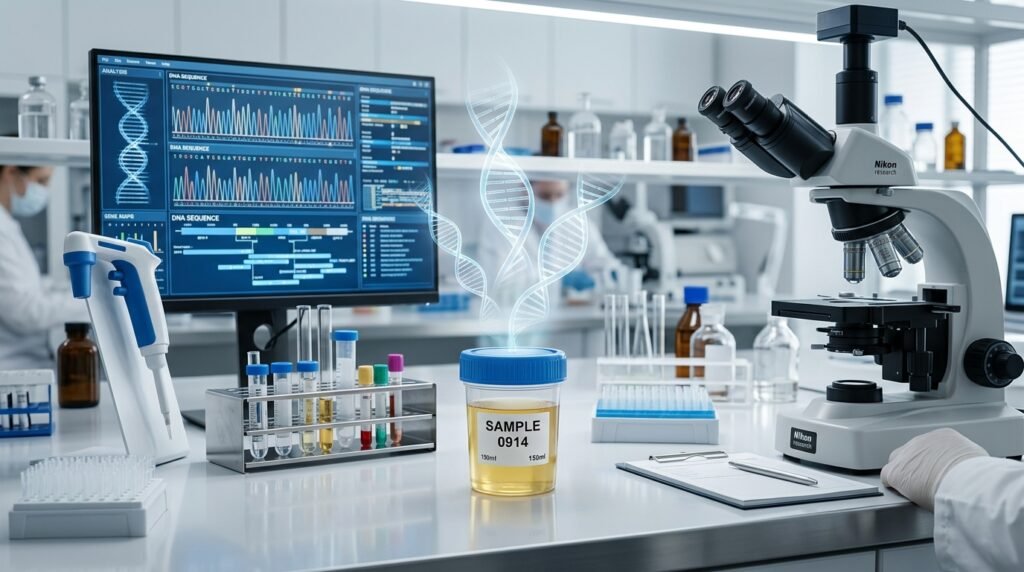
Quick answer: Yes, you can get DNA from urine. Urine carries cells shed from your urinary tract, and those cells hold DNA. But the amount is usually small, and the quality can be poor. That’s why most DNA tests use cheek swabs or saliva instead.
People ask this question for all kinds of reasons. Maybe you’re curious about paternity testing. Maybe you watched a crime show and wondered if urine left at a scene could identify someone. Or perhaps you’re reading about medical research and how doctors detect disease.
Whatever brought you here, you’ll get clear answers. This article explains where DNA in urine comes from, how labs extract it, and whether you can actually use urine for things like paternity, ancestry, or forensic testing.
Let’s dig in.
Does Urine Contain DNA?
Yes, urine does contain DNA—just not very much of it.
Here’s the short version:
- Urine contains cells shed from the urinary tract as it passes through your body.
- These cells may hold human DNA, which is what testing relies on.
- Labs can often extract DNA from urine using the right equipment and methods.
- Urine is usually not the first choice for most consumer DNA tests.
So the DNA is there. The catch is getting enough of it, in good enough shape, to actually use.
Where Does DNA in Urine Come From?
You might wonder how DNA ends up in urine at all. After all, urine is mostly water and waste, right?
The answer comes down to cells.
Cells Naturally Present in Urine
As urine travels through your body, it picks up tiny bits of cellular material. The main sources include:
- Epithelial cells from the lining of your urinary tract. These shed naturally, the same way skin cells flake off.
- White blood cells, especially if there’s any infection or inflammation.
- Other biological material that gets carried along the way.
These cells are where the DNA hides. No cells, no DNA.
Why Urine Contains Less DNA Than Saliva or Blood
Compared to a cheek swab or a vial of blood, urine is a weak source of DNA. Why?
Two big reasons:
- Lower cell concentration. Urine simply doesn’t carry as many cells as blood or saliva.
- DNA degradation. Once cells break down in urine, the DNA inside starts to fall apart. Urine isn’t a friendly environment for keeping DNA intact.
Think of it like trying to read a letter that’s been left out in the rain. The words might still be there—but they’re harder to make out.
Factors That Affect DNA Quantity
Not every urine sample is equal. A few things can change how much DNA you’ll find:
- Hydration level. Drink a lot of water, and your urine becomes more diluted. More dilution often means fewer cells per sample.
- Health conditions. Infections or kidney issues can raise the number of cells in urine, which sometimes means more DNA.
- Collection method. A clean, fresh, well-collected sample holds up better than a messy or old one.
Can DNA Be Extracted From Urine?
Yes, scientists can pull DNA out of urine. It just takes the right process and a bit of patience.
How Scientists Extract DNA From Urine
The basic steps look something like this:
- Collection. A fresh urine sample is gathered, ideally in a clean container.
- Cell isolation. The sample is spun in a centrifuge—a machine that separates heavier cells from the liquid. The cells settle at the bottom.
- DNA purification. Special chemicals break open the cells and separate the DNA from everything else.
What’s left is a small amount of purified DNA, ready for analysis.
Challenges of Urine DNA Extraction
This isn’t always smooth sailing. Labs run into a few common hurdles:
- Low DNA concentration. Sometimes there just isn’t enough DNA to work with.
- Sample contamination. Bacteria or other material can interfere with results.
- DNA degradation. Older samples often have broken-down DNA that’s hard to read.
Success Rates in Laboratory Settings
When a sample is fresh and handled correctly, labs often succeed in getting usable DNA. Older or poorly stored samples lower the odds. The bottom line? It’s possible, but results depend heavily on sample quality.
Can You Use Urine for a DNA Test?
Technically, yes. Practically, it depends on the test—and most of the time, the answer is no.
What Most Commercial DNA Testing Labs Require
If you’ve ever ordered a home DNA kit, you know what they ask for:
- Cheek swabs (the most common)
- Saliva samples
- Blood samples for certain medical tests
These sources give plenty of clean, reliable DNA.
Why Urine Is Rarely Accepted
Most labs skip urine for two main reasons:
- Reliability concerns. Lower DNA quality can lead to failed or unclear results.
- DNA quantity limitations. There’s often not enough material for a confident analysis.
For a company that needs accurate results every time, urine is a gamble.
Situations Where Urine May Be Used
That said, urine isn’t useless. It can be valuable in:
- Specialized laboratory testing, where experts have the tools to work with tricky samples.
- Research applications, where scientists study urine for specific purposes.
Can a Paternity Test Be Done With Urine?
This is one of the most common questions out there. So let’s be honest about it.
Is It Technically Possible?
In theory, yes. If a urine sample has enough good-quality DNA, a lab might be able to use it for paternity analysis.
Why Most Paternity Tests Use Cheek Swabs Instead
Cheek swabs win for one simple reason: they’re reliable. A quick swab inside the cheek collects loads of clean DNA. It’s painless, easy, and consistent.
Urine just can’t promise the same.
Challenges of Using Urine for Relationship Testing
A urine-based paternity test faces real problems:
- Not enough DNA in many samples
- Risk of contamination
- Higher chance of an unclear or failed result
When you’re answering a question as serious as paternity, you want certainty—not a maybe.
What Labs Typically Recommend
Almost every lab will steer you toward a cheek swab. If you’re considering a paternity test, that’s the safest and most accurate route.
Can Urine Be Used for Ancestry DNA Testing?
If you’re hoping to trace your roots with a urine sample, here’s the reality.
DNA Requirements for Ancestry Testing
Ancestry tests need a large amount of high-quality DNA. They analyze thousands of genetic markers to map your heritage, so they can’t work with scraps.
Why Saliva Is the Standard Sample
Most ancestry companies ask you to spit into a tube. Saliva is rich in DNA, easy to collect at home, and stable enough to mail to a lab. It checks every box.
Limitations of Urine-Based Testing
Urine usually doesn’t carry enough DNA for ancestry work. The risk of low yield and degraded samples makes it a poor fit. For ancestry, stick with the saliva kit.
Urine DNA in Forensic Investigations
Crime shows love a good DNA twist. But how does urine actually fit into forensics?
How Forensic Scientists Use Urine Samples
Forensic experts can sometimes recover DNA from urine found at a scene. With specialized methods, they extract whatever usable DNA the sample holds.
DNA Profiling From Urine Evidence
If enough DNA survives, scientists can build a DNA profile—a sort of genetic fingerprint. That profile can then be compared to a suspect or a database.
Limitations in Criminal Investigations
It’s not a sure thing. Urine evidence degrades quickly, especially outdoors or in heat. Contamination is also a real risk. Many samples simply don’t yield enough DNA for a solid profile.
Real-World Forensic Applications
Forensic labs typically prefer blood, saliva, or skin cells. Urine is more of a backup—useful when nothing better is available, but rarely the star witness.
Factors That Affect DNA Recovery From Urine
Want the best shot at usable DNA? A handful of factors make all the difference.
Sample Age
Fresh is best. The longer a sample sits, the more the DNA breaks down.
Storage Conditions
Proper storage protects DNA. Sloppy storage destroys it.
Temperature Exposure
Heat speeds up DNA breakdown. Cool conditions help preserve it.
Sample Volume
A larger sample gives labs more material to work with—and a better chance of success.
Collection Method
A clean, careful collection beats a rushed, contaminated one every time.
Here’s a quick look at how these factors play out:
| Factor | Impact on DNA Recovery |
|---|---|
| Fresh sample | High |
| Refrigerated sample | Moderate to High |
| Old sample | Low |
| Contaminated sample | Low |
| Improper storage | Very Low |
Urine vs Other DNA Sample Types
How does urine stack up against other sources? This table makes it clear:
| Sample Type | DNA Quantity | Ease of Collection | Commonly Used for DNA Testing |
|---|---|---|---|
| Cheek swab | High | Easy | Yes |
| Saliva | High | Easy | Yes |
| Blood | Very High | Moderate | Yes |
| Hair with root | Moderate | Moderate | Sometimes |
| Urine | Low | Easy | Rarely |
| Nail clippings | Low to Moderate | Easy | Occasionally |
Which Sample Type Is Best?
For most people, the cheek swab is the winner. It’s easy, painless, and packed with DNA. Saliva runs a close second, especially for ancestry kits. Blood offers the most DNA but is harder to collect.
Choose a cheek swab if you want simplicity and reliability. Pick saliva if you’re doing an at-home ancestry test. Save urine for situations where it’s truly your only option.
Medical Uses of Urine DNA Testing
Here’s where urine actually shines. In medicine, urine DNA can be surprisingly helpful.
Genetic Disease Screening
Doctors can study DNA in urine to check for certain genetic conditions. It’s a non-invasive option—no needles required.
Cancer Detection Research
Researchers are exploring DNA in urine to detect early signs of certain cancers, such as bladder cancer. Because urine passes through the urinary tract, it can carry clues about what’s happening inside.
Prenatal and Diagnostic Applications
Some diagnostic tests look at urine DNA to gather health information. It’s a gentle way to collect samples, especially when other methods are tricky.
Emerging Technologies in Urine DNA Analysis
New tools are making urine DNA easier to study. As technology improves, urine could play a bigger role in medical testing down the road.
Common Myths About DNA in Urine
There’s a lot of confusion out there. Let’s clear up a few myths.
Myth #1: Urine Contains No DNA
False. Urine does contain DNA—just in smaller amounts than blood or saliva.
Myth #2: Urine Is the Best DNA Sample
Not even close. Cheek swabs and saliva offer far more reliable DNA.
Myth #3: Any Urine Sample Can Be Used for Paternity Testing
Wrong. Most urine samples don’t have enough quality DNA for accurate paternity results.
Myth #4: DNA in Urine Never Degrades
Also false. DNA in urine breaks down fairly quickly, especially without proper storage.
Frequently Asked Questions
Can DNA be found in urine?
Yes. Urine carries cells from the urinary tract, and those cells contain DNA. The amount is small compared to blood or saliva, but it’s there.
Can a paternity test be done using urine?
It’s technically possible, but rarely done. Most labs require cheek swabs because they provide more reliable DNA. Urine carries a higher risk of failed or unclear results.
How much DNA is present in urine?
Usually a small amount. Urine has a low cell concentration, so it holds far less DNA than blood, saliva, or a cheek swab.
Is urine accepted by commercial DNA testing companies?
Rarely. Standard DNA kits ask for cheek swabs or saliva. Urine isn’t reliable enough for most consumer tests.
How long does DNA remain detectable in urine?
It depends on storage. Fresh, refrigerated samples last longer. DNA in urine degrades quickly at room temperature or in heat, sometimes within hours to a few days.
Can ancestry testing be performed with urine?
No, not in any practical way. Ancestry tests need plenty of high-quality DNA, which urine usually can’t provide. Saliva is the standard sample.
Is urine used in forensic DNA analysis?
Sometimes, but rarely as a first choice. Forensic experts can extract DNA from urine, but the samples often degrade fast and risk contamination. Blood and saliva are preferred.
Final Verdict: Can You Get DNA From Urine?
Yes, you can get DNA from urine. The cells shed into your urine carry DNA, and labs can often extract it with the right tools and a fresh sample.
But here’s the truth: urine isn’t the best choice for most DNA tests. It holds less DNA than saliva or cheek swabs, and that DNA breaks down quickly. For paternity, ancestry, or everyday testing, cheek swabs and saliva win every time.
Where urine does earn its place is in specialized labs, forensic work, and medical research. In those hands, with the right methods, urine DNA can reveal valuable information.
So if you’re choosing a sample for a DNA test, go with a cheek swab or saliva. Leave urine to the experts who know how to make the most of it.