Feeling constantly tired, dealing with muscle cramps, or just feeling off? Your sodium levels might be the hidden culprit.
Sodium imbalance can easily affect your energy, hydration, and even your heart health. Yet, many people do not realize their levels may be out of range until they feel really sick.
Thankfully, you no longer have to wait for an annual doctor’s visit to see what is going on inside your body. At-home testing is becoming a convenient way to keep track of your health on your schedule.
We are going to walk through how a sodium blood test home kit works, how accurate they really are, and when it makes sense to use one.
What Is a Blood Sodium Test?
A blood sodium test is exactly what it sounds like. It checks the amount of sodium flowing through your bloodstream.
Sodium is an essential mineral that your body needs to function properly. It helps balance the fluids in your body, keeps your nerves firing, and helps your muscles contract smoothly.
When your sodium levels dip too low or spike too high, your whole system feels the impact. Testing matters because catching an imbalance early can help you fix it before it turns into a bigger health issue.
Can You Test Blood Sodium Levels at Home?
Yes, you can check sodium levels at home, but we need to be honest about what is out there.
Right now, you will not easily find a standalone “sodium-only” blood test kit on store shelves. The market for just testing sodium by itself is very limited.
Instead, the best way to check your sodium at home is by using an electrolyte test kit at home. These kits check sodium along with other important minerals like potassium and magnesium, giving you a complete picture of your hydration health.
How Do At-Home Blood Sodium Test Kits Work?
Using a home electrolyte test is surprisingly simple. You do not need to be a medical expert to get it done.
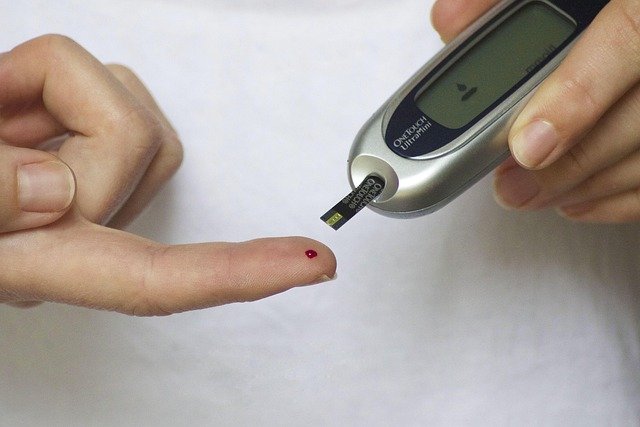
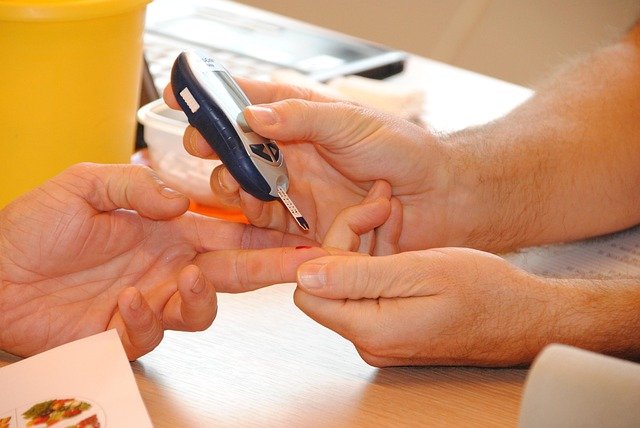
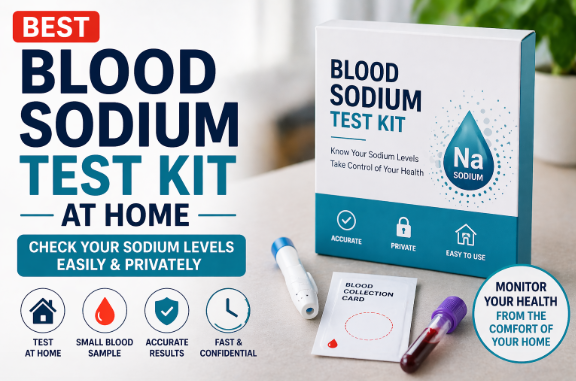
First, you order a kit online, and it arrives at your door in a discreet package. You will wash your hands and use a small, easy-to-use lancet to do a quick finger prick.
You then collect a few drops of blood in a tiny tube or on a special card. Once you package it up in the prepaid envelope, you just drop it in the mail.
A certified lab analyzes your sample. A few days later, you get a secure email with an easy-to-read report explaining your results.
Best Blood Sodium Test Kits at Home (Available Options)
Because finding a sodium-only test is rare, we recommend looking at complete electrolyte panels. Here are a few great options to consider if you want to check your levels.
Best Overall Electrolyte Test Kit
Look for a comprehensive at-home metabolic panel. These tests usually check sodium, potassium, calcium, and kidney health markers all at once.
- Features: Finger-prick blood collection, fast lab processing.
- Pros: Gives a full picture of your hydration and kidney health.
- Cons: Can be a bit pricey.
- What it measures: Sodium, potassium, chloride, and more.
Best Lab-Based Home Test
Some companies let you buy the test online, but you take the paperwork to a local lab for a quick blood draw.
- Features: Professional blood draw, highly accurate.
- Pros: No finger-pricking yourself, extremely reliable results.
- Cons: Requires leaving the house to visit a lab.
- What it measures: Full electrolyte and metabolic panel.
If you want the most accurate results possible, an alternative to at-home kits is using a professional lab test through HealthLabs.com
Unlike mail-in kits, this option allows you to order your test online and then visit a certified lab near you for a proper blood draw—giving you clinical-grade accuracy.
Best Budget Option
There are some basic hydration urine test strips available, though they are not blood tests.
- Features: Instant dip-stick test.
- Pros: Very affordable and gives immediate results.
- Cons: Not a blood test, so it is far less accurate for specific sodium levels.
- What it measures: Hydration levels and urine specific gravity.
What Do Sodium Test Results Mean?
Reading your lab report is usually straightforward. Most labs will show your level on a simple gauge.
A normal sodium level generally falls between 135 and 145 milliequivalents per liter (mEq/L). If you are in this range, your fluid balance is likely in good shape.
If your results show low sodium, doctors call this hyponatremia. This means you might be holding onto too much water, which dilutes the sodium in your blood.
If your results show high sodium, known as hypernatremia, it often means you are dehydrated. Your body is losing more water than it is taking in.
Are At-Home Sodium Tests Accurate?
Yes, most at-home blood tests are very accurate. The companies that sell these kits partner with the exact same certified labs that your doctor uses.
However, the way you collect your sample matters. If you do not squeeze enough blood or if the sample gets contaminated, the results might be off.
You can generally trust these results for a baseline check. But if your numbers come back dangerously high or low, your doctor will likely order a traditional lab test to confirm.
At-Home Sodium Test vs Lab Test
Trying to decide between doing a test at home or going to the doctor? Here is a quick breakdown to help you choose.
| Feature | At-Home Test Kit | Traditional Lab Test |
|---|---|---|
| Accuracy | Very good, but depends on your sample collection. | Excellent, performed by professionals. |
| Cost | Usually out-of-pocket, ranges from $50 to $100. | Often covered by health insurance. |
| Convenience | High. Do it in your pajamas. | Lower. Requires an appointment and travel. |
Who Should Consider Testing Sodium Levels?
Not everyone needs to check their sodium levels regularly. However, certain people should pay closer attention.
If you struggle with chronic dehydration or drink massive amounts of water every day, testing can be helpful.
People with known kidney concerns, heart conditions, or blood pressure issues often need to watch their electrolytes.
Endurance athletes, like marathon runners, also benefit from checking their levels, as intense sweating drastically lowers sodium.
Symptoms of Sodium Imbalance
How do you know if your levels are off before you take a test? Your body usually sends you warning signs.
Common sodium imbalance symptoms include deep fatigue and a lack of energy that sleep does not fix.
You might also experience brain fog or confusion, especially if your sodium drops too fast.
Other physical signs include dull headaches, nausea, and severe muscle cramps in your legs or stomach.
Monitoring your sodium levels is important, especially if you have symptoms like fatigue, confusion, or dehydration. But how often should you actually test your blood?
Limitations of At-Home Sodium Testing
While convenient, an electrolyte test kit at home is not perfect.
As mentioned earlier, standalone sodium tests are hard to find. You usually have to buy a broader health panel.
Also, these tests only give you a snapshot of that specific day. They do not tell you why your sodium is high or low.
Finally, if your results show a major problem, you still have to visit a doctor for follow-up testing and treatment.
How to Choose the Right Test Kit
When shopping for a test, always check that the company uses CLIA-certified labs. This ensures your sample is handled by trusted medical professionals.
Decide if you want a full metabolic panel or just an electrolyte test. A full panel gives you more health data for your money.
Also, look at the turnaround time. A good kit should get your results back to you within two to five days of mailing your sample.
Tips for Accurate Results
To get the best reading, stay normally hydrated the day before your test. Do not chug gallons of water, but do not restrict your fluids either.
Read the instruction manual completely before you prick your finger. Make sure your hands are washed with warm water to help the blood flow easily.
Try to avoid testing right after a heavy workout or a long run. Intense sweating will temporarily skew your sodium numbers.
Common Mistakes to Avoid
The biggest mistake people make is misinterpreting their results and panicking. A slightly high or low number is often easily fixed with diet or hydration changes.
Another mistake is ignoring actual physical symptoms. If you feel dizzy and confused, do not wait for a mail-in test kit—go to a doctor right away.
Lastly, never rely solely on home testing to manage a serious medical condition. Always use these tests as a tool to discuss with your healthcare provider.
Frequently Asked Questions (FAQ)
Can I check sodium levels at home?
Yes, you can check your levels at home using a mail-in electrolyte blood test kit. You simply collect a small blood sample and mail it to a lab.
What is a normal sodium level?
A normal sodium level is generally between 135 and 145 mEq/L.
Are home sodium tests accurate?
Yes, they are highly accurate if you follow the collection instructions perfectly. They are processed in the same medical labs that hospitals use.
How do I know if my sodium is low?
Common signs of low sodium include fatigue, headaches, nausea, muscle weakness, and confusion.
Should I see a doctor after testing?
If your results are out of the normal range or if you are feeling unwell, you should definitely share your results with a doctor.
Taking Charge of Your Hydration Health
Understanding your body does not have to be scary or complicated. Taking a proactive step to check your sodium levels can give you incredible peace of mind.
Remember, an at-home test is a wonderful tool to track your wellness, but it never replaces the advice of a caring medical professional. Always pair your home test results with real medical advice if you have concerns.