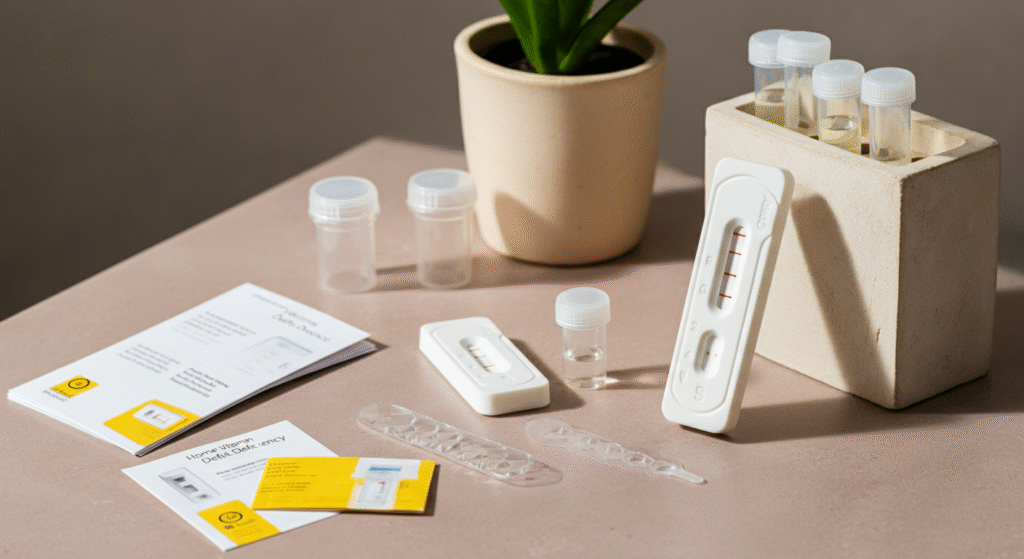
Have you been feeling unusually exhausted lately? Maybe you are struggling to remember simple things, or you have noticed a weird tingling sensation in your hands and feet.
These symptoms are incredibly common, yet they are often brushed off as just a normal part of getting older or working too hard. But what if your body is actually trying to tell you something specific?
Constant fatigue, brain fog, and numbness can be major red flags for a vitamin B12 deficiency. B12 is absolutely crucial for keeping your body running smoothly.
Unfortunately, many people are running low on this vital nutrient without even knowing it. And let’s be honest, scheduling a doctor’s appointment just to get your blood drawn can feel like a massive hassle.
You have to take time off work, sit in a crowded waiting room, and deal with unexpected medical bills. It is no wonder so many people put off getting tested.
Thankfully, there is a much easier way to check your health. An at-home vitamin B12 test kit offers a private, convenient, and highly accurate alternative to the traditional clinic visit.
This article will explain exactly why B12 matters and who is most at risk for a deficiency. We will also cover exactly how these home kits work and how you can confidently interpret your results.
Why Vitamin B12 is Vital for Your Health
You might be wondering, what does B12 do exactly? Think of vitamin B12 as the power grid for your entire body.
Without it, your systems simply cannot communicate or function properly. Understanding vitamin B12 benefits can help you see why keeping your levels up is so important.
Here is a quick look at its core functions:
- Energy Production: B12 plays a massive role in your metabolism. It helps convert the food you eat into usable cellular energy.
- Nerve Health: It helps maintain the myelin sheath, which is the protective coating around your nerves. When this breaks down, you get that uncomfortable tingling or numbness.
- Red Blood Cell Formation: Your body needs B12 to create healthy red blood cells. Without it, you risk developing megaloblastic anemia, a condition where your blood cells are too large and function poorly.
- DNA Synthesis: B12 is literally the building block of your cells. It helps create and repair your DNA, keeping your body healthy at a microscopic level.
Could You Be Deficient? Symptoms and Risk Factors
Because B12 does so much heavy lifting, running low on it can cause widespread issues. But who needs a B12 test?
It helps to know what your body looks like when it is crying out for help.
Common Warning Signs
Vitamin B12 deficiency symptoms can sneak up on you slowly. Watch out for these common warning signs:
- Chronic fatigue and generalized muscle weakness.
- Pale skin or a slight yellowing (jaundice) in your complexion.
- Brain fog, memory problems, or sudden depressive moods.
- A “pins and needles” sensation in your hands or feet, known as paresthesia.
- A sore, visibly smooth, or swollen tongue (a condition called glossitis).
High-Risk Groups
Some people are naturally at a higher risk of developing a deficiency.
- Vegans and Vegetarians: B12 is primarily found in animal products like meat, eggs, and dairy. If you eat a plant-based diet, you must supplement or test regularly.
- Adults Over 50: As we age, our stomachs produce less acid. This acid is required to separate B12 from the food we eat, meaning older adults struggle to absorb it.
- People with Digestive Disorders: Conditions like Crohn’s disease or Celiac disease severely impact nutrient absorption. The same goes for anyone who has had weight-loss surgery.
- People on Certain Medications: Long-term use of heartburn medications (PPIs) or the diabetes drug Metformin can block your body from absorbing B12 effectively.
How an At-Home Vitamin B12 Test Kit Works
If you have never done a medical test outside a clinic, the idea might sound intimidating. However, learning how to test B12 at home is surprisingly simple.
A finger-prick B12 test is designed specifically for everyday people to use without stress. Here is how the process usually goes:
- Step 1: Ordering & Receiving: You order the kit online. It arrives at your door in discreet packaging in just a few days.
- Step 2: Sample Collection: You will wash your hands and use a small, spring-loaded lancet to prick your finger. It is a quick pinch that only requires a few drops of blood on a collection card.
- Step 3: Registration & Shipping: You register your unique kit number online to ensure your privacy. Then, you place your sample in the provided pre-paid envelope and drop it in the mail to a certified lab.
- Step 4: Receiving Results: Within a few days of the lab receiving your sample, you will get an email. You can view your results privately on a secure digital portal.
Comparing At-Home Kits vs. Doctor’s Office Visits
You might be asking yourself if a home kit is really as good as a clinic visit. When comparing a B12 lab test vs. a home test, there are a few major differences to consider.
Understanding the benefits of home testing can help you make the best choice for your lifestyle.
- Convenience: Home tests eliminate travel time and waiting rooms. You can collect your sample in five minutes from your own bathroom.
- Cost: Clinic visits often come with surprise bills and hidden lab fees. Home kits usually offer flat, transparent pricing right upfront.
- Privacy: If you prefer to keep your health data off your primary medical record until you know for sure, home testing offers complete confidentiality.
- Accuracy: Reputable home kits process your blood using the exact same CLIA-certified and CAP-accredited laboratories that your local doctor uses.
What Do Your B12 Test Results Mean?
Once you get that email notification, it is time to look at your numbers.
Understanding your B12 test results means the first step to feeling better. Labs usually measure B12 in picograms per milliliter (pg/mL) or picomoles per liter (pmol/L).
Normal B12 levels typically fall between 200 and 900 pg/mL. If you are in this range, you can usually maintain your levels with a balanced diet or a daily multivitamin.
If your results come back borderline or low (under 200 pg/mL), your body is struggling. This might indicate anemia or an underlying malabsorption issue that needs attention.
If you receive abnormal results, the critical next step is sharing them with your doctor. They can help you figure out a proper treatment plan, which might include high-dose supplements or routine B12 injections.
Choosing the Right At-Home B12 Test Kit
Not all health kits are created equal. If you want the best at-home B12 test, you need to know what to look for before you buy.
Keep an eye out for reputable B12 test kits that meet these specific criteria:
- Lab Accreditation: This is non-negotiable. Ensure the company explicitly states they use CLIA-certified or CAP-accredited labs.
- Type of B12 Tested: Some kits test Total B12, while others test Active B12 (holotranscobalamin). Active B12 is often better because it measures the specific B12 your body can actually use right now.
- Turnaround Time: Look for a company that promises results within two to five days of receiving your sample. You shouldn’t have to wait weeks for answers.
- Price: Check the fine print. Make sure the upfront price includes the lab processing fees and the return shipping label.
Frequently Asked Questions (FAQ)
Do I need to fast before a home B12 test?
In most cases, you do not need to fast before taking a B12 test. However, you should always read the specific instructions included in your kit, as some labs have different requirements.
Can I test my B12 if I am already taking supplements?
Yes, but the results will reflect your supplemented levels, not your baseline. If you want to know what your body does naturally, doctors usually recommend pausing supplements for a week or two before testing.
How accurate are at-home finger-prick blood tests?
They are highly accurate when used correctly. As long as you follow the collection instructions and the company uses a certified laboratory, your results will be just as reliable as a traditional blood draw.
What are the signs of severe B12 deficiency?
Severe deficiency can cause serious neurological issues. Watch out for extreme difficulty walking, severe memory loss, paranoia, and dangerous drops in red blood cell counts.
Take Control of Your Health Today
Vitamin B12 is absolutely essential for keeping your brain, nerves, and blood cells healthy. Unfortunately, a deficiency is a very common problem that can quietly steal your energy for months or even years.
Knowing your actual levels is the master key to your long-term health. You do not have to guess why you are feeling tired, and you certainly do not have to wait for symptoms to disrupt your life.
Testing from home is incredibly easy, totally private, and highly accurate. Do not wait until your symptoms worsen to get the answers you deserve.
Find Our Recommended At-Home Vitamin B12 Test Kits HERE