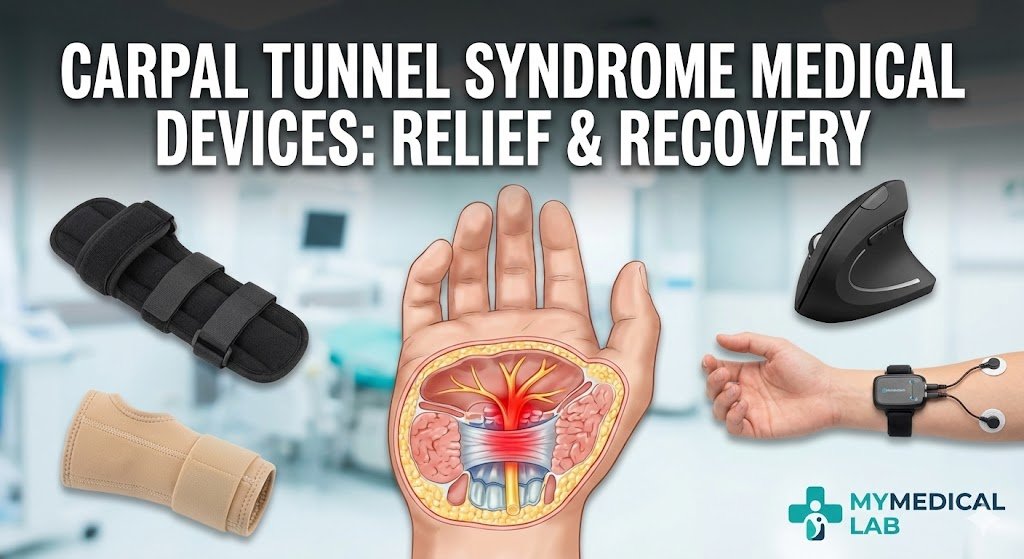
Carpal tunnel syndrome affects millions of people each year, causing numbness, tingling, and weakness in the hands. If you’re dealing with these symptoms, you’re probably wondering what tools can actually help you heal at home.
If your pain is strictly localized to the thumb side of your wrist and feels like sharp grinding rather than numbness, you might be dealing with a different repetitive strain injury. Check out our guide to the top recovery gear for De Quervain’s syndrome instead.)
The good news? You don’t need to jump straight to surgery. Research shows that 70% to 90% of mild-to-moderate carpal tunnel cases respond well to conservative treatment. The key is using the right gear consistently and understanding how each tool works.
This guide breaks down the most effective at-home recovery equipment, from basic night splints to advanced clinical devices. We’ll also cover what medical professionals use for more severe cases, so you understand all your options.
Essential At-Home Recovery Tools
1. Night Wrist Splints
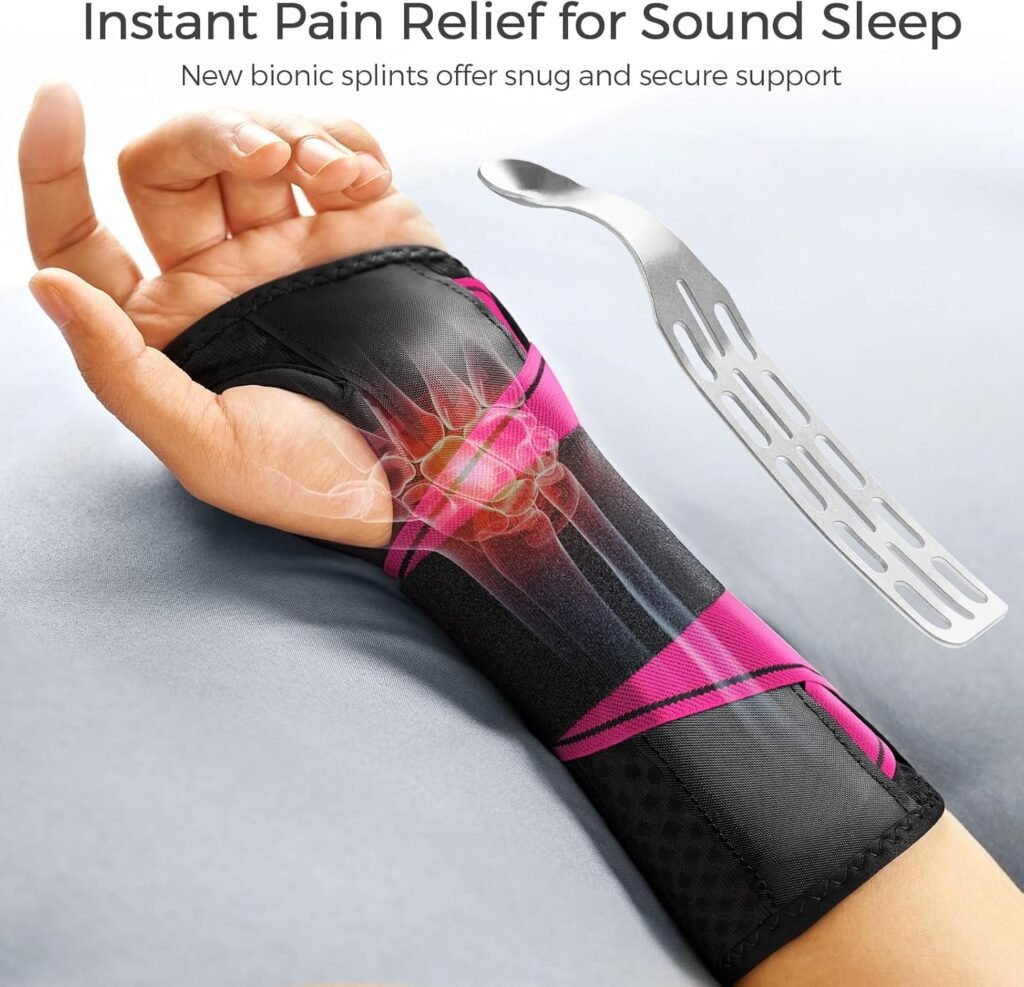
How it feels: A heavily padded, comfortable brace that keeps your hand perfectly flat while you sleep.
The benefit: Night splints are the #1 recommended conservative treatment for carpal tunnel syndrome. Here’s why they work: most people naturally curl their wrists inward while sleeping, which maximizes pressure on the median nerve. A night splint holds your wrist in a neutral position, relieving that pressure for 6-8 hours every night.
According to the National Institutes of Health, wearing a splint can improve symptoms within a few weeks, though the effect may be temporary without consistent use. Studies suggest that patients should undergo follow-up evaluation within 1 to 2 months. If symptoms improve, continue splinting. If not, consider combining it with other therapeutic approaches.
Crucial buying tip: Avoid rigid sports braces with hard metal spines pressing directly into the palm. This can actually compress the nerve more. Look for splints with support on the back of the hand or designs specifically contoured to relieve palm pressure.
Timeline: Many people feel a reduction in morning numbness within the first few days of wearing a night splint. However, it typically takes 4 to 8 weeks of consistent nightly use to see significant, lasting improvement.
2. Daytime Low-Profile Wrist Braces
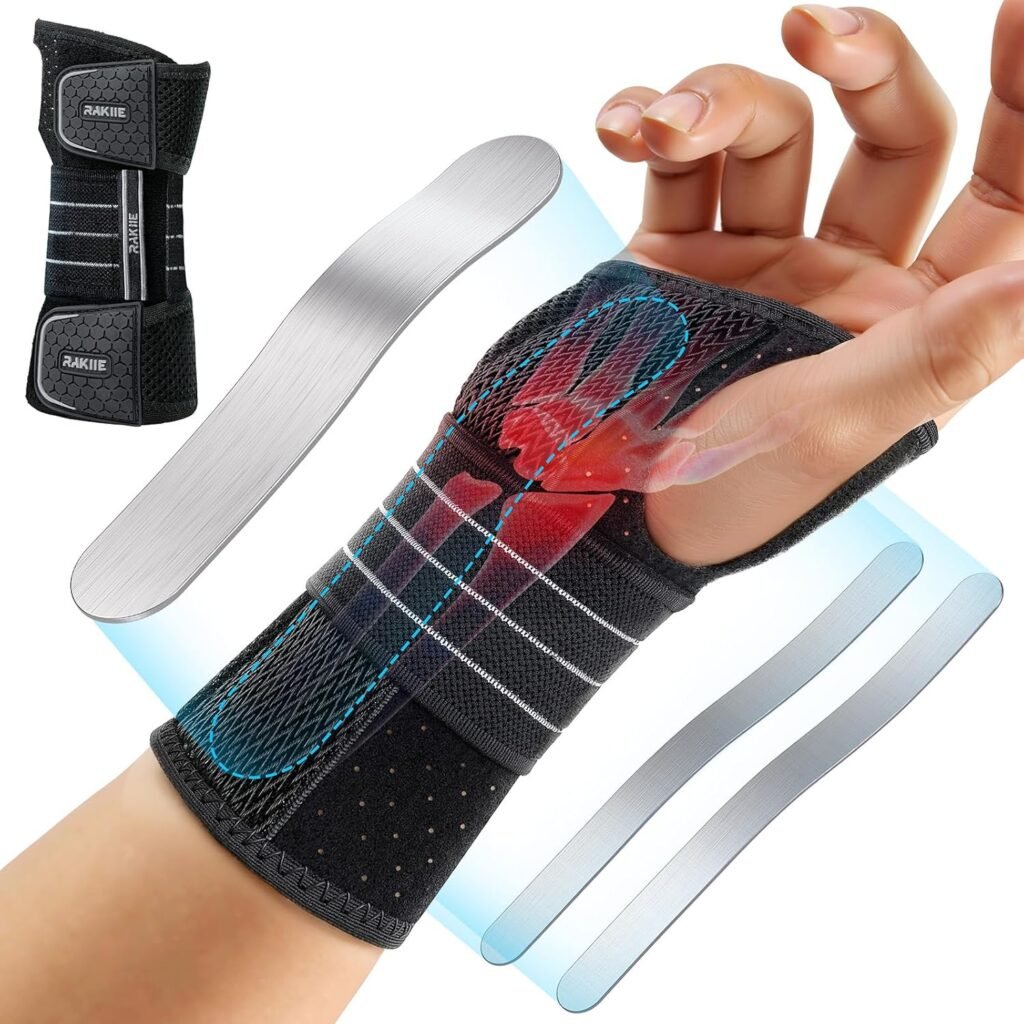
How it feels: A snug, lightweight sleeve that restricts extreme wrist bending but leaves your fingers completely free.
The benefit: You still need to use your hands during the day. A low-profile daytime brace (made with breathable neoprene or moisture-wicking materials) acts as a physical reminder to keep your wrist in a neutral posture while typing or lifting.
Important note: The brace should be snug enough to keep your wrist straight, but never so tight that it restricts blood flow or increases the tingling in your fingers. If you notice increased numbness or your fingers turn pale or blue, loosen the brace immediately.
3. Ergonomic Office and Gaming Devices
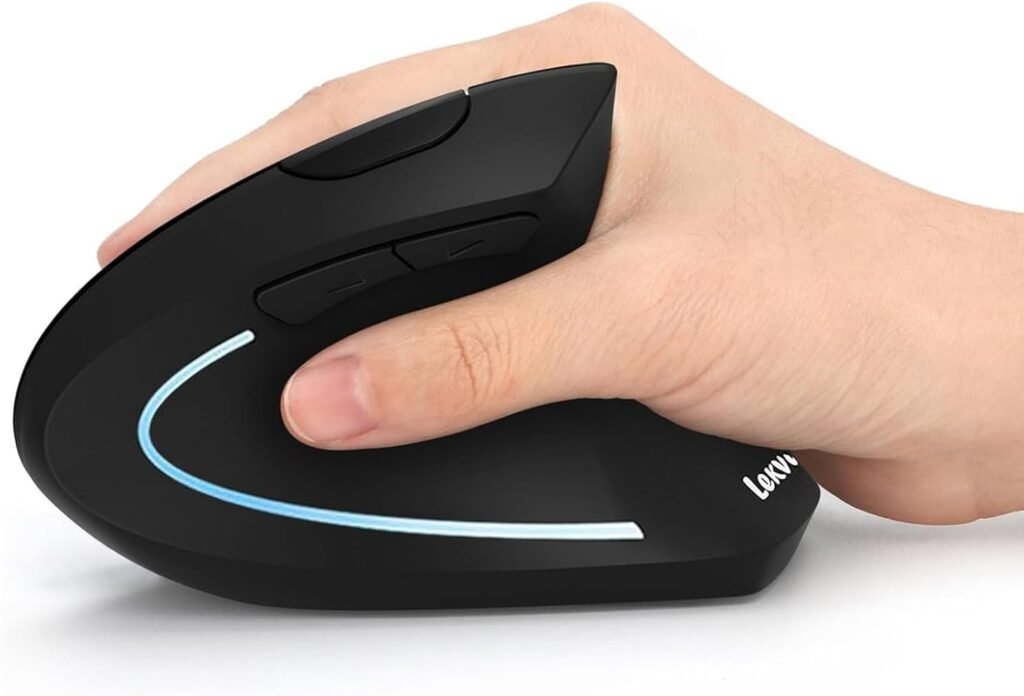
How it feels: Typing and clicking in a relaxed, natural “handshake” posture.
The benefit: Since repetitive strain is a major trigger for carpal tunnel, fixing your workstation is essential. Research indicates that while computer work has at most a very small effect on carpal tunnel syndrome, ergonomic adjustments can reduce strain on your hand and wrist.
Consider these devices:
- Vertical ergonomic mice: Stop you from twisting your forearm flat
- Split, tented keyboards: Keep your wrists perfectly straight
- Wrist rests with memory foam: Provide support without pressure points
While studies haven’t definitively proven that ergonomic keyboards prevent carpal tunnel, they do help reduce strain when typing, which is particularly helpful if you’re already experiencing symptoms.
4. Electromyographic (EMG) Biofeedback Devices
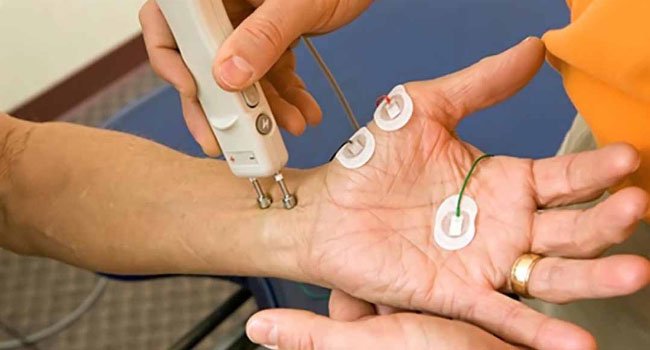
What it is: Small wearable sensors that monitor your muscle activity in real-time.
The benefit: These home-use devices provide real-time feedback (like a beep or vibration) if you’re tensing your forearm muscles too hard or bending your wrist at a dangerous angle. This helps you physically retrain your movement habits throughout the day.
While specific research on consumer EMG biofeedback devices for carpal tunnel is still emerging, the principle is sound: awareness of harmful postures is the first step toward correcting them.
Advanced Clinical Medical Devices & Treatments
Understanding professional medical options builds your knowledge and helps you have informed conversations with your doctor. Here are the advanced treatments healthcare providers use for more severe cases.
1. Diagnostic Ultrasound (Shear Wave Elastography)
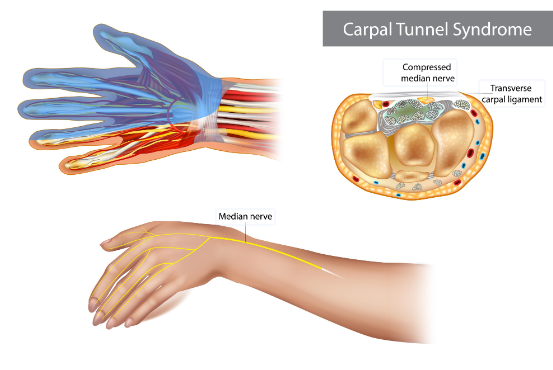
What it is: Doctors use specialized, FDA-cleared ultrasound machines to map the exact stiffness and thickness of the median nerve and transverse carpal ligament.
How it works: Instead of relying only on nerve conduction studies, doctors can look inside the wrist in real-time to see exactly where the swelling and compression are happening. A 2022 study found that measurements of the transverse carpal ligament thickness and stiffness at the distal carpal tunnel had diagnostic accuracy (AUC) ranging between 0.925 and 0.967—significantly higher than traditional nerve measurements.
This technology also helps doctors evaluate severity and track healing over time, providing objective data to guide treatment decisions.
2. Extracorporeal Shockwave Therapy (ESWT)
What it is: A machine that sends acoustic energy waves deep into the wrist.
How it works: This therapy stimulates blood flow, reduces inflammation around the nerve, and promotes tissue repair without injections or medication. Experimental studies indicate that shockwave therapy enhances nitric oxide production, repairs damaged axons, and promotes axonal regeneration.
A 2025 randomized controlled trial found that high-dose radial extracorporeal shockwave therapy (administered at 4.0 bars) was significantly better than low-dose therapy in recovering nerve conduction parameters and functional status in patients with carpal tunnel syndrome. Both groups showed improvements in pain, grip strength, and function, but the high-dose group demonstrated moderate effect sizes for nerve recovery.
3. Minimally Invasive Carpal Tunnel Surgical Devices
What it is: If surgery is required, doctors no longer have to make large incisions across the entire palm. Advanced tools like endoscopic release systems allow for much smaller incisions and faster recovery.
How it works: Using a tiny incision (5-10 mm), a surgeon can insert specialized instruments to cut the tight ligament pressing on your median nerve. Some systems use endoscopic cameras for visualization, while others use ultrasound guidance.
One example in development is the CarpX device, which uses a balloon catheter with integrated bipolar radiofrequency electrodes. The balloon protects the nerve and tendons while the electrodes precisely cut the ligament from the inside out. According to a 2020 clinical safety study, all 20 patients met pre-specified effectiveness and safety endpoints, with procedures eventually performed through small keyhole incisions that avoided crossing the base of the palm—an area known for problematic healing after traditional open surgery.
Recovery advantage: Endoscopic and minimally invasive approaches typically result in less pain and faster recovery than traditional open surgery, with many patients returning to normal activities within weeks rather than months.
Frequently Asked Questions
Should a carpal tunnel brace be tight?
No. Your brace should be snug enough to keep your wrist straight, but never so tight that it restricts blood flow or increases the tingling in your fingers. If you notice increased numbness, swelling, or your fingers turn pale or blue, loosen the brace immediately.
Can a massage gun fix carpal tunnel?
You should never use a percussion massage gun directly on the wrist or over the median nerve, as this can cause nerve damage. You can carefully use it on your forearm muscles to relieve tension, but keep it at least several inches away from the carpal tunnel itself.
How long should I try conservative treatment before considering surgery?
According to medical guidelines, patients should undergo follow-up evaluation within 1 to 2 months of starting conservative treatment. If symptoms improve, continue with splinting and other conservative measures. If there’s no improvement after 1 or 2 corticosteroid injections (when applicable), or if you have severe symptoms confirmed by nerve conduction studies, your doctor may recommend surgery.
Do hand exercises really help?
Yes. Research suggests that certain exercises can relieve symptoms for several weeks or months. Tendon gliding exercises, nerve mobilization techniques, and manual therapy have shown benefits in studies. Your doctor or hand therapist can teach you the proper techniques.
Take Control of Your Recovery
Carpal tunnel syndrome doesn’t have to derail your daily life. Start with the basics: wear a night splint consistently, make ergonomic adjustments to your workspace, and avoid activities that worsen your symptoms.
If you’re not seeing improvement within 4-6 weeks, or if your symptoms are severe (like weakness when gripping objects or constant numbness), schedule an appointment with your doctor. They can perform nerve conduction studies, discuss injection options, or refer you to a hand specialist if needed.
Remember: early intervention gives you the best chance of avoiding surgery altogether. The tools in this guide work best when used consistently and as part of a comprehensive treatment plan.