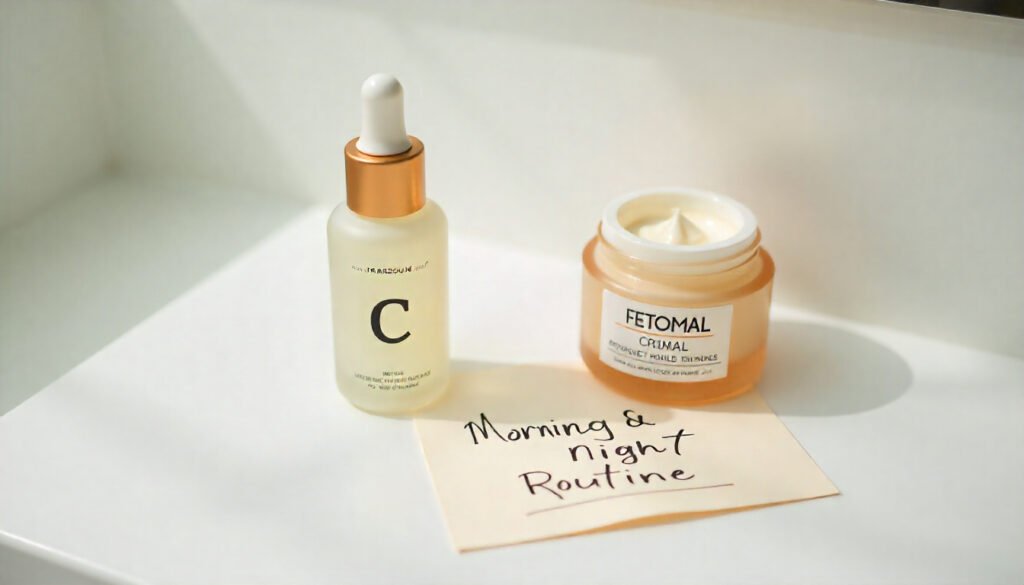
Vitamin C and Retinol are two of the most celebrated ingredients in modern skincare. One is praised for its brightening abilities, the other for its anti-aging power. But a quick search online reveals a whirlwind of conflicting advice about whether these two powerhouses can be used together. The confusion is enough to make anyone hesitant to mix them into their daily regimen.
This post will cut through the noise. We are here to provide a clear, evidence-based guide on how to safely and effectively incorporate both Vitamin C and Retinol into your skincare routine. You will learn about the unique benefits of each ingredient, the best way to combine them for maximum results, and crucial tips to avoid irritation. By the end, you’ll feel confident building a routine that helps you achieve your skin goals.
What is Vitamin C?
In the world of skincare, Vitamin C is a potent antioxidant that plays a crucial defensive role. It works on the skin’s surface to protect it from damage caused by environmental aggressors like UV rays and pollution. These aggressors produce free radicals, which are unstable molecules that can damage skin cells, leading to premature aging.
The primary benefits of Vitamin C include:
- Protection from Environmental Damage: As an antioxidant, it neutralizes free radicals, helping to prevent the visible signs of aging.
- Brighter Complexion: It inhibits the enzyme responsible for melanin production, which helps to fade dark spots, sun spots, and post-acne marks (hyperpigmentation), leading to a more even and radiant skin tone.
- Collagen Production: Vitamin C is essential for synthesizing collagen, the protein that gives skin its firmness and structure. Regular use can help skin look plumper and more youthful.
When you’re shopping for products, you might see different forms of Vitamin C listed. L-ascorbic acid is the most potent and well-researched form, but it can be unstable. Other popular derivatives, like Sodium Ascorbyl Phosphate and Tetrahexyldecyl Ascorbate, are more stable and gentler on the skin, making them great options for sensitive types.
What is Retinol?
Retinol is a derivative of Vitamin A and is considered the gold standard ingredient for tackling signs of aging. It works on a deeper level than Vitamin C by communicating with skin cells and encouraging them to behave in a healthier, more youthful way.
The key benefits of Retinol are:
- Accelerated Cell Turnover: Retinol speeds up the rate at which your skin sheds dead cells and generates new ones. This process helps to reduce the appearance of fine lines, wrinkles, and uneven texture.
- Pore Management: By keeping cell turnover efficient, Retinol helps prevent dead skin cells from clogging pores, making it an effective tool for managing acne and reducing the appearance of enlarged pores.
- Improved Skin Tone: Over time, Retinol can improve overall skin texture and tone, leaving it smoother and more refined.
Retinol is available in various strengths. Over-the-counter formulas are a great starting point for beginners. Prescription-strength retinoids, like tretinoin, are more powerful and offer faster results but also come with a higher risk of irritation.
Can You Use Vitamin C and Retinol Together?
Let’s get straight to the point: Yes, you can absolutely use Vitamin C and Retinol in your skincare routine. When used correctly, they form a highly effective duo that can address a wide range of skin concerns, from dullness to wrinkles.
The myth that they “cancel each other out” stems from older research related to their pH levels. Early formulations of Vitamin C required a very low (acidic) pH to remain stable, while Retinol worked best at a more neutral pH. The concern was that using them together would destabilize both ingredients, rendering them ineffective.
However, modern skincare formulation has come a long way. Today, many Vitamin C products are created with more stable derivatives that work well at a wider range of pH levels. The key isn’t whether you can use them together, but how you combine them to maximize benefits and minimize potential irritation.
How to Safely Combine Vitamin C and Retinol in Your Routine
The safest and most effective way to use both ingredients is to separate them. This simple rule ensures that each active ingredient can work at its optimal pH without interfering with the other.
The Golden Rule: Vitamin C in the Morning, Retinol at Night.
Your Morning (AM) Routine
Vitamin C is the perfect daytime ingredient. Its antioxidant properties provide an extra layer of defense against the environmental stressors you encounter throughout the day, like sunlight and pollution. It essentially works alongside your sunscreen to protect your skin.
A simple morning routine looks like this:
- Cleanser: Start with a gentle face wash.
- Vitamin C Serum: Apply a few drops to dry skin.
- Moisturizer: Lock in hydration.
- Sunscreen: Finish with a broad-spectrum SPF 30 or higher.
Your Evening (PM) Routine
Retinol is best reserved for nighttime. This is because it can make your skin more sensitive to the sun, increasing the risk of sunburn. Furthermore, your skin’s natural repair processes are most active while you sleep, making it the ideal time for Retinol to work its magic on cell turnover and collagen production.
A simple evening routine looks like this:
- Cleanser: Wash your face to remove makeup, dirt, and impurities.
- Retinol Serum: Apply a pea-sized amount to dry skin.
- Moisturizer: Follow with a nourishing moisturizer to soothe and hydrate.
If you are new to Retinol, it’s crucial to start slowly. Begin by applying it just 2-3 times a week and gradually increase the frequency as your skin builds tolerance. This approach will help you reap the benefits without overwhelming your skin.
Potential Side Effects and How to Manage Them
Introducing powerful active ingredients like Retinol can sometimes lead to side effects, especially in the beginning. Common signs of irritation include redness, dryness, peeling, and increased sensitivity. This is often referred to as “retinization,” the adjustment period as your skin gets used to the ingredient.
Here are actionable tips to manage these side effects:
- Start Low and Go Slow: Choose a product with a lower concentration of Retinol to begin with. Don’t rush into using it every night.
- Try the “Sandwich” Method: To buffer the intensity of Retinol, apply a thin layer of moisturizer to your skin, wait a few minutes, apply your Retinol, and then follow with another layer of moisturizer.
- Listen to Your Skin: If you experience significant irritation, take a break for a few days. Your skin’s health is the priority. You can always reduce the frequency of use.
- Hydration is Key: Support your skin barrier by using a good, simple moisturizer. Look for hydrating ingredients like hyaluronic acid, ceramides, and glycerin to use in the same routine.
- Sunscreen is Non-Negotiable: This cannot be stressed enough. Both Vitamin C and Retinol can make your skin more vulnerable to sun damage. Applying a broad-spectrum sunscreen with at least SPF 30 every single morning is essential to protect your skin and preserve your results.
Power Up Your Skincare Routine
Incorporating Vitamin C and Retinol into your skincare doesn’t have to be complicated. These two ingredients are a true power couple that can deliver transformative results. By following the simple rule of using Vitamin C in the morning and Retinol at night, you can effectively address a wide range of concerns, from dullness and dark spots to fine lines and acne.
With this knowledge, you can confidently build a skincare routine that is both safe and effective. Listen to your skin, be patient with the process, and get ready to enjoy a brighter, smoother, and more youthful complexion.