Trying to conceive can feel like a rollercoaster of emotions. For many couples, it is a journey filled with anticipation, hope, and sometimes, frustration. Statistics show that approximately 1 in 6 people experience difficulties with fertility, making it a far more common challenge than it may seem.
While the traditional route often involves scheduling appointments with specialists, waiting for referrals, and visiting clinics, a new option has emerged. At-home fertility tests are growing in popularity as a private, accessible first step for individuals and couples wanting to understand their reproductive health better.
Whether you are just starting to try for a baby or have been trying for a while without success, understanding your body is crucial. This guide explores the landscape of at-home fertility testing for both men and women. We will cover what these tests actually do, the different options available, and how to decide if this route aligns with your family-planning goals.
What is an At-Home Fertility Test?
Historically, assessing fertility required a visit to a doctor’s office or a specialized clinic. This often meant taking time off work, dealing with insurance approvals, and waiting weeks for results. Modern at-home kits have disrupted this model by bringing the laboratory technology to your bathroom cabinet.
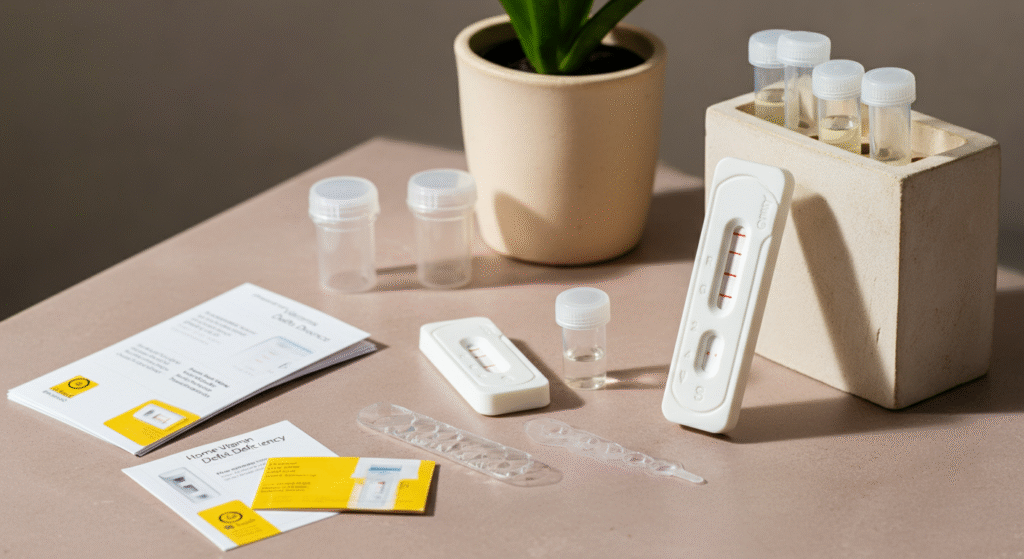
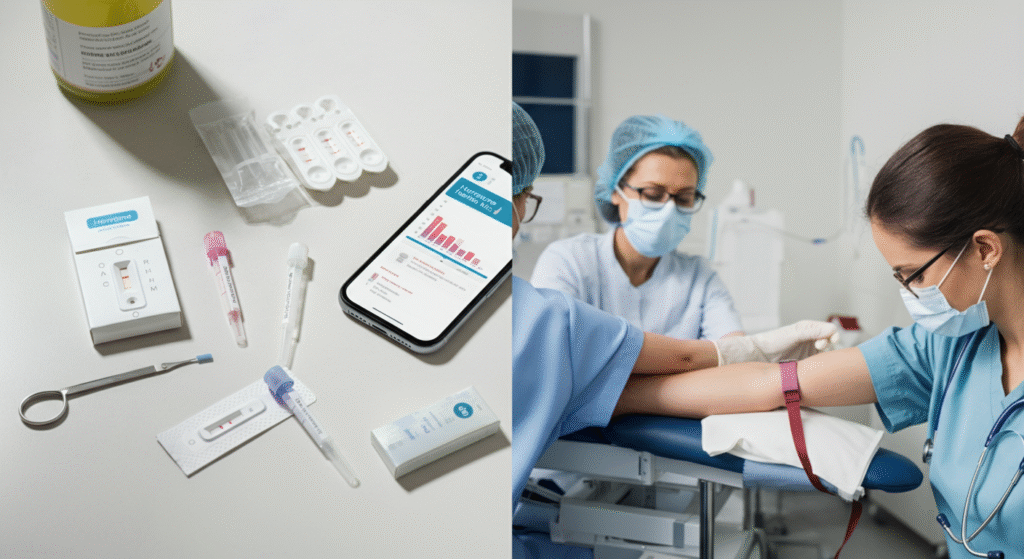
These kits are designed to analyze specific biological markers that indicate reproductive potential. They differ from clinical tests primarily in the collection method. Instead of a phlebotomist drawing blood or providing a sample in a clinical setting, you collect the sample—usually urine, a finger-prick blood sample, or semen—in the privacy of your own home. You then test it immediately with a device or mail it to a certified lab for analysis.
While the methods vary, the goal remains the same: to give you a snapshot of your fertility health.
- Female fertility testing typically focuses on hormone levels. These include Luteinizing Hormone (LH) to predict ovulation, Follicle-Stimulating Hormone (FSH) to assess ovarian function, and Anti-Müllerian Hormone (AMH) to estimate egg count.
- Male fertility testing generally analyzes sperm health. These tests look at metrics such as sperm count (how many), motility (how well they move), and concentration.
It is important to remember that these tests provide valuable data points, but they do not offer a complete medical diagnosis. They serve as a powerful screening tool to help you understand your baseline.
Top At-Home Fertility Tests for Women
Women have complex hormonal cycles, and different tests are designed to capture different parts of that picture. Understanding which test you need depends on what you are trying to find out.
Ovulation Predictor Kits (OPKs)
If your immediate goal is pregnancy, knowing when you ovulate is essential. Ovulation Predictor Kits are the most common form of female fertility testing. These urine-based tests track the surge of Luteinizing Hormone (LH) that occurs roughly 24 to 36 hours before an egg is released.
By identifying this LH surge, you can pinpoint your “fertile window”—the days when intercourse is most likely to result in pregnancy. These tests come in two main forms: standard test strips (which show a line that darkens) and digital readers (which give a clear “yes” or “no” result).
Hormone & Ovarian Reserve Tests
For those looking at the bigger picture—perhaps considering freezing eggs or worried about age-related fertility decline—ovarian reserve tests are beneficial. These typically require a finger-prick blood sample.
These tests measure Anti-Müllerian Hormone (AMH). Since AMH is produced by the follicles in your ovaries, the level of this hormone correlates to the number of eggs you have left (your ovarian reserve). Some kits also measure Follicle-Stimulating Hormone (FSH) and Estradiol. High FSH levels on day 3 of your cycle can sometimes indicate that your ovaries are working harder to produce an egg, suggesting a lower reserve.
While no test can predict exactly when you will get pregnant or when menopause will start, these results can help you make informed decisions about your reproductive timeline.
Top At-Home Fertility Tests for Men
Fertility is a shared equation, with male factors contributing to roughly 40-50% of infertility cases. Despite this, men are often tested last. At-home male fertility testing helps break down the stigma and embarrassment often associated with clinical sperm analysis.
Sperm Analysis Kits
The most common at-home option for men is the sperm analysis kit. Traditional analysis requires producing a sample in a clinical room, which can be uncomfortable for many. At-home kits allow for sample collection in a familiar environment.
Some of these kits are rapid tests that give you results in minutes, similar to a pregnancy test, telling you if your sperm count is above or below a “normal” threshold. More advanced options involve mailing a sample in a special preservation solution to a lab. The lab then provides a detailed report on:
- Volume: The amount of semen produced.
- Count: The total number of sperm.
- Concentration: The density of sperm within the sample.
- Motility: The percentage of sperm that are moving properly.
Hormone Tests for Men
While less common than sperm analysis, hormone testing is also available for men. These tests usually check testosterone levels. Low testosterone can impact sperm production and sex drive, serving as another puzzle piece in the broader fertility picture.
When considering male fertility testing at home, look for FDA-cleared devices or services that use CLIA-certified labs to ensure the accuracy is comparable to what you would receive from a doctor.
The Pros and Cons of Testing at Home
Before purchasing a kit, it is helpful to weigh the advantages against the limitations. Here is a breakdown of why you might—or might not—choose an at-home fertility test.
Benefits
- Privacy & Comfort: For many, fertility is a deeply personal topic. Testing at home removes the anxiety of clinical environments and uncomfortable interactions.
- Convenience: There is no need to take time off work, sit in traffic, or wait months for an appointment. You can test on your own schedule.
- Cost-Effective: Clinical fertility workups can be expensive, often costing hundreds or thousands of dollars. At-home kits are generally a fraction of the price, making them a good entry point.
- Empowerment: Knowledge is power. Having data about your own body allows you to have more informed, productive conversations with your doctor later on.
Limitations
- Incomplete Picture: A hormone test cannot tell you if your fallopian tubes are blocked or if there are uterine abnormalities (like fibroids). A sperm count test cannot detect DNA fragmentation.
- User Error: Clinical professionals are trained to collect and handle samples perfectly. At home, mistakes in collection or reading the results can happen.
- Anxiety: Receiving a result that indicates “low fertility” or “low egg count” while sitting alone in your bathroom can be distressing without a doctor immediately present to explain what it means.
How to Choose the Right At-Home Fertility Test
With dozens of brands flooding the market, selecting the right one can be confusing. Here is a checklist to help you navigate your options:
- Define Your Goal: Are you trying to conceive right now (look for ovulation kits), or are you curious about your long-term fertility potential (look for ovarian reserve or sperm analysis kits)?
- Check for Validation: Is the test FDA-cleared? Does the company use a CLIA-certified lab? Accuracy matters, so look for brands that have validated their technology against standard clinical methods.
- Ease of Use: Read reviews regarding the user experience. Are the instructions clear? Is the blood collection process painful? Complicated instructions increase the chance of user error.
- Result Interpretation: Does the purchase price include a follow-up consultation or a detailed guide? Data is useless if you don’t understand it. Look for companies that offer access to nurses or fertility experts to help you interpret your results.
Empowering Your Reproductive Journey
Taking an at-home fertility test can be a proactive and empowering step toward understanding your reproductive health. Whether you are confirming that your hormones are balanced or checking sperm health before trying to conceive, these tools offer accessible insights that were once difficult to obtain.
However, remember that these tests are a starting point, not a final answer. They are best used as a complement to professional medical advice rather than a substitute. If your results raise concerns, or if you have been trying to conceive for 6 to 12 months (depending on your age) without success, take your results to a fertility specialist.
By combining the data from your at-home test with professional guidance, you can create a comprehensive plan that supports your family-building goals.