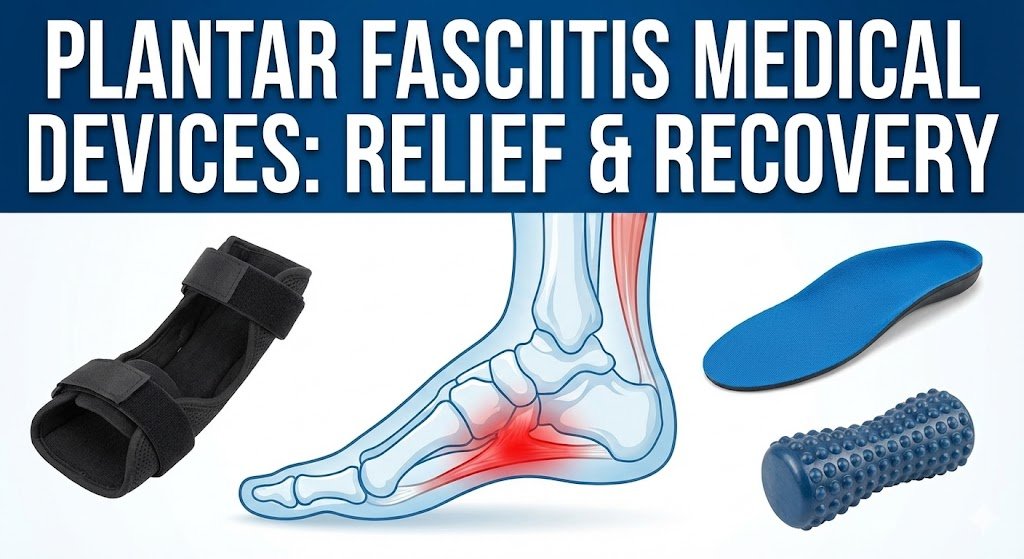
The plantar fascia is a thick band of tissue that runs along the bottom of your foot, connecting your heel bone to your toes. When it gets irritated or overworked, every step feels like walking on broken glass.
If your heel pain is concentrated specifically on the back of your ankle above the heel bone, rather than the bottom of your foot, head over to our breakdown of the top Achilles tendonitis recovery gear instead.)
Here’s the problem: waiting for the pain to disappear on its own rarely works. The tissue needs active support to heal properly. That’s where recovery gear comes in. From simple arch supports you can slip into your shoes to high-tech clinical tools used by doctors, the right equipment can speed up healing and get you back on your feet comfortably.
This guide breaks down the best medical devices for plantar fasciitis—both the ones you can use at home and the advanced options available in a clinic.
Best At-Home Recovery Gear for Plantar Fasciitis
If you’re looking for immediate relief without booking a doctor’s appointment, these at-home devices are a great starting point.
1. Night Splints (For Morning Pain)
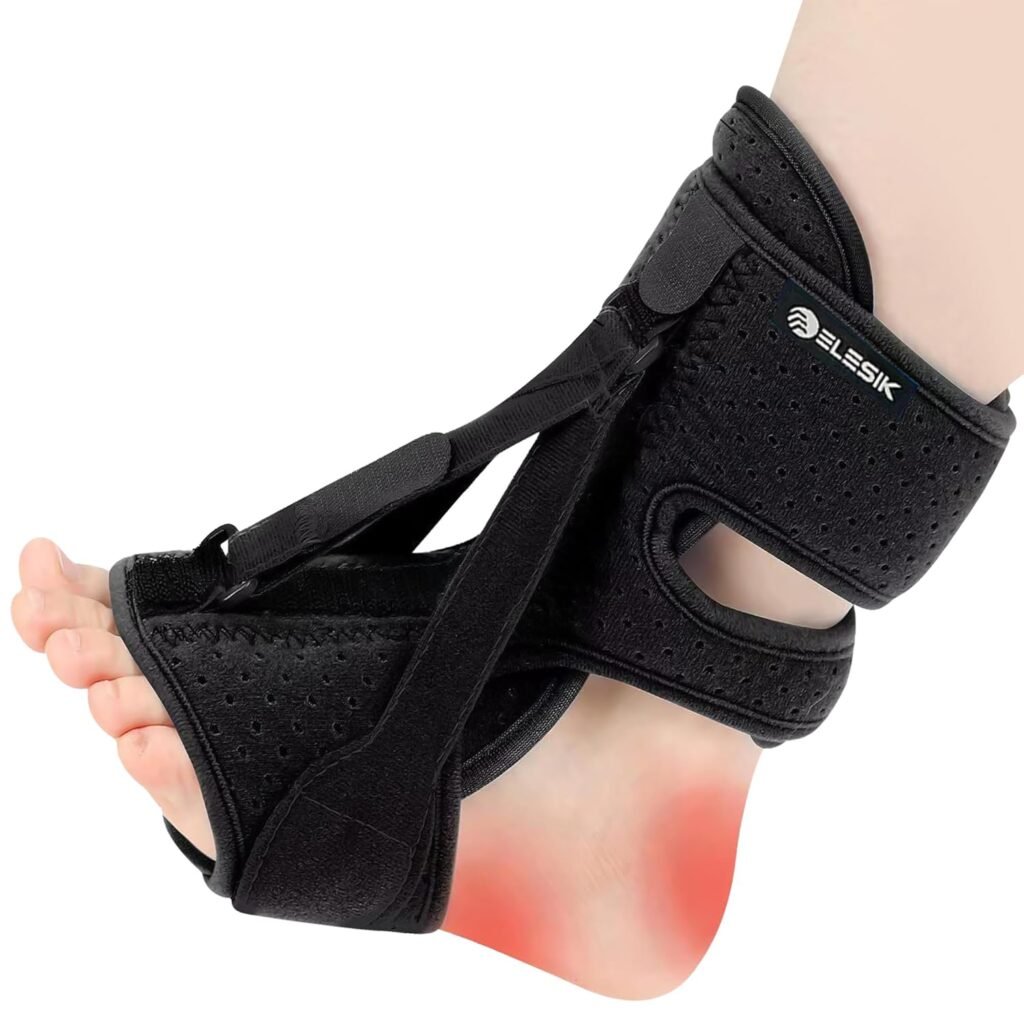
How it feels: A night splint wraps around your foot and lower leg, holding your foot at a firm 90-degree angle while you sleep. Instead of letting your foot naturally point downward (which shortens the fascia overnight), the splint keeps it stretched.
The benefit: This constant, gentle stretch prevents the tissue from healing in a tight, contracted position. When you stand up in the morning, you’re not immediately re-tearing the fascia with that first step.
Research published by the National Center for Biotechnology Information shows that patients wearing night splints often see significant improvement within just four weeks, with many achieving full symptom resolution by 12 weeks.
Night splints are especially helpful if your worst pain happens during those first few morning steps. Because rigid night splints hold the foot at a strict 90-degree angle, they are also a primary at-home tool used to treat severe Achilles tendonitis, making them a highly versatile piece of recovery gear.
2. Orthotics and Arch Support Insoles
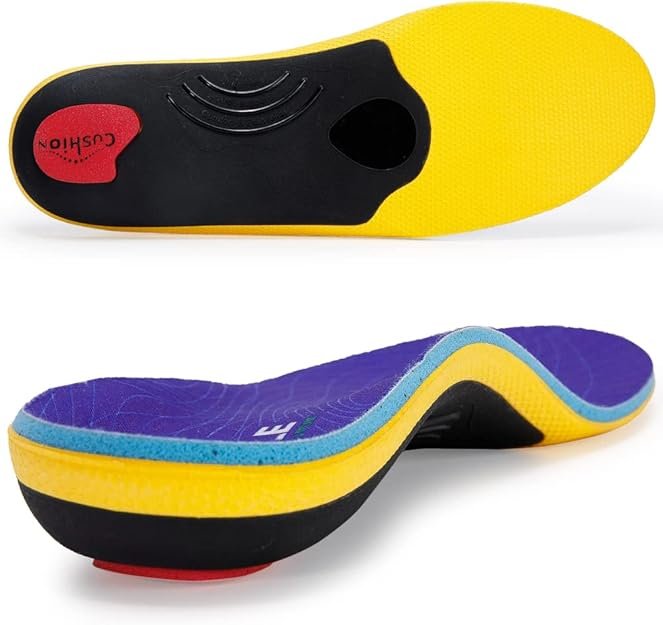
How it feels: Like a shock absorber built directly into your shoe.
The benefit: These devices redistribute your body weight evenly across your foot, reducing the load on the plantar fascia. By supporting the arch and cushioning the heel, they help prevent further strain during daily activities.
Here’s something that might surprise you: while custom orthotics from a podiatrist are effective, studies show that high-quality, over-the-counter insoles often work just as well for people without major biomechanical issues. Prefabricated options can provide excellent daily support at a fraction of the cost.
When choosing insoles, look for semi-rigid designs that offer both arch support and a cushioned heel cup. Some also include an aperture (a cut-out section) to relieve direct pressure on swollen or tender areas of the plantar fascia.
3. Orthopedic Foot Rollers
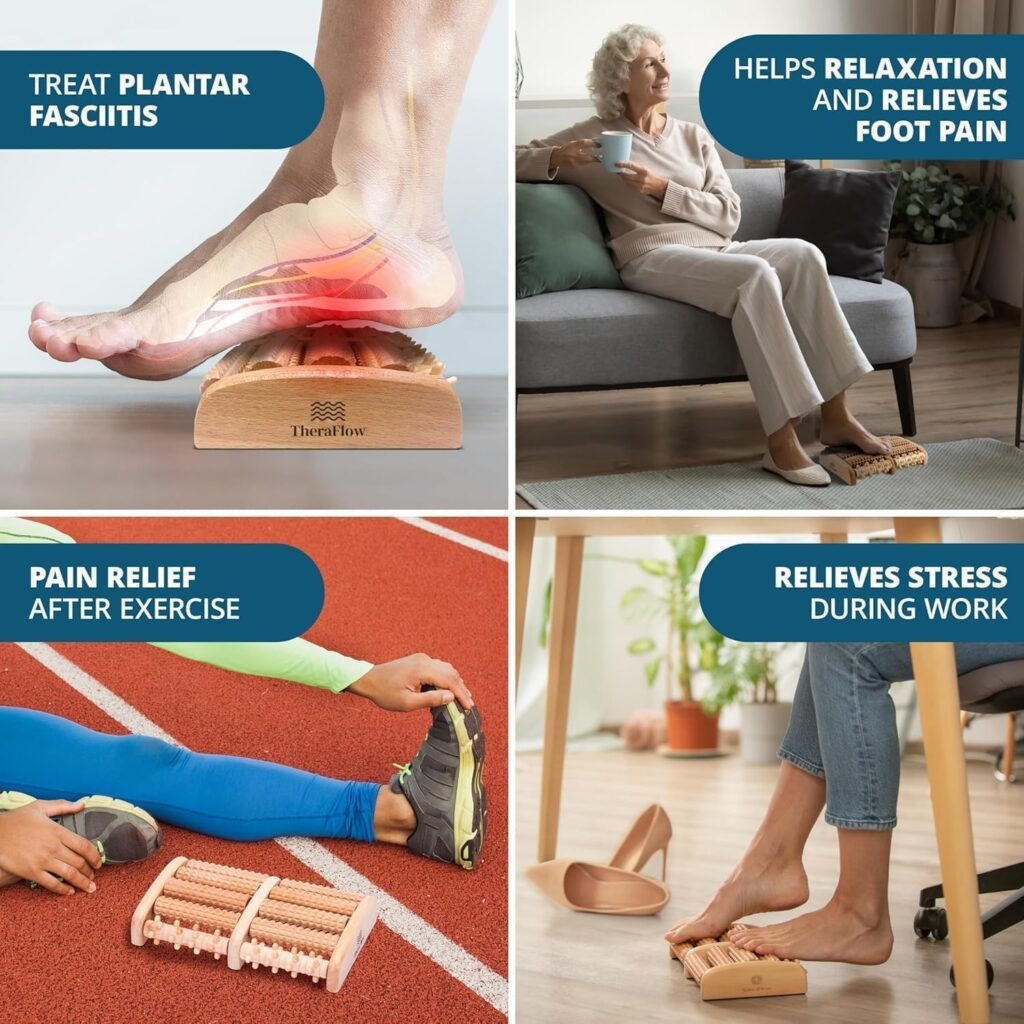
How it feels: Like a deep tissue massage targeting the sorest part of your arch.
The benefit: Foot rollers break up tension in the plantar fascia and surrounding muscles. Rolling your foot for just five to ten minutes can increase blood flow, reduce stiffness, and provide temporary pain relief.
One standout option is the Roll Recovery R3, an FDA-cleared medical device designed with an asymmetrical shape. Unlike basic foam rollers, the R3’s unique design lets you target both the inner and outer portions of your foot with precision. It’s compact, easy to use, and works well as part of a daily stretching routine.
A simple DIY alternative? Roll a frozen water bottle or can under your foot with moderate pressure at the end of each day. The cold helps reduce inflammation while the rolling motion loosens tight tissue.
4. Compression Foot Sleeves
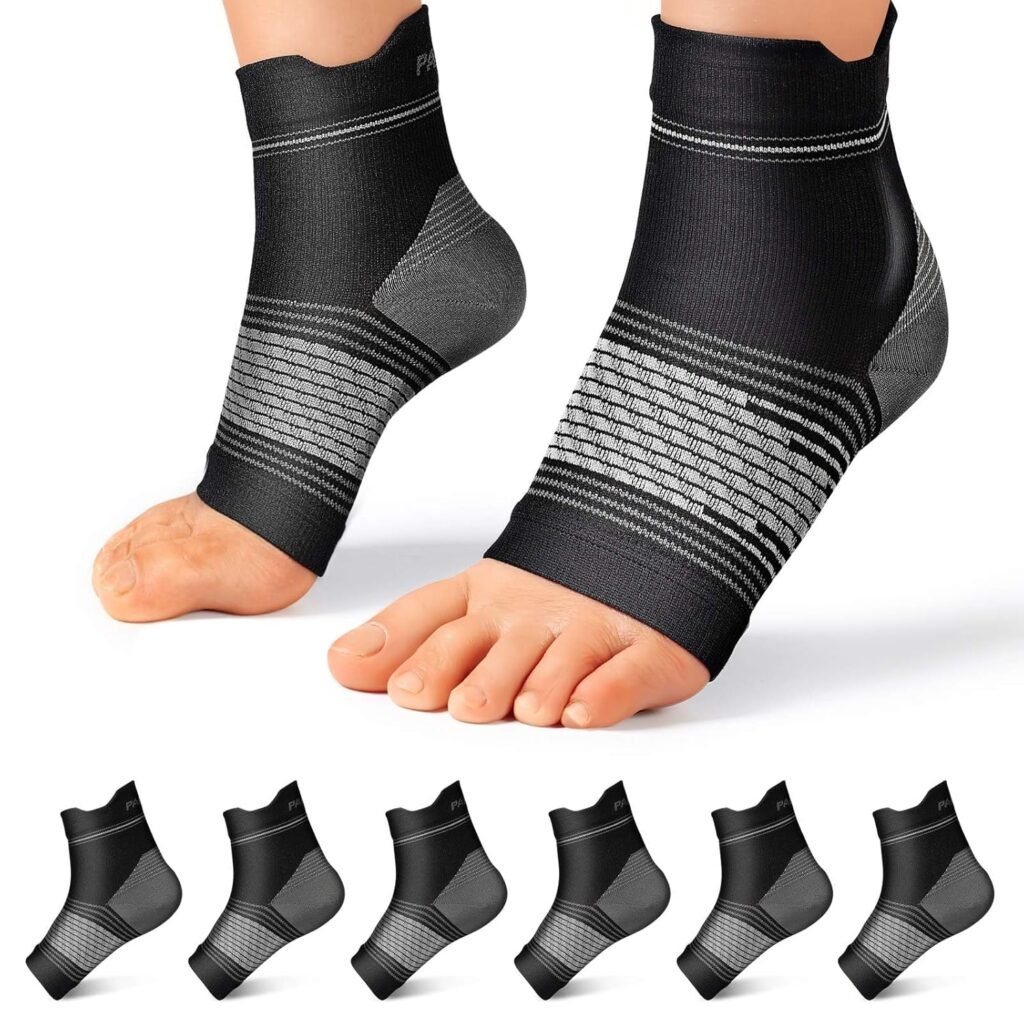
How it feels: A snug, supportive hug around your ankle and arch.
The benefit: Medical-grade compression sleeves improve blood circulation and physically lift the plantar fascia, which reduces swelling during the day. They’re thin enough to wear inside most shoes, making them a practical option for people who spend long hours on their feet.
Compression sleeves work best when combined with other treatments like stretching or orthotics. They won’t cure plantar fasciitis on their own, but they can make walking and standing much more comfortable.
Advanced Clinical Medical Devices
If at-home treatments haven’t provided enough relief after several weeks, these professional medical devices offer more aggressive intervention.
1. Extracorporeal Shockwave Therapy (EPAT)
What it is: A doctor uses a handheld device to deliver focused acoustic pressure waves directly into your heel. The treatment is noninvasive and typically takes about 10 minutes per session.
How it works: These sound waves create controlled microtrauma in the damaged tissue. Your body responds by increasing blood flow and sending stem cells to the area, which jumpstarts the natural healing process. According to research on patients with chronic plantar fasciitis, shockwave therapy is particularly effective for cases that haven’t responded to conservative treatments like stretching, icing, or orthotics.
This technology is FDA-cleared and used worldwide. Most patients need two to three treatment sessions spaced one week apart for optimal results. Over 80% of people report significant pain reduction or complete relief after completing the full treatment protocol.
One important note: while shockwave therapy is highly effective and FDA-cleared, most insurance plans still consider it an out-of-pocket expense.
2. Ultrasound-Guided Injections
What it is: Doctors use high-frequency ultrasound imaging to see inside your foot in real time while administering an injection.
How it works: This precision allows them to guide the needle directly to the exact location of tissue damage. Two common injection options are:
Platelet-Rich Plasma (PRP): Your own blood is processed to concentrate healing platelets, which are then injected into the injured area. PRP promotes long-term tissue repair and regeneration.
Corticosteroids: These powerful anti-inflammatory medications provide fast, short-term pain relief—usually lasting up to three months. However, repeated corticosteroid injections carry risks, including plantar fat pad atrophy and potential plantar fascia rupture. Medical guidelines recommend avoiding frequent injections whenever possible.
Ultrasound guidance ensures the medication goes exactly where it’s needed, improving effectiveness and reducing the risk of complications.
Frequently Asked Questions
Do night splints actually work for plantar fasciitis?
Yes. Multiple studies confirm that wearing a night splint can significantly reduce morning pain. By keeping the plantar fascia stretched overnight, the tissue heals in a lengthened position instead of tightening up. Many patients notice improvement after just four weeks of consistent use.
Can a foot massager cure heel pain?
A massager won’t cure the underlying injury, but it’s an excellent recovery tool. Rolling out your foot increases blood flow, loosens tight muscles, and provides temporary relief. When combined with stretching and proper footwear, regular massage can support the overall healing process.
Does insurance cover shockwave therapy for feet?
Usually, no. Even though shockwave therapy is FDA-cleared and backed by clinical evidence, most insurance companies classify it as an out-of-pocket treatment. Check with your provider for specific coverage details, but expect to pay for sessions yourself in most cases.
How long does it take for plantar fasciitis to heal?
Healing time varies based on the severity of the injury and how consistently you follow treatment recommendations. Many people see significant improvement within 6 to 12 weeks with conservative care (stretching, orthotics, rest). Chronic or severe cases may take longer and could benefit from advanced treatments like shockwave therapy.
Should I see a doctor or try at-home treatments first?
Start with at-home treatments—stretching, ice, orthotics, and activity modification—for at least 4 to 6 weeks. If your pain isn’t improving or is getting worse, schedule an appointment with a podiatrist or orthopedic specialist. They can evaluate your condition and recommend advanced options if needed.
Take the First Step Toward Recovery
Plantar fasciitis doesn’t have to control your life. Whether you start with a simple pair of arch support insoles or work with a doctor on advanced shockwave therapy, the right medical devices can make a dramatic difference in how quickly you heal.
The key is consistency. Wear your night splint every night. Use your orthotics every day. Roll out your foot regularly. Give your body the support it needs to repair itself.
If conservative treatments haven’t worked after several months, talk to your doctor about clinical options like shockwave therapy or ultrasound-guided injections. These advanced tools have helped thousands of people avoid surgery and return to pain-free movement.